
COP31’s Electrification Push Raises Concerns Over Mining’s Environmental and Human Rights Costs

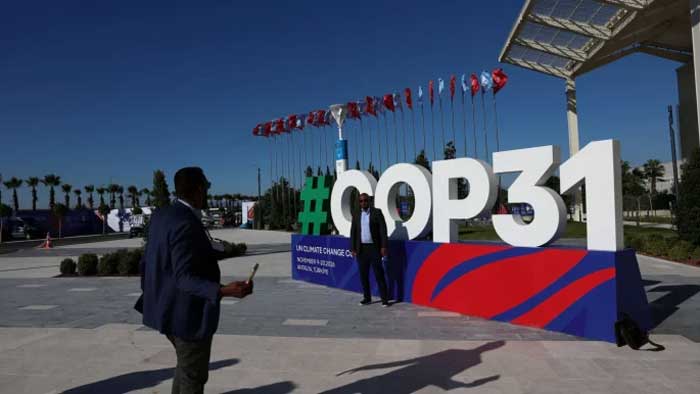
Clean public transport, energy-efficient buildings and affordable electricity are among the priorities outlined by the president of the UN climate talks, COP31, as part of a global plan to accelerate electrification.
The plan, announced during the world’s largest annual climate summit, calls on governments and other stakeholders to support a major expansion in electricity use. However, environmental and human rights organizations warn that the growing demand for minerals and metals needed to build power grids, batteries, wind turbines and other clean energy infrastructure could intensify environmental destruction and human rights violations worldwide.
Mining has already taken a heavy toll on communities and ecosystems. Forests have been cleared, water sources contaminated and Indigenous communities displaced or deprived of access to their ancestral lands. Rights groups are therefore urging COP31 leaders to ensure that the materials needed for the energy transition are sourced responsibly and fairly.
COP31 Sets an Ambitious Electrification Target
Türkiye has identified electrification as a central priority of its COP31 co-presidency with Australia. The proposed “35-by-35” global electrification pledge aims to increase electricity’s share of final energy consumption from 21% to 35% by 2035, helping reduce greenhouse gas emissions, ideally through renewable sources such as solar and wind.
The initiative builds on commitments made at previous climate summits. At COP28, countries agreed to work towards tripling global renewable energy capacity and transitioning away from fossil fuels. COP29 placed greater emphasis on energy storage, modernizing electricity grids and climate finance.
The COP31 presidency describes electrification as the next step in turning these commitments into practical changes in energy consumption.
“This transition brings together renewable energy, strong grids, storage capacity, energy efficiency, clean transport and green industry. Each supports the others,” said COP31 President Murat Kurum, who also serves as Türkiye’s environment minister.
He said the goal was to make the benefits of climate action visible in everyday life through more energy-efficient buildings, cleaner public transport, affordable electricity and new employment opportunities.
However, environmental campaigners point out that the pledge does not explicitly require electricity to come from renewable sources, potentially allowing fossil fuels such as coal to remain part of the energy mix. Nevertheless, renewable energy is expected to play a significant role as countries seek to reduce their dependence on fossil fuels.
Rising Demand for Minerals Raises Mining Concerns
The demand for minerals and metals used in wind turbines, solar panels, electric vehicle batteries, high-speed railways and other clean energy technologies has been increasing for years, according to the International Energy Agency (IEA).
From Indonesia to Brazil, mining activities are expanding to meet the growing demand. Governments are also exploring alternative sources of minerals, including deep-sea mining, to strengthen domestic supplies. Geopolitical tensions, including the Iran war, are adding further pressure to secure resources for energy development.
The 35-by-35 pledge could accelerate this demand, raising concerns about the environmental and social consequences of expanding mining operations.
Figures published by the Business & Human Rights Resource Centre highlight the scale of the problem. The international nonprofit documented more than 300 allegations of human rights abuses linked to transition-mineral mining in 2025, a 73% increase compared with the previous year.
Experts warn that without stronger protections, an expansion in mining could lead to further violations.
“If mining is going to ramp up without proper protections in place, I think we can probably expect to see some of these problems ramp up as well,” said Emily Iona Stewart, head of policy and advocacy at Global Witness, an environmental and human rights organization.
Rights Groups Demand Stronger Safeguards
Environmental and human rights organizations are calling on governments to introduce stronger protections throughout critical mineral supply chains.
In an open letter addressed to the COP31 presidencies, more than 120 international civil society organizations outlined conditions they believe must accompany the 35-by-35 target. Their demands include protecting vulnerable ecosystems, introducing binding human rights and environmental due diligence requirements, and safeguarding Indigenous peoples and their land rights.
“The transition must not repeat the harms of the fossil fuel era or replace one dependency with another,” the letter stated.
Experts also stress that recycling existing materials must become a bigger part of the energy transition. Recovering minerals from used batteries, electronic equipment and other products could reduce the need for new mining.
The IEA estimates that successfully scaling up recycling could reduce demand for newly mined minerals by 25–40% by 2050.
However, many countries still lack adequate waste management systems and supportive regulations to make large-scale recycling possible, according to the agency.
Critical Minerals Missing From COP31 Negotiations
Another concern raised by rights advocates is the limited attention given to critical minerals and mining in COP31’s official negotiations and central policy discussions.
Experts warn that the absence of explicit commitments on responsible mineral sourcing could leave communities and ecosystems vulnerable as demand for resources increases.
Aimee Boulanger, executive director of the Initiative for Responsible Mining Assurance, emphasized that expanding access to electricity should not come at the expense of communities where essential raw materials are extracted.
“If we want to do good by communities, bringing electricity to communities who don’t have it right now is a basic human need and right,” she said. “But we can’t do good by some communities by doing inherent harm against others where the raw materials are extracted.”
The comments highlight a fundamental challenge facing the global energy transition: ensuring that the pursuit of cleaner energy does not reproduce the environmental destruction, exploitation and inequalities associated with the fossil fuel industry.
The COP31 presidencies, with Türkiye serving as the official host and Australia leading the negotiations, did not respond to requests for comment.
Comments are closed.