
COP31 Climate Summit Begins in Türkiye: World Leaders Gather to Tackle Global Warming, Food Security and Climate Finance

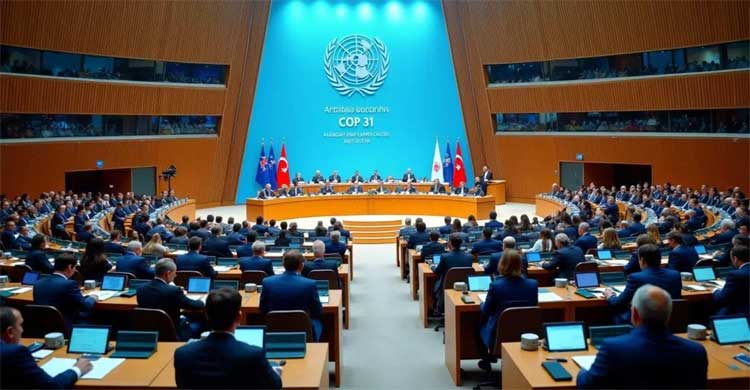
The 31st United Nations Climate Change Conference (COP31) begins in Antalya, Türkiye, on November 9, 2026, bringing together representatives from nearly 200 countries for two weeks of discussions on climate action. The summit will focus on food security, agriculture, public health, reducing greenhouse gas emissions and financial support for vulnerable nations.
COP31 begins in Antalya as global climate concerns intensify
The world is turning its attention to Antalya, Türkiye, as the 31st United Nations Climate Change Conference (COP31) gets underway on Monday, November 9.
Representatives from nearly 200 countries are expected to participate in the international climate summit, which will continue until November 20.
The conference comes at a critical time as countries face growing challenges associated with rising global temperatures, extreme weather events, water shortages, declining agricultural productivity and environmental degradation.
The main objective of COP31 is to accelerate international climate cooperation and turn existing commitments into practical solutions.
Discussions will focus on reducing greenhouse gas emissions, strengthening climate adaptation measures and increasing financial assistance for developing countries that are particularly vulnerable to climate impacts.
COP31 Day 1: Food, agriculture and health take centre stage
The opening day of COP31 will focus on three closely connected areas: food, agriculture and health.
Climate change is increasingly affecting agricultural production, water availability and public health. Rising temperatures, irregular rainfall, droughts and floods are creating additional pressure on food systems and vulnerable communities.
One of the major discussions will examine ways to finance innovative solutions for climate-resilient food systems.
Organisations including the United Nations Development Programme (UNDP) and the Adaptation Fund are expected to contribute to discussions on mobilising resources for climate adaptation.
Other sessions will explore improved agricultural practices, sustainable water management and the relationship between climate change and sustainable development.
The discussions will also draw on scientific findings from the Intergovernmental Panel on Climate Change (IPCC).
WHO to highlight climate change and global health risks
Public health will receive special attention during the opening day.
The World Health Organization (WHO) will organise discussions on climate-sensitive health technologies, digital healthcare, humanitarian assistance and strengthening health systems to respond to climate-related emergencies.
A ministerial roundtable will also bring together health ministers to discuss national priorities and strategies for protecting populations from climate-related health risks.
Climate change can increase health threats through extreme heat, air pollution, changing patterns of infectious diseases and disruptions to healthcare services.
The discussions are expected to highlight the importance of integrating climate resilience into national healthcare planning.
Other key discussions scheduled for the opening day
Apart from food, agriculture and healthcare, COP31 will also address several interconnected environmental challenges.
Important subjects include:
- Climate-friendly transportation: Exploring cleaner transport systems and reducing emissions from the transport sector.
- Water management: Discussing sustainable water use and the importance of indigenous communities in protecting water resources.
- Climate technology: Strengthening international partnerships to develop and distribute climate-friendly technologies.
- Agricultural sustainability: Supporting farming practices that can withstand changing climatic conditions.
- Climate resilience: Helping vulnerable communities prepare for environmental and weather-related challenges.
What other major issues will COP31 focus on?
Beyond the opening day’s programme, COP31 will address several major challenges shaping the global climate agenda.
1. Reducing greenhouse gas emissions
Countries will discuss strategies to reduce emissions responsible for global warming, including cleaner energy, renewable power and low-carbon industrial development.
2. Climate finance for developing countries
Financial support will remain one of the most important subjects. Developing countries need substantial investment to strengthen infrastructure, protect communities and transition towards cleaner economies.
3. Preparing for extreme weather
The summit will examine ways to improve preparedness for floods, droughts, heatwaves, wildfires and other climate-related disasters.
4. Implementing the Paris Agreement
Countries will assess progress under the Paris Agreement and discuss how to turn national climate commitments into measurable results.
5. Protecting oceans and biodiversity
Marine ecosystems, forests, wildlife and biodiversity will also feature in discussions on environmental protection and climate resilience.
COP31 thematic days to cover major environmental challenges
The conference will feature thematic programmes addressing different aspects of climate action throughout its two-week schedule.
Major areas of discussion will include:
- Energy and transport.
- Waste management and the circular economy.
- Climate finance and investment.
- Youth participation and education.
- Science, research and technology.
- Oceans and biodiversity.
- Social development and climate justice.
These discussions are intended to bring governments, scientists, businesses, international organisations and civil society representatives together.
World Leaders’ Summit scheduled for November 11 and 12
One of the most important events during COP31 will be the World Leaders’ Summit, scheduled for November 11 and 12.
Heads of state and government will gather for high-level discussions on international climate cooperation.
The meetings will provide an opportunity for national leaders to discuss climate commitments, financing requirements and strategies for accelerating environmental action.
Developing countries are expected to emphasise the need for greater financial and technological support to address the growing consequences of climate change.
Why COP31 matters for India and developing countries
COP31 is particularly important for developing nations, including India, which face increasing climate-related challenges.
Rising temperatures, unpredictable monsoon patterns, floods, droughts and heatwaves can affect agriculture, water supplies, public health and economic development.
For India, climate finance, renewable energy expansion, climate-resilient agriculture and disaster preparedness remain important priorities.
The conference could provide an important platform for developing countries to highlight their requirements and push for stronger international cooperation.
Conclusion: Can COP31 turn climate promises into real action?
The COP31 summit in Antalya comes at a decisive moment for international climate cooperation.
With global temperatures rising and extreme weather events placing increasing pressure on communities, countries face growing expectations to move beyond political declarations and deliver practical climate solutions.
From food security and healthcare to renewable energy, biodiversity and climate finance, the discussions over the next two weeks will cover some of the most important environmental challenges facing the world.
The success of COP31 will ultimately depend on whether participating countries can agree on meaningful commitments, mobilise adequate financial resources and accelerate action to protect the planet.
As the world watches Antalya, the central question remains: Can global leaders turn climate promises into measurable progress before the climate crisis becomes even more difficult to manage?
Sources and references:
- United Nations Framework Convention on Climate Change (UNFCCC) – COP31 official conference information.
- World Health Organization (WHO) – Climate change and health.
- United Nations Development Programme (UNDP) – Climate resilience and food systems.
- Intergovernmental Panel on Climate Change (IPCC) – Climate science and adaptation assessments.
- Adaptation Fund – Climate adaptation financing.
SEO keywords: COP31 2026, COP31 Antalya Türkiye, UN Climate Change Conference, climate change news, global warming, climate finance, food security, climate adaptation, WHO climate health, Paris Agreement, climate summit November 2026.
Comments are closed, but trackbacks and pingbacks are open.