
India Plans Major Bullet Train Corridor Connecting Delhi to Guwahati: Check Route, Stations and Proposed Travel Times

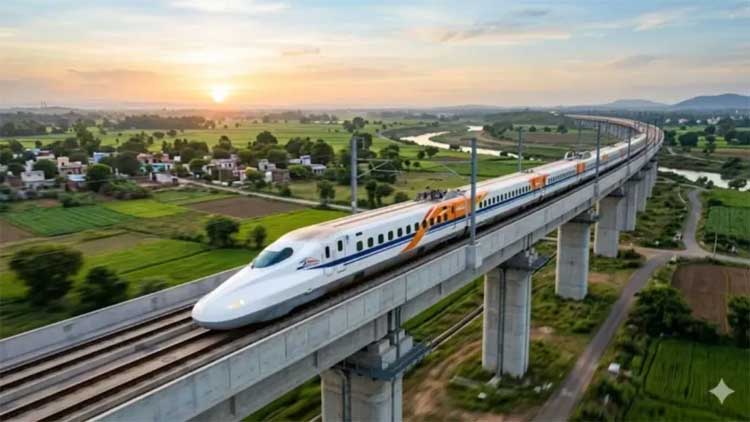
India is preparing for a major transformation in railway connectivity with a proposed high-speed rail corridor connecting Delhi to Guwahati via Agra, Lucknow, Ayodhya, Varanasi, Patna and Siliguri. The ambitious project could significantly reduce travel times across northern and eastern India, bringing several major cities closer together.
India plans an ambitious Delhi–Guwahati bullet train corridor
India’s high-speed rail network could receive a major boost with a proposed bullet train corridor connecting the national capital, Delhi, with Guwahati in Assam.
According to a report by CNBC-TV18, Railway Minister Ashwini Vaishnaw has outlined a proposed route covering several important cities across northern and eastern India.
The corridor is expected to connect major religious, commercial, industrial and tourism destinations, potentially transforming long-distance travel across the region.
The proposed route will pass through Uttar Pradesh, Bihar and West Bengal before extending into Assam in the Northeast.
Proposed bullet train route: Delhi to Guwahati
According to the proposed alignment, the high-speed rail corridor will connect the following cities:
- Delhi
- Agra
- Kanpur
- Lucknow
- Ayodhya
- Varanasi
- Prayagraj
- Patna
- Siliguri
- Guwahati
The proposed connectivity could benefit millions of passengers by providing faster access to major economic centres, religious destinations and tourism hubs.
Cities such as Ayodhya and Varanasi could also benefit from improved tourism connectivity, while Patna and Guwahati may gain stronger links to India’s national transport network.
Bullet train through the Chicken Neck corridor
One of the most strategically significant aspects of the proposed project is its passage through the Siliguri Corridor, popularly known as the Chicken Neck.
The narrow geographical stretch connects India’s northeastern states with the rest of the country.
Assam Chief Minister Himanta Biswa Sarma has indicated that the proposed high-speed railway could pass through this strategically important region using either an underground or elevated track.
Such infrastructure would involve substantial engineering work and investment.
The project could improve connectivity between northeastern India and major northern Indian cities while strengthening regional transportation infrastructure.
Delhi to Agra in just 59 minutes: Proposed bullet train travel times
One of the biggest attractions of the proposed high-speed rail corridor is the significant reduction in journey times between major destinations.
Railway Minister Ashwini Vaishnaw has shared the following indicative travel durations:
| Proposed route | Journey time |
|---|---|
| Delhi to Agra | 59 minutes |
| Delhi to Kanpur | 1 hour 45 minutes |
| Delhi to Lucknow | 2 hours 12 minutes |
| Delhi to Varanasi | 3 hours 33 minutes |
| Varanasi to Prayagraj | 33 minutes |
| Varanasi to Lucknow | 1 hour 21 minutes |
| Varanasi to Patna | 1 hour |
| Varanasi to Agra | 2 hours 34 minutes |
| Delhi to Siliguri | Around 6 hours |
| Delhi to Guwahati | Under 8 hours |
These journey durations are proposed estimates rather than confirmed operational schedules.
The Railway Ministry has not yet announced a detailed timetable, final station locations or confirmed service frequency.
Seven new high-speed rail corridors announced in Budget 2026–27
The proposed Delhi–Guwahati connectivity forms part of India’s broader high-speed rail expansion ambitions.
In the Union Budget 2026–27, Finance Minister Nirmala Sitharaman announced seven new high-speed rail corridors.
Among the important proposed connections are:
- Delhi–Varanasi
- Varanasi–Siliguri
These projects are intended to improve connectivity between major economic centres and support regional development.
The expansion of high-speed rail infrastructure is also expected to encourage tourism, business travel and investment along the proposed routes.
What about India’s first bullet train project?
Meanwhile, India’s first high-speed rail project, the Mumbai–Ahmedabad bullet train corridor, remains under construction.
The project is being developed with Japanese technical assistance and is designed for speeds of up to 320 km/h.
The government is targeting the opening of a priority section by August 2027.
The Mumbai–Ahmedabad project is expected to serve as an important foundation for India’s future high-speed railway network.
How could the Delhi–Guwahati bullet train benefit passengers?
If implemented, the proposed corridor could bring several benefits to passengers and regional economies.
1. Faster travel: Journey times between Delhi, Uttar Pradesh, Bihar, West Bengal and Assam could be substantially reduced.
2. Tourism growth: Faster connectivity could encourage travel to destinations such as Agra, Ayodhya, Varanasi and Guwahati.
3. Economic development: Improved transport links could support businesses, trade, investment and employment opportunities.
4. Better Northeast connectivity: Guwahati could gain a faster connection with major northern Indian cities.
5. Regional infrastructure development: The project could encourage investment in railway stations, surrounding urban areas and supporting infrastructure.
Conclusion: A major step towards India’s high-speed rail future
The proposed Delhi–Guwahati bullet train corridor represents an ambitious vision for India’s future transportation network.
By connecting ten major cities and extending high-speed rail connectivity into the Northeast, the project could transform long-distance passenger travel.
The proposed journey of under eight hours between Delhi and Guwahati is particularly noteworthy, while the Delhi–Agra journey could take just 59 minutes.
However, passengers will have to wait for further announcements regarding project approvals, construction timelines, financing, final alignment and operational schedules.
If realised, the corridor could become one of India’s most significant railway infrastructure developments, bringing northern and northeastern India closer than ever before.
Sources and references:
- CNBC-TV18 – Report on the proposed Delhi–Guwahati high-speed rail corridor.
- Ministry of Railways – High-speed rail development announcements.
- Union Budget 2026–27 – Seven proposed high-speed rail corridors.
- Assam Chief Minister Himanta Biswa Sarma – Remarks on the proposed Siliguri Corridor alignment.
SEO keywords: Delhi Guwahati bullet train, India bullet train project 2026, Delhi to Agra in 59 minutes, Delhi to Patna bullet train, Delhi to Varanasi high-speed rail, Patna Guwahati bullet train, Chicken Neck corridor railway, Indian high-speed rail network.
SEO publishing details
-
SEO title: Delhi to Guwahati Bullet Train: Route, Stations and Travel Time Explained
-
Meta description: India proposes a Delhi–Guwahati bullet train corridor via Agra, Lucknow, Ayodhya, Varanasi, Patna and Siliguri. Check proposed routes and travel times.
-
URL slug:
delhi-guwahati-bullet-train-route-travel-time -
Category: Travel News / Indian Railways
-
Tags: Bullet Train, Indian Railways, Patna, Guwahati, Delhi, High-Speed Rail, Travel News 2026
The corridor and travel times should be described as proposed, not confirmed or operational. Before publication, independently verify the reported route, ministerial statements, seven-corridor budget announcement and August 2027 Mumbai–Ahmedabad target against official Railway Ministry and government releases. Also distinguish the proposed Delhi–Varanasi and Varanasi–Siliguri corridors from the wider Delhi–Guwahati route.
Comments are closed, but trackbacks and pingbacks are open.