
French Supermarket Cyberattack Signals New Phase in Iran’s Asymmetric Campaign Across Europe

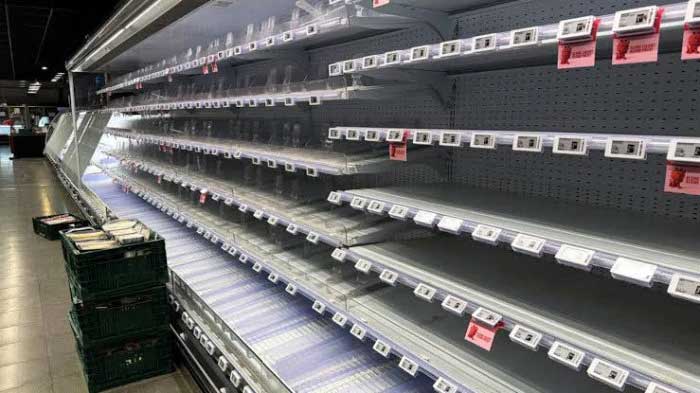
A cyberattack targeting supermarket refrigeration systems in France, which Paris has blamed on Iran, may signal a new phase in Tehran’s asymmetric confrontation with the United States, with potential consequences extending across European territory, security analysts have warned.
The October 11 and 12 attacks affected dozens of French supermarkets, manipulating refrigerator temperatures and forcing some stores to discard entire stocks of perishable food products.
France accused Iran’s Islamic Revolutionary Guard Corps (IRGC) of orchestrating what it described as unprecedented cyberattacks. Tehran rejected the allegations.
Although French authorities focused on incidents involving domestic supermarket chains, similar attacks were reported in at least 11 other European countries.
Security sources and analysts say Iran has intensified its activities across Europe since the war launched by Israel and the United States in February, raising concerns about the possibility of further retaliatory operations.
Tehran has warned that any renewed military strikes would trigger consequences beyond the immediate conflict.
“In recent days, Iran has sent very clear signals to a number of countries, warning that if there is another major US-Israeli bombing campaign, there will be consequences in Europe,” a European security source told AFP.
Growing Concerns Over European Targets
Iran has been accused of planning attacks against American interests in Europe, including two British air bases used by the United States. On Monday, the US military withdrew aircraft from RAF Mildenhall.
Tehran has also been accused of using intermediaries to organise attacks against Western and Jewish targets.
These allegations include an incident involving a Bank of America branch in Paris this spring, as well as attacks targeting synagogues in Belgium and the Netherlands.
French authorities have additionally accused Iran of spreading disinformation linked to protests in France and mistreating a senior official at the French embassy in Tehran in October.
The developments come as the conflict remains largely at a stalemate, with diplomatic efforts continuing to prevent a renewed outbreak of hostilities.
Propaganda Campaigns Highlight Potential Retaliation
Warnings about possible attacks on European territory have also appeared in propaganda circulated by media networks associated with Tehran.
A recent AI-generated video titled “Europe On Fire” depicts attacks on several European military installations, including RAF Fairford in Britain and Istres Air Base in France.
The video shows missile alerts sounding in Paris and London as civilians flee through the streets. An English-language narration warns that European countries assisting American military operations against Iran could become targets.
On November 8, intelligence monitoring organisation SITE reported that the Persian-language outlet Teyban published another video targeting what it described as “Satan’s Nests”, referring to US military installations.
The video reportedly identified facilities including Ramstein Air Base in Germany and Bezmer Air Base in Bulgaria.
Clement Therme, an Iran specialist at the University of Montpellier Paul-Valéry, said the developments reflected Tehran’s broader asymmetric strategy.
“It is a continuation of Iran’s asymmetric threat strategy and its determination to bring the battlefield onto European soil,” he told AFP.
Therme compared the approach with Russian operations in Europe aimed at affecting Ukraine’s strategic depth.
He argued that Europe occupies a strategically important position because of its role in supporting US military operations against Iran.
Cyberattacks Expand the Range of Potential Targets
According to Therme, the potential targets of Iranian operations have expanded beyond traditional American and Jewish interests to include civilian infrastructure.
“We are now seeing a horizontal escalation, a geographical widening of the conflict and a shift in the nature of the targets toward civilian infrastructure such as refrigeration systems,” he said.
Cyber operations offer governments and other actors an additional means of exerting pressure while potentially maintaining plausible deniability over their involvement.
Iran is considered an established cyber actor with capabilities that extend beyond conventional espionage.
Anthony Chaix, a cybersecurity analyst at SQUAD, said Iran possessed highly developed offensive cyber capabilities and was particularly specialised in sabotage rather than data theft.
He added that, unlike some state-backed actors that rely on criminal groups to conduct cyber operations, Iran was generally known for carrying out such activities directly.
Chaix said sabotage operations were frequently designed to achieve their objectives quickly, although Iran also had the capacity to conduct more discreet and prolonged campaigns.
Civilian Infrastructure Emerges as a New Cybersecurity Concern
Kris Vanhulst, another cybersecurity specialist at SQUAD, said the supermarket refrigeration attacks differed from many previous cyber incidents because of the nature and scale of the targets.
He highlighted the significance of targeting systems that directly affect everyday physical infrastructure.
“This was not a single company,” he said. “There were hundreds of impacts, it was extremely wide-ranging. The goal was to destabilize.”
The incidents have raised broader concerns about the vulnerability of civilian infrastructure, including food distribution networks, refrigeration systems and other essential services.
As tensions between Iran and the United States continue, European governments face growing questions about protecting critical infrastructure against cyber threats and preventing the wider Middle East conflict from spilling over into Europe.
While Iran has denied responsibility for the French supermarket attacks, the allegations and reported incidents elsewhere have intensified scrutiny of the potential role of cyber operations in Tehran’s regional and international strategy.
Comments are closed, but trackbacks and pingbacks are open.