
Amid OBC Creamy Layer Row, Why 958 New UPSC Civil Servants Are in Limbo

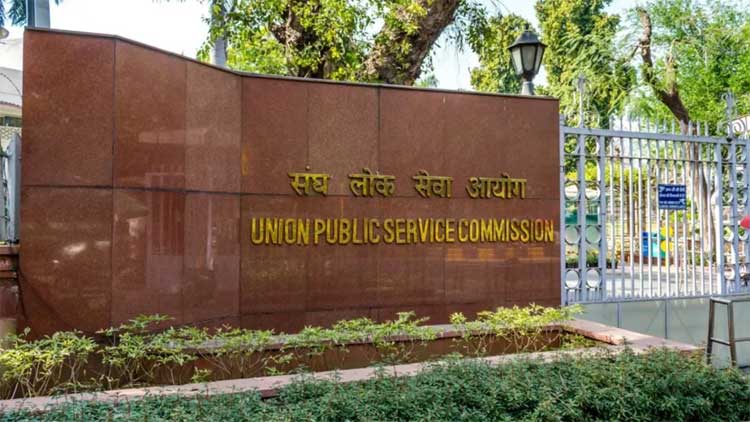
The future of 958 candidates recommended for appointment through the Union Public Service Commission’s (UPSC) Civil Services Examination (CSE) 2025 remains uncertain amid a legal dispute over the criteria for determining the Other Backward Classes (OBC) creamy layer. The delay has stalled service allocation and the foundation training programme for the successful candidates, leaving them waiting for clarity on their appointments.
The controversy stems from a Supreme Court judgment delivered on March 11, 2026, which clarified how the creamy layer status of OBC candidates should be determined, particularly when their parents work in public sector undertakings (PSUs) or private companies. The Centre has approached the court seeking clarification on whether the new interpretation should apply to the 2025 examination cycle, which had largely concluded before the judgment was delivered.
Why are 958 candidates waiting?
The UPSC declared the final results of the Civil Services Examination 2025 on March 6, 2026, recommending 958 candidates for appointment to the Indian Administrative Service (IAS), Indian Foreign Service (IFS), Indian Police Service (IPS) and other central services.
Five days later, the Supreme Court delivered its judgment in the case concerning OBC creamy layer criteria. This created uncertainty over how the government should assess eligibility for reservation and allocate services to candidates from the examination cycle.
The Department of Personnel and Training (DoPT), which handles service allocation, has held back the process while seeking the Supreme Court’s guidance. As a result, the candidates have been left waiting for their service assignments, while the usual foundation course at the Lal Bahadur Shastri National Academy of Administration (LBSNAA) in Mussoorie has also been delayed.
What is the OBC creamy layer controversy?
The OBC reservation system provides eligible candidates from Other Backward Classes with reservation benefits in central government recruitment and educational institutions. However, candidates classified as belonging to the “creamy layer” are excluded from these benefits.
The dispute concerns how the creamy layer status of candidates whose parents work in PSUs or private-sector companies should be assessed. In its March 11 judgment, the Supreme Court ruled that a parent’s salary income alone cannot be the decisive factor in excluding an OBC candidate from reservation benefits.
The court emphasised that the status and category of a parent’s post, along with the applicable income and wealth criteria under the existing rules, must be considered in determining creamy layer eligibility. The ruling addressed concerns that some candidates had been denied OBC non-creamy layer benefits based primarily on their parents’ salary income. 【turn130804search9】【turn130804search13】
What has the Centre asked the Supreme Court to do?
The Centre has sought permission to allocate services to the 958 candidates using the creamy layer criteria that were followed before the March 11 judgment, pending a final decision on its broader plea.
It has also asked the Supreme Court to give the judgment prospective effect, meaning the revised interpretation would apply going forward rather than reopen completed recruitment and admission processes. The government has sought a two-year window to develop a uniform mechanism for determining equivalence between posts in government organisations and those in PSUs and private companies.
According to the Centre, applying the ruling retrospectively could unsettle existing appointments, seniority, cadre allocation and admission decisions. It has also argued that candidates made choices about their application categories based on the rules and interpretation prevailing when they took the examination.
The government’s request does not seek to overturn the judgment itself; it seeks clarity on how and when the ruling should be implemented.
Why could retrospective implementation create complications?
The Centre has pointed to the possibility of unequal treatment among candidates who participated in the same examination cycle.
For instance, some candidates whose parents worked in PSUs or private companies may have believed they were ineligible for OBC non-creamy layer benefits under the earlier interpretation. They may have applied under the general category or decided not to apply at all. Some may also have forgone the additional attempts and age relaxation available to eligible OBC non-creamy layer candidates.
If the rules are reassessed after the examination, candidates who applied under the OBC category could have their eligibility reconsidered, while those who did not apply under that category might not have an equivalent opportunity to change their status retrospectively.
The government has argued that resolving these issues could require extensive verification and create further complications in recruitment and service allocation.
What is the impact on the selected candidates?
The delay extends beyond the announcement of service assignments. The 958 candidates are also awaiting the Foundation Course at the Lal Bahadur Shastri National Academy of Administration in Mussoorie, which normally begins in late August or early September.
The uncertainty could affect several administrative processes:
- Service allocation: Candidates are waiting to learn which central civil service they will join.
- Foundation training: The delay has disrupted the planned training schedule for the incoming batch.
- Cadre allocation and seniority: Further delays could affect the assignment of cadres and the determination of seniority.
- Pay fixation and induction: The government has warned that the disruption could have consequences for pay-related formalities and the training schedules of other services.
The academy is prepared to conduct the course, but the finalisation of service allocation remains a key prerequisite for moving ahead with the batch’s training arrangements.
What happens next?
On September 24, 2026, the Supreme Court reserved its order on the Centre’s plea after hearing arguments on the prospective application of its March 11 judgment. The decision is expected to determine how the government should proceed with the pending service allocation and implement the revised interpretation of the OBC creamy layer rules.
Until the court issues its order, the position of the 958 candidates remains uncertain. The outcome will have implications not only for the CSE 2025 batch but also for the wider implementation of OBC reservation criteria in recruitment and admissions.
At the heart of the dispute is the need to reconcile the Supreme Court’s interpretation of reservation eligibility with the practical consequences of applying that interpretation to selection processes already completed or underway. For the successful candidates, the immediate concern is when their service assignments will be finalised and their training can begin.
Comments are closed, but trackbacks and pingbacks are open.