
British Airways Flight Drops 28,000 Feet In Minutes, Returns To London After Emergency

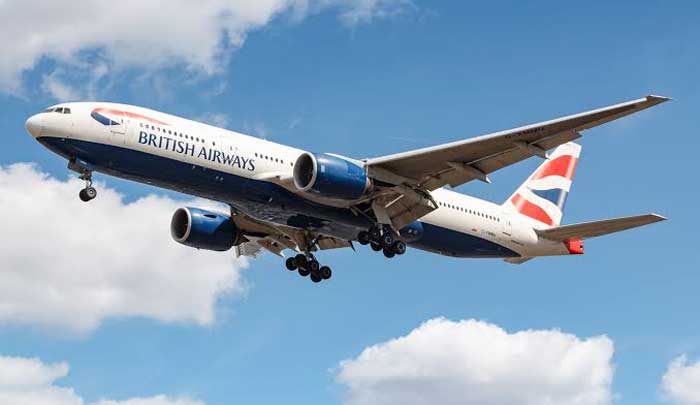
A British Airways flight travelling from London to Chicago made a rapid 28,000-foot descent about an hour after takeoff on Monday before turning back to the UK, according to flight-tracking data.
Flight BA295, operated by a Boeing 777-200ER, declared an emergency after broadcasting the squawk 7700 code. The aircraft descended from 37,000 feet to around 9,000 feet within minutes before making a U-turn over Irish airspace.
The flight subsequently returned to London Heathrow Airport, where it landed nearly five hours after departure.
What Did The Flight-Tracking Data Show?
BA295 departed Heathrow at around 11:50 am local time and was scheduled to fly for approximately eight hours and 40 minutes to Chicago O’Hare International Airport.
After takeoff, the aircraft climbed to its cruising altitude of 37,000 feet. It then suddenly began a steep descent, dropping to approximately 9,000 feet — a loss of around 28,000 feet.
The aircraft transmitted the 7700 emergency code shortly after beginning the descent and subsequently turned back towards the UK while flying over Ireland.
After being diverted back to London, the aircraft circled several times over the area between Wales and Ireland before heading towards Heathrow. It then made a gradual descent and landed at the airport.
Why Was The Aircraft Flying In Circles?
The Boeing 777 was seen circling after turning back towards London, apparently as it prepared for an early landing.
Long-haul aircraft carry substantial amounts of fuel for transatlantic flights. When a flight returns shortly after takeoff, the aircraft may need to reduce its fuel load to reach a suitable landing weight.
The circling may therefore have been intended to burn fuel before the aircraft returned to Heathrow, although the exact reason for the emergency and the descent was not immediately clear.
What Does Squawk 7700 Mean?
Squawk 7700 is the standard transponder code used by aircraft crews to indicate a general emergency.
When activated, it alerts air traffic controllers that an aircraft requires immediate attention and allows controllers to prioritise the flight for assistance and, if necessary, landing.
Comments are closed, but trackbacks and pingbacks are open.