
Trump Extends $100,000 H-1B Visa Fee For Another Year, Signs Order Targeting Worker Layoffs

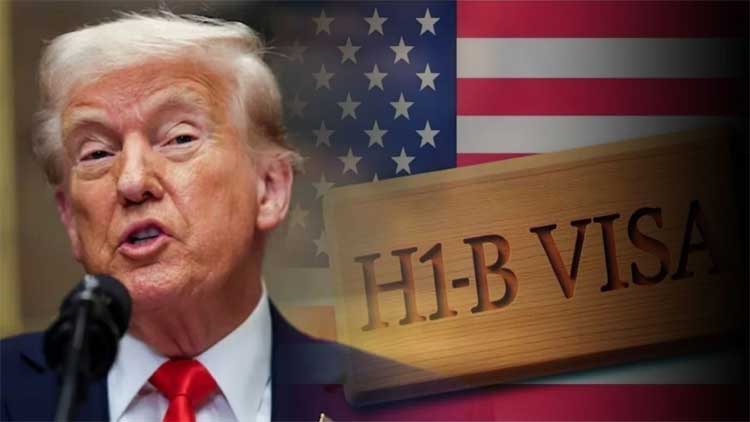
US President Donald Trump on Friday signed a proclamation extending the $100,000 H-1B visa fee for another 12 months, through September 2027, while also ordering his administration to consider recent or planned layoffs of US workers when reviewing H-1B visa applications.
The fee was originally set to expire on September 21. However, its legal status remains contested after a US district court vacated the government’s guidance implementing the fee in June. The administration is challenging that decision, and the government has been barred from collecting the fee while the appeal is pending.
Trump also signed an executive order directing senior Cabinet officials to examine whether employers have recently laid off, or plan to lay off, US workers when evaluating H-1B applications.
White House Says H-1B Use Has Fallen Sharply
The White House described the measures as part of a broader effort to curb what the administration calls abuse of the H-1B programme, a major route used by skilled foreign professionals, including thousands of Indians, to work in the United States.
The administration claimed the $100,000 fee has significantly reduced H-1B applications from major IT outsourcing companies.
“Since the 2025 Proclamation took effect, H-1B registrations filed by the largest IT outsourcing firms have been reduced by 92%,” the White House said.
The administration also argued that the H-1B programme has contributed to downward pressure on wages for US workers and encouraged the outsourcing of certain jobs, particularly in the technology sector.
Trump Administration Cites Changes In H-1B Trends
According to the White House, the number of foreign STEM workers in the US more than doubled between 2000 and 2019, while overall STEM employment increased by 44.5%.
The administration also said the proportion of IT workers holding H-1B visas increased from 32% in fiscal year 2003 to more than 65% in recent years before the 2025 proclamation.
The White House claimed the $100,000 fee subsequently resulted in a nearly 97% decline in consular processing requests, along with a shift away from lower-paid foreign labour toward higher-skilled and higher-paid workers.
These figures and the administration’s interpretation of the programme’s impact have become part of the broader debate over H-1B policy.
Legal Challenge Could Limit Impact Of Extension
Despite Trump’s proclamation, the practical effect of extending the fee remains uncertain because of the ongoing court battle.
A US district court vacated the government guidance implementing the $100,000 charge in June. The government is appealing the ruling and is currently barred from collecting the fee while the case proceeds.
As a result, the extension announced Friday does not by itself resolve the legal dispute over whether the administration can impose and collect the charge.
H-1B Lottery Already Underwent Major Changes
The Trump administration has also changed the way H-1B visas are allocated.
A Department of Homeland Security rule issued in December 2025 replaced the traditional randomised H-1B lottery with a weighted selection system based on wage levels. The administration said the change resulted in registrations falling by nearly 40%.
In August, the administration also proposed a separate $103,265 H-1B visa fee that would apply to certain applicants seeking the roughly 85,000 capped H-1B visas available annually.
That proposal could affect foreign students and other first-time applicants already in the United States who were not covered by the $100,000 fee introduced in September 2025.
Impact On Indian Professionals
The changes are particularly significant for Indian professionals because India has historically accounted for the largest share of H-1B beneficiaries.
The combination of higher fees, changes to the selection process and greater scrutiny of employers could affect companies that rely heavily on foreign skilled workers as well as Indian professionals seeking employment in the US.
The latest proclamation, however, is subject to the outcome of the ongoing legal challenge over the $100,000 fee, meaning the rules governing H-1B applicants could continue to change as the case moves through the US courts.
Comments are closed, but trackbacks and pingbacks are open.