
Nepal Flood Disaster Puts Climate Crisis, Energy Security At Centre Of UNGA And COP31 Talks

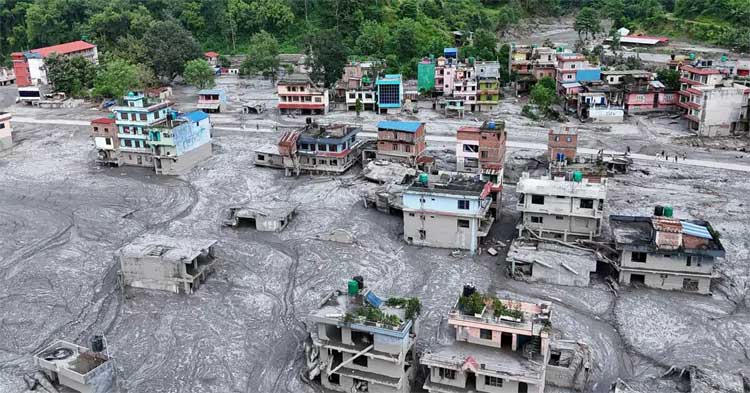
The deaths of more than 1,300 people and thousands of missing persons following a glacier collapse and catastrophic flooding in Nepal and China’s Tibet region have renewed calls for a coordinated global response to the worsening climate crisis.
The disaster comes amid a year marked by extreme weather events around the world. More than 1 million hectares of land were reportedly burned in Europe during the continent’s record 2025 wildfire season, while successive storms battered parts of Asia. Meanwhile, new modelling estimates average annual global insured catastrophe losses at around $171 billion, an increase of $19 billion from the previous year.
The growing scale and economic cost of climate-related disasters, combined with the fallout from the US war with Iran and uncertainty surrounding the Strait of Hormuz, are expected to feature prominently as world leaders gather in New York for the 81st session of the United Nations General Assembly (UNGA) from September 22 to 28.
Attention will then turn to the 31st Conference of Parties (COP31) to the United Nations Framework Convention on Climate Change, scheduled to be held in Antalya, Türkiye, from November 9 to 20.
The International Energy Agency (IEA) has described the Iran conflict as the biggest energy crisis in history, with disruptions affecting flows through the Strait of Hormuz, a critical route for global oil and liquefied natural gas supplies.
Against this backdrop, climate experts say UNGA will test whether governments can link immediate concerns over energy security and the cost of living with longer-term climate action.
What To Watch At UNGA
The 81st UNGA opened on September 8 under the theme “Restoring Trust, Managing Transformation: A United Nations That Delivers for All.” Its high-level week runs from September 22 to 29, with the general debate scheduled for September 22 to 26 and September 28.
A high-level meeting on climate action and a just transition is scheduled for September 23, while a high-level plenary on the existential threat posed by sea-level rise will take place on September 24.
Jennifer Morgan, a senior fellow at the Fletcher School of Law and Diplomacy at Tufts University and former Climate Envoy for Germany, said the key question would be whether world leaders use the UNGA platform to demonstrate that they understand the urgency of accelerating climate action.
“The climate impacts have really pushed us into new territory this year. They’re no longer a future scenario. They’re very much here and now, and it is everywhere,” Morgan said during a virtual press conference on September 16.
She said governments would also need to respond to Nepal’s appeal for international support. Morgan called on Türkiye and Australia to use the period ahead of COP31 to present a clear vision for the summit.
Ajay Mathur, professor at the School of Public Policy at the Indian Institute of Technology Delhi, former director general of the International Solar Alliance and former Indian climate negotiator, said the Nepal disaster showed how climate and energy crises were increasingly compounding each other.
He pointed to projected annual insurance losses of around $170 billion, up $19 billion from the previous year, arguing that the financial costs of climate inaction were already being felt by governments and households.
Mathur said UNGA and COP31 were likely to see renewed calls for greater resources for the Loss and Damage Fund, increased investment in electricity grids and continued momentum on the global energy transition.
He warned that current energy shocks should not lead to permanent dependence on fossil fuels but should instead accelerate the shift towards cleaner energy systems.
Energy Crisis Could Accelerate Clean Energy Transition
Nathalie Jones, senior policy advisor at the International Institute for Sustainable Development (IISD), said the energy shock had strengthened the case for reducing dependence on fossil fuels.
According to the Centre for Research on Energy and Clean Air, fossil fuel importers paid an additional $330 billion for crude oil, oil products and liquefied natural gas during the first six months of the war compared with pre-war market forecasts.
Jones said the response should focus on renewable energy, energy efficiency, electrification, electricity grids and energy storage.
At UNGA, she said, governments should provide clearer signals on the transition away from fossil fuels through national transition roadmaps and immediate policy measures.
She also said the fossil-fuel roadmap emerging from Brazil’s COP30 presidency would need to be translated into national action ahead of COP31.
COP31 To Focus On Implementation,Electrification And Finance
COP31 will be held in Antalya from November 9 to 20. Türkiye will host the summit, preside over the conference and lead its Action Agenda, while Australia will lead the negotiations through its President of Negotiations, Climate Change and Energy Minister Chris Bowen.
The division of responsibilities makes coordination between the formal negotiations and the Action Agenda a key issue for the summit.
Umit Sahin, senior scholar and coordinator of climate change studies at the Istanbul Policy Center, identified three major priorities for the Turkish presidency: making Antalya an “implementation COP”, advancing electrification and addressing climate finance.
The implementation agenda is aimed at turning climate commitments into tangible and measurable progress. Sahin said this should complement, rather than come at the expense of, negotiated outcomes needed to implement the Paris Agreement, keep the 1.5°C target within reach and advance a new science-based Global Stocktake cycle.
Türkiye’s ‘35 By 35’ Electrification Target
Electrification is another major focus. Türkiye has proposed a “35 by 35” target to increase electricity’s share of final energy consumption from just over 20% currently to 35% by 2035.
The proposal would be supported by expanded renewable energy generation, electricity grids and storage and has been included in the COP31 Global Climate Action Agenda.
The presidency has also announced a goal of halving the growth of global waste by 2035 and a resilient-cities target aimed at reducing energy-consumption intensity in the building sector by at least 25% by 2035.
Sahin’s third priority is climate finance. Türkiye’s proposed Climate Implementation Bridge is intended to connect national priorities and project preparation with existing sources of climate finance rather than establish another climate fund.
Mathur said electrification would need to go beyond electric vehicles and cover areas including affordable cooling, industrial supply chains, heat pumps and modern electricity grids.
He said COP31 would need to produce “concrete measurable commitments” that countries could adopt.
“Diplomatic rhetoric alone will not lower electricity bills or stop the glacial melts that occurred in Nepal,” Mathur said.
Nepal Disaster Could Renew Focus On Loss And Damage
The scale of the Nepal disaster is also expected to intensify discussions on climate-related loss and damage.
Mathur said climate-vulnerable developing countries had been “rattled” by the disaster and were likely to press for greater resources for the Loss and Damage Fund at COP31.
The issue remains significant as developing countries continue to seek financial support for climate-related destruction that cannot be prevented through adaptation alone.
Morgan said governments should explore additional mechanisms for raising funds, including solidarity levies and other revenue-generating measures that could support loss and damage and adaptation.
The issue is expected to feature alongside negotiations on the Global Goal on Adaptation and broader climate finance discussions at COP31.
Geopolitics Complicates Global Clean Energy Push
The energy crisis has made energy security and climate action increasingly interconnected, but geopolitical tensions are also affecting the clean-energy transition.
Laurence Tubiana, chief executive officer of the European Climate Foundation and a former French climate diplomat, said the current crisis was putting pressure on governments to address immediate energy affordability concerns while maintaining longer-term transition plans.
She also highlighted tensions surrounding clean-energy supply chains, particularly countries’ dependence on China for technologies required for electrification.
The “geopolitics of value chains”, she said, was making the transition more complicated as governments seek greater technological and energy independence.
Tubiana also argued that countries needed to make the economic costs of climate impacts more visible in national policymaking, as the consequences of climate inaction become increasingly measurable.
For COP31, this places electrification alongside questions over fossil-fuel dependence, energy affordability, access to technology, climate finance and the credibility of the Turkish and Australian presidencies.
The UNFCCC has said Türkiye and Australia are pursuing the negotiations and Action Agenda as separate but complementary tracks, with the Action Agenda intended to help implement decisions reached through the formal negotiating process.
Comments are closed, but trackbacks and pingbacks are open.