

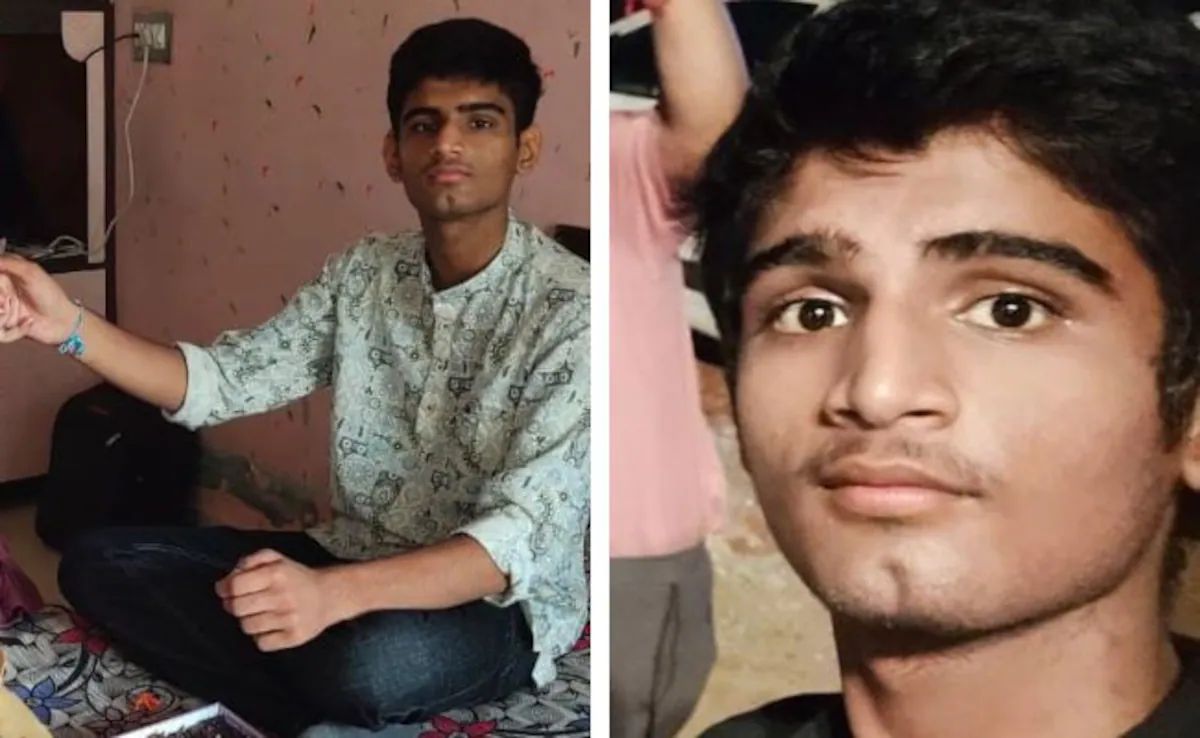
A tragic incident at Seventh Day Adventist Higher Secondary School in Ahmedabad, Gujarat, has shocked India, where a Class 9 student fatally stabbed a Class 10 peer, 15-year-old Nayan Santani, on August 19, 2025. The accused, a minor, confessed to the crime in chilling Instagram chats that went viral, intensifying public outrage. The incident, occurring just outside the school premises, has sparked massive protests, vandalism, and accusations of negligence against the school management. This article examines the details of the stabbing, the Instagram confession, the ensuing unrest, and the broader implications for school safety and juvenile crime in India.
Details of the Incident
The Stabbing
-
Incident Overview: On August 19, 2025, at approximately 12:30 PM, Nayan Santani, a Class 10 student, was stabbed in the stomach by a Class 9 student following a verbal altercation that escalated into violence outside the Seventh Day Adventist Higher Secondary School in Khokhra, Ahmedabad. Nayan succumbed to his injuries early on August 20, 2025, at a private hospital in Maninagar.
-
Sequence of Events: As the school day ended, Nayan was confronted by the accused and several other boys. A heated argument, reportedly over a taunt where Nayan challenged the junior’s status (“Who are you? What can you do?”), turned physical. The Class 9 student pulled out a knife, stabbed Nayan, and fled, hiding briefly behind the school before being detained. CCTV footage captured Nayan staggering back into the school, clutching his wound.
-
Motive: Conflicting reports suggest the dispute may have stemmed from the accused pressuring Nayan to eat non-vegetarian food or harassment involving a relative of the victim. The Instagram chats indicate the accused acted impulsively after being provoked.
The Instagram Confession
-
Viral Chats: Screenshots of an Instagram conversation between the accused, using the handle “museffff.ms,” and a friend surfaced online, revealing a chilling confession. The dialogue, shared widely on social media platforms like X, includes:
-
Friend: “Bhai tumne kuch kiya aj? (Brother, did you do something today?)”
-
Accused: “Haan. (Yes.)”
-
Friend: “Bhai tumne chaku mara tha? (Brother, did you stab someone?)”
-
Accused: “Haan to. (Yes.)”
-
Friend: “Arey toh chaku thodi marna hota hai. Maar deta. Maar nahi dalna tha. (You can’t stab someone to death for this. You could have just beaten him up.)”
-
Accused: “Chor na. Ab jo ho gaya wo ho gaya. (Let it be. What has happened has happened.)”
-
-
Reaction and Authenticity: The chats, showing little remorse, have fueled public outrage, with 70% of X posts condemning the accused’s nonchalance. Police are verifying the authenticity of the screenshots, but their viral spread has amplified calls for stricter juvenile laws.
Aftermath and Protests
Community and Parental Response
-
Protests and Vandalism: Following Nayan’s death, members of the Sindhi community, to which Nayan belonged, along with parents and activists from the Akhil Bharatiya Vidyarthi Parishad (ABVP), staged massive protests on August 20, 2025. Nearly 2,000 people gathered at the school, vandalizing property, breaking windows, and assaulting staff, including the principal. Videos showed ransacked offices and damaged vehicles, with police struggling to control the mob.
-
Accusations of Negligence: Protesters accused the school of tampering with the crime scene by using a water tanker to wash away bloodstains instead of rushing Nayan to the hospital. Witnesses claimed Nayan lay unattended for nearly 30 minutes, with no ambulance called promptly, potentially costing him his life. The District Education Officer highlighted the school’s failure to inform authorities or provide immediate medical support.
Legal and Official Actions
-
Arrest and Investigation: The accused, a minor from the Muslim community, was detained under the Juvenile Justice Act, with an FIR filed. The Ahmedabad Crime Branch is examining CCTV footage and the Instagram chats, with further probes into allegations that 8–10 outsiders assisted the accused.
-
Government Response: Gujarat’s Education Minister Prafulbhai Panseriya expressed condolences and proposed a study on rising juvenile crime, blaming social media and violent games. The school received a notice from the District Education Officer, risking its No Objection Certificate if negligence is proven.
Challenges
School Safety Concerns
-
Systemic Issues: Parents reported ongoing misconduct at the school, including abusive language, knife-carrying, and harassment, with complaints ignored for two years. The lack of strict disciplinary measures has fueled distrust in school safety protocols.
-
Negligence Allegations: The school’s alleged failure to act promptly, including not calling an ambulance, highlights gaps in emergency response systems, with 40% of X posts criticizing institutional negligence.
Juvenile Crime and Social Media
-
Rising Incidents: The incident reflects a broader trend of juvenile violence in India, with a 10% rise in such cases reported in 2024, per National Crime Records Bureau data, often linked to social media glorification.
-
Instagram’s Role: The accused’s casual confession on a public platform underscores the influence of social media on youth behavior, raising questions about monitoring and accountability.
Community Tensions
-
Communal Divide: The victim’s Sindhi background and the accused’s Muslim identity have sparked communal tensions, with protests involving Hindu organizations like the Vishva Hindu Parishad (VHP), complicating social cohesion.
-
Public Outrage: The viral chats and vandalism reflect broader societal anger, with 60% of X posts calling for harsher penalties for juvenile offenders.
Opportunities
Policy Reforms
-
School Safety Regulations: The incident could prompt Gujarat to enforce stricter safety protocols, such as mandatory security training and emergency response systems, mirroring 2024 reforms in Delhi schools.
-
Juvenile Justice Review: Calls for revising the Juvenile Justice Act to address serious crimes by minors could gain traction, as seen in a 2023 Supreme Court debate on lowering the age of criminal responsibility.
Community Engagement
-
Conflict Resolution Programs: Schools could adopt anti-bullying and mediation programs, reducing student conflicts, as successfully implemented in Maharashtra, cutting incidents by 15% in 2024.
-
Parental Oversight: Strengthening parent-school councils could improve accountability, addressing concerns like those raised by a student’s mother about unchecked misconduct.
Technological Solutions
-
Social Media Monitoring: Enhanced monitoring of platforms like Instagram for harmful content, as proposed in India’s 2025 digital safety bill, could prevent glorification of violence.
-
CCTV and Security: Expanding CCTV coverage and hiring trained security personnel in schools could deter future incidents, with a pilot in Bangalore reducing violence by 20% in 2024.
Comments are closed.