
US Strikes on Iranian Targets Raise Fears of Renewed Conflict Ahead of Midterm Elections

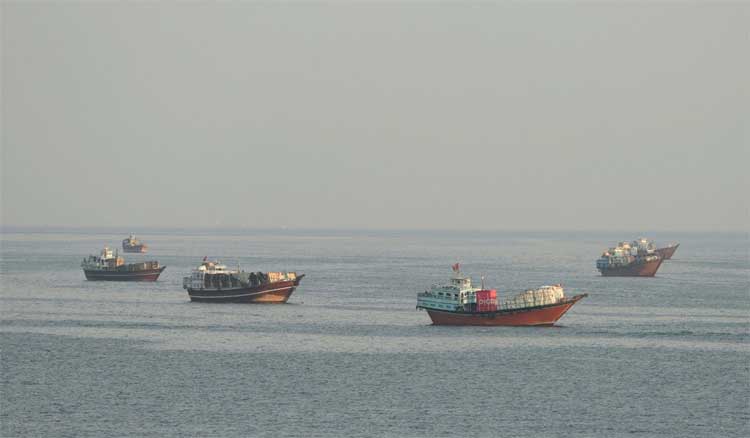
What appeared to be a limited US strike on Iranian targets in the Strait of Hormuz, just hours before Tuesday’s US midterm elections, has heightened concerns over the possibility of a renewed military escalation in the Middle East.
For weeks, US President Donald Trump has indicated that he was considering launching another wave of strikes against Iran following the elections. Israeli Prime Minister Benjamin Netanyahu also urged Trump to resume military action during a call over the weekend, according to two regional officials and another person familiar with the discussions.
The prospect of Washington resuming large-scale military operations against Iran for the first time in nearly two months has kept the Middle East and the wider international community on edge.
Diplomatic efforts to prevent a fresh escalation are continuing, with several US allies in the region urging Washington not to restart a war that has lasted more than eight months, disrupted the global economy and caused widespread devastation in Iran.
Trump has repeatedly shifted between threatening major military action and expressing optimism about reaching a negotiated agreement with Tehran.
The unpopular conflict, along with its impact on US gasoline prices and the wider economy, has also emerged as a political liability for Republicans as they seek to retain control of Congress.
US strikes target Iranian positions near Strait of Hormuz
Iranian state media reported explosions on the islands of Qeshm and Hengam in the strategically important Strait of Hormuz, as well as in the nearby mainland city of Bandar Abbas.
A US official, speaking anonymously because they were not authorized to comment publicly, said on Monday that the strikes targeted Iranian personnel who had been using surface-to-air missiles against US forces in the strait.
Iran says US must address its demands to end the conflict
Iran’s Supreme National Security Council chief said on Tuesday that Washington’s response to Tehran’s demands for ending the war was unsatisfactory.
Maj. Gen. Mohsen Rezaei said in a social media post that the Strait of Hormuz would remain closed until the United States addressed Iran’s conditions.
Tehran has offered to reopen the strategic waterway and resume negotiations over its nuclear programme if Washington lifts its naval blockade of Iranian ports, eases sanctions on Iranian oil exports and agrees to a ceasefire that also includes Lebanon.
Vance expresses optimism over diplomatic settlement
Behind-the-scenes negotiations have continued as Israel and several Middle Eastern countries intensify their diplomatic efforts to influence Trump’s next move.
Before the US official confirmed the strikes, Vice President JD Vance said on Monday that he and Trump were optimistic about the possibility of reaching a negotiated settlement with Iran.
“We both feel pretty good about the prospects for potentially coming to a negotiated settlement,” Vance said.
The Trump administration’s last known military strikes against Iran took place in early September. However, thousands of US troops remain deployed in waters near Iran to enforce a naval blockade intended to prevent Iranian oil tankers from reaching international markets.
Another aircraft carrier, accompanied by thousands of additional troops, is also heading towards the Middle East.
According to two regional officials and a third person familiar with the matter, Netanyahu urged Trump during a weekend telephone conversation to launch another round of strikes against Iran after the US elections.
However, the officials said diplomatic efforts had made progress, with mediators working towards a framework under which Iran would halt its attacks in the Strait of Hormuz in exchange for Washington lifting its naval blockade.
The officials spoke on condition of anonymity because they were discussing classified briefings received from American and Israeli officials. The third person, who had been briefed on the conversation, was also not authorized to speak publicly.
Meanwhile, Egyptian President Abdel-Fattah El-Sisi has urged both Washington and Tehran to pursue dialogue and reach an agreement, warning that further military escalation could have serious consequences for the region.
Iranians closely watch US midterm elections
In Tehran, some residents expressed hope that the US midterm elections could bring a change in Washington’s approach towards Iran.
“The American people need to make a fundamental decision and bring about real change. They need to put an end to the leadership of someone who is so extreme and who runs things through lies, someone who supports Israel, a country that is literally killing children,” said 69-year-old Reza Rezaei.
Others, however, were less hopeful about the possibility of a political shift in Washington.
“It doesn’t really make much difference who comes into power,” said Tehran resident Raheleh Movahhed. “The American government and its policies have always had a problem with us. I’m not talking about the American people, mind you. I’m talking about their policies.”
Iran’s chief negotiator warns Washington against renewed war
Iran’s chief negotiator and parliamentary speaker, Mohammad Bagher Qalibaf, said on Tuesday that Tehran had delivered a firm but reasonable response to Washington.
Iranian state television quoted Qalibaf as saying that the responsibility for preventing another war now rested with the United States.
“The ball is now in America’s court to prevent war,” he said, although it was not immediately clear which specific US proposal or response he was referring to.
Qalibaf also warned that Iran’s armed forces remained at the highest level of defensive readiness.
“If Washington makes another strategic miscalculation, it should know that this time it will face a new battlefield and will find itself even more desperate than it is today,” he warned.
With military tensions rising, diplomatic negotiations continuing and regional powers pressing for restraint, the coming days could prove decisive in determining whether Washington and Tehran move towards a negotiated settlement or slide back into a wider military confrontation.
Comments are closed, but trackbacks and pingbacks are open.