
Private Investment Picking Up as GST Reforms Boost Demand, Says Finance Minister Nirmala Sitharaman

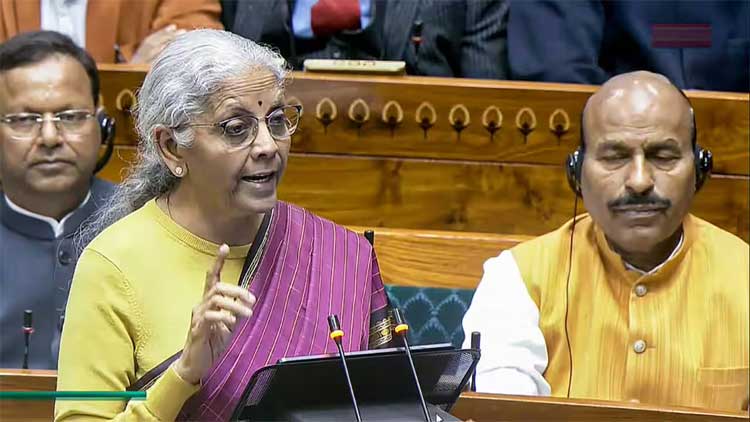
Union Finance Minister Nirmala Sitharaman has dismissed concerns over the sluggish corporate capital expenditure cycle, saying private-sector investment is gradually gaining momentum, although the recovery remains selective across industries.
Speaking at a fireside chat with Shyamal Majumdar, Editor of Financial Express, during Monday’s Financial Express Leadership Awards, Sitharaman also defended the upward revision of India’s growth forecast for 2026-27 to 7.3%. She said the government had begun doing things differently and would continue with its approach of placing greater trust in businesses, industries, farmers, taxpayers and the people.
“Everything we do is based on that premise: that we trust people,” she said, explaining that the government’s policies on the Goods and Services Tax (GST), income tax and other matters were guided by the principle of trusting taxpayers.
“That is how the Prime Minister wants all of us to work. Whatever policy we formulate, we must trust business, industry and the taxpayer. That will remain our charter,” she added.
GST reforms provide visibility on demand, boost private investment
Sitharaman said she was witnessing greater willingness among businesses to invest, supported by improved consumption and clearer demand signals following last year’s next-generation GST 2.0 reforms.
She acknowledged that investment was not expanding uniformly across sectors, with companies choosing specific areas for expansion rather than necessarily increasing capacity in their existing businesses.
“It may be selective, choosing particular sectors rather than investing in areas where it is already present. But I am seeing private investment picking up,” she said.
According to the Finance Minister, improved visibility on market demand has given businesses greater confidence to invest, increase production and expand operations according to their growth ambitions.
“The recovery in consumption has provided clear visibility on demand, and that is why I’m seeing private-sector investment happening,” she said.
Sitharaman also encouraged industry leaders to maintain regular engagement with the government, stressing that businesses should communicate their requirements and provide feedback on their progress.
She said the government was open to industry demands and that engagement between the two sides should remain active and continuous.
“The government and businesses are in this together, and we have to take India towards Viksit Bharat. We have reached an inflection point. We should not fail ourselves at this juncture,” she said.
MSMEs challenge dominance of large corporate groups
Responding to concerns that India’s economy was increasingly dominated by a handful of large business conglomerates, Sitharaman said this might have been a more accurate description a decade or two ago but did not reflect the country’s broader economic landscape today.
She said large companies continued to play an important role in the economy but stressed that micro, small and medium enterprises (MSMEs) were also expanding and creating opportunities.
The government, she explained, wanted micro enterprises to grow into small businesses, small businesses to become medium-sized companies and medium enterprises to eventually develop into large corporations.
She said the revised MSME classification had been widely appreciated because it allowed businesses to expand while continuing to access government benefits.
“India is not an economy with just a few large companies; there are many small and medium-sized enterprises as well,” she said.
Sitharaman highlighted the contribution of MSMEs to India’s export sector, noting that they account for around 40% of the country’s total exports.
She also pointed to the rapid expansion of India’s startup ecosystem, saying innovative smaller companies had demonstrated their ability to enter markets, establish themselves and grow into major businesses.
The emergence of billionaire entrepreneurs and unicorns from startups, she added, represented a significant development in India’s economic history.
Government to review underperforming PLI sectors
On the question of industrial incentives and the support extended by East Asian economies to domestic manufacturers, Sitharaman cited India’s production-linked incentive (PLI) scheme as a key policy instrument for encouraging manufacturing and improving international competitiveness.
Under the scheme, companies must demonstrate additional incremental production to qualify for financial incentives.
The Finance Minister said the initiative had delivered positive results in several sectors, although some industries had not performed as expected.
“PLI has shown success, although some sectors have not performed as well. We will have to examine what went wrong there,” she said.
Her remarks indicate that the government could review the performance of underperforming sectors while assessing the effectiveness of its manufacturing incentive programmes.
Sitharaman urges Tata Group to resolve internal differences amicably
Commenting on the reported tensions within the Tata Group and allegations raised by Congress leader Rahul Gandhi, Sitharaman described the matter as sensitive and said it required considerable commercial understanding and cordiality.
She stopped short of suggesting immediate government intervention, arguing that the parties involved should resolve their differences through discussions.
The Finance Minister acknowledged the Tata Group’s importance to the Indian economy and its contribution to building a globally recognised business brand.
“I know the brand value of Tata and the contribution of the Parsi community in making it a huge global brand. I also know the range of activities in which the Tatas are invested. This is a very critical component of the Indian economy, and therefore, the matter must be settled amicably among the parties,” she said.
She urged the stakeholders to engage in dialogue and restore normalcy quickly, adding that disagreements of this nature should not spill into the public domain.
“Given the maturity expected of that leadership, we would like to see the issue settled soon,” she said.
Sitharaman says consumption growth will remain intact
Addressing concerns about employment conditions and the possibility that slower wage growth compared with corporate profits could weaken household consumption, Sitharaman expressed confidence that India’s consumption momentum would remain intact.
She pointed to October’s GST collections, which recorded a 23% year-on-year increase, as an indication of continued economic activity and demand.
The Finance Minister also emphasised that improving workforce skills and reducing the gap between employers’ expectations and the capabilities of new graduates would remain important government priorities.
She said industry leaders had repeatedly raised concerns about the employability of graduates, noting that companies often had to invest six to eight months in additional training before new recruits could be deployed effectively.
Sitharaman said the last two Union Budgets had placed considerable emphasis on skill development and that these efforts would continue.
AI adoption makes workforce skilling more important
The Finance Minister also highlighted the growing importance of artificial intelligence (AI) in India’s industrial and business sectors.
While AI adoption could help improve productivity across large corporations and MSMEs, she said the country also needed a workforce equipped with the skills to work alongside emerging technologies.
“Our school, college and professional curricula need that additional input to ensure that young people enter the workforce job-ready,” she said.
Sitharaman stressed that educational institutions would need to incorporate relevant AI-related skills into their curricula to prepare young people for changing workplace requirements.
Her remarks underline the government’s broader economic priorities: strengthening private investment, expanding manufacturing, supporting MSMEs, sustaining consumption and developing a workforce capable of meeting the demands of an increasingly technology-driven economy.
Comments are closed, but trackbacks and pingbacks are open.