
US raises Ebola alert to highest response level amid outbreak concerns

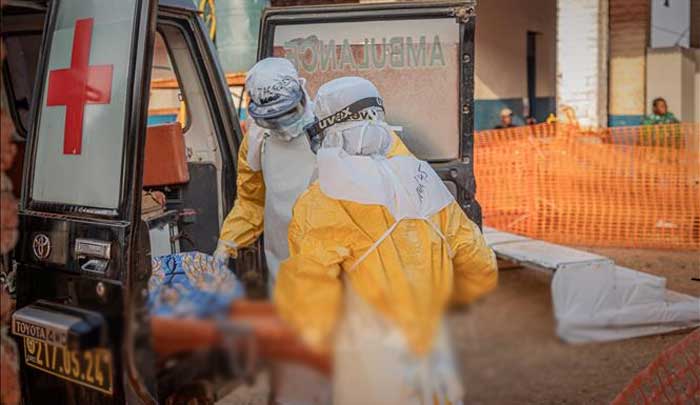
US health authorities have raised their response level to the highest category over the ongoing Ebola outbreak in the Democratic Republic of Congo (DRC), while announcing the deployment of experimental treatments to help control the crisis.
Satish Pillai, who is leading the Ebola response at the US Centers for Disease Control and Prevention (CDC), said the risk to the United States remains low despite the outbreak. However, the CDC has activated a Level 1 response — its highest alert level — similar to the action taken during the 2014 Ebola epidemic.
A CDC official said the move serves as an internal signal that the outbreak has become a top priority, allowing the agency to rapidly mobilize additional staff and resources.
The latest Ebola outbreak, declared just over a month ago, has killed 304 people among 1,115 confirmed cases in the DRC. The virus has also spread to Uganda, where authorities have reported 20 confirmed cases and two deaths since May 15, though containment efforts have helped limit transmission.
US health officials have warned that if the outbreak is not brought under control quickly, it could grow to a scale comparable to the 2014-2016 Ebola crisis, which originated in Guinea and spread across West Africa, killing more than 11,000 people, according to the World Health Organization.
The current outbreak is caused by the Bundibugyo strain of Ebola, for which there are no approved vaccines or treatments. The US has announced plans to send doses of an experimental therapy called MBP134 to the DRC and Uganda. Additional doses will be provided to the University of Oxford in the United Kingdom for a clinical trial.
Washington is also preparing to send 2,500 diagnostic tests to help identify Ebola strains from deceased victims.
Meanwhile, the DRC has introduced strict travel restrictions, requiring people returning from Ebola-affected areas to complete a 21-day quarantine before traveling abroad. Anyone who has stayed in an affected province must spend at least 21 days outside the area before international travel is permitted.
A new government order also requires contacts of confirmed or suspected Ebola patients to undergo 21 days of active health monitoring after their last exposure. During this period, travel within the country or abroad is prohibited unless specifically approved by health authorities.
Comments are closed, but trackbacks and pingbacks are open.