
US-Iran war’s economic fallout to dominate ASEAN summit in Philippines

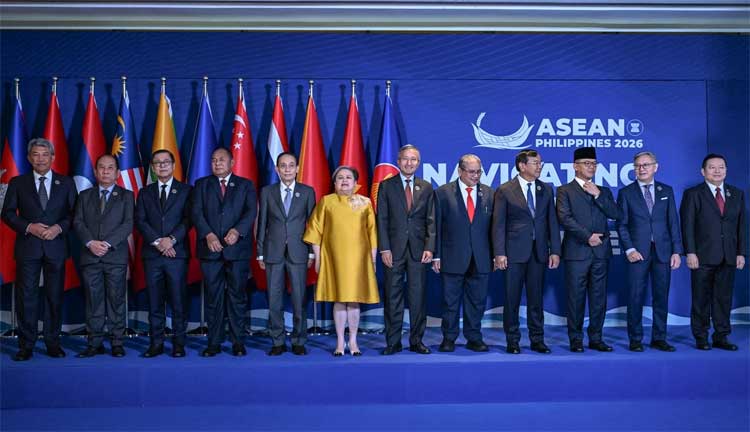
The mounting economic impact of the US-Israeli war on Iran is set to dominate discussions as Southeast Asian leaders gather in the Philippines this week, with President Ferdinand Marcos Jr. saying regional energy security will be the summit’s top priority.
The conflict, which escalated following US and Israeli strikes on Iran on Feb. 28, led to the closure of the Strait of Hormuz — a critical maritime route that carries more than 80 percent of Asia’s crude oil and liquefied natural gas imports. The disruption has hit Southeast Asian economies particularly hard, given their heavy dependence on Middle Eastern energy supplies.
“At this summit, I will lead discussions on how the region can strengthen preparedness, ensure stable energy supplies, and accelerate diversification to reduce vulnerability to external shocks, including those arising from the conflict in the Middle East,” Marcos said in a video message released Wednesday.
The Philippines, this year’s chair of the Association of Southeast Asian Nations (ASEAN), will host the regional summit in Cebu on Friday.
Among the countries most affected by the crisis, the Philippines — which relies almost entirely on the Middle East for crude oil imports — declared a national energy emergency in late March after domestic diesel and petrol prices surged to more than double their usual levels.
The crisis has also disrupted fuel supplies across Cambodia, Laos, Myanmar and Thailand, where petrol stations have reported shortages and temporary shutdowns. The knock-on effects are being felt across industries through higher raw material, transport and operational costs, weakening regional currencies and slowing economic growth.
“What do we do? How can we help each other? What is the ASEAN position regarding all of these shocks coming our way?” Marcos said earlier, describing the gathering as a “bare-bones summit” focused on three urgent priorities: energy, food security and migrant workers.
Philippine Foreign Affairs Assistant Secretary and ASEAN spokesperson Dominic Xavier Imperial said leaders are expected to issue a joint statement outlining the bloc’s collective response to the crisis while laying the groundwork for stronger coordination during future emergencies.
ASEAN members have already agreed to keep trade routes open, avoid restrictive measures and deepen regional cooperation to address both the economic and energy fallout of the conflict.
“The prolonged Middle East conflict has affected the region by slowing economic growth and forcing downward revisions of projections,” said Tereso Panga, director general of the Philippine Economic Zone Authority.
“The recent crisis highlighted the region’s vulnerability to oil price volatility and supply disruptions. Greater cooperation would allow member states to share energy reserves, stabilize supply chains and pursue joint oil and gas exploration within the region, reducing dependence on vulnerable routes such as the Strait of Hormuz.”
Comments are closed, but trackbacks and pingbacks are open.