
US-Iran peace deal: A timeline of decades of conflict, nuclear tensions and war

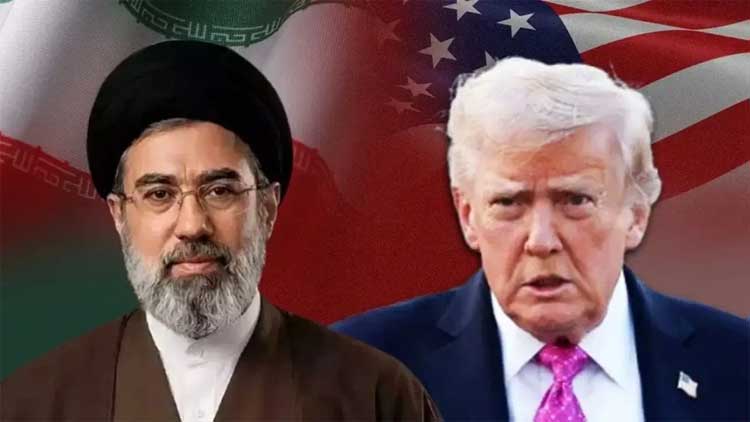
The United States and Iran have reportedly reached a tentative peace agreement aimed at reducing hostilities and reopening the Strait of Hormuz, one of the world’s most important oil shipping routes.
A formal signing ceremony is expected in Switzerland on Friday. However, previous diplomatic efforts have collapsed at the final stage, and several key provisions of the proposed agreement remained under negotiation as of Monday.
The deal follows decades of confrontation centred on Iran’s nuclear programme, regional conflicts and direct military clashes involving the United States and Israel.
For more than 30 years, Israeli Prime Minister Benjamin Netanyahu has repeatedly argued that Iran was on the verge of acquiring nuclear weapons, describing the prospect as an existential threat to Israel. Those warnings, dating back to the 1990s, often differed from assessments by US intelligence agencies and the International Atomic Energy Agency (IAEA), which concluded that Iran’s organised nuclear weapons programme had been halted in 2003.
Early nuclear era (1967–2006)
Iran’s nuclear journey began in 1967 when it received the Tehran Research Reactor from the United States under the “Atoms for Peace” programme, laying the groundwork for its future nuclear ambitions.
The trajectory changed dramatically after the 1979 Islamic Revolution, which overthrew the US-backed Shah Mohammad Reza Pahlavi. Ayatollah Ruhollah Khomeini returned from exile and assumed power, while the seizure of the US Embassy in Tehran triggered a 444-day hostage crisis. International pressure and political upheaval slowed Iran’s nuclear activities.
In 2002, Western intelligence agencies and an Iranian opposition group revealed the existence of a secret uranium-enrichment facility at Natanz, sparking global concern.
Diplomatic efforts followed in 2003, with Britain, France and Germany negotiating a temporary suspension of Iranian enrichment activities. The arrangement unravelled after the election of Mahmoud Ahmadinejad, and by 2006 Iran had resumed enrichment, leading to the collapse of talks.
Rising mistrust (2009–2015)
Iran’s disputed 2009 presidential election triggered the Green Movement protests and a severe government crackdown. At the same time, Washington and Tehran quietly opened backchannel communications through Oman.
By 2012, the two countries were engaged in secret direct negotiations.
Those efforts culminated in the 2015 Joint Comprehensive Plan of Action (JCPOA), under which Iran agreed to limit its nuclear programme in exchange for sanctions relief.
Then-US President Barack Obama presented the accord as a means of preventing Iran from obtaining a nuclear weapon without resorting to military conflict.
Collapse of the nuclear deal (2018–2022)
The agreement suffered a major setback in 2018 when US President Donald Trump withdrew from the JCPOA, calling it a “flawed” deal. Iran gradually reduced its compliance and reportedly resumed higher levels of uranium enrichment.
Tensions escalated sharply in 2020 after the US killing of Iranian military commander Qassem Soleimani, which prompted retaliatory Iranian missile strikes on US facilities.
Iran’s nuclear infrastructure was subsequently targeted by sabotage operations and cyberattacks in 2020 and 2021, with Israel widely reported to be responsible.
Efforts by the administration of US President Joe Biden to revive the JCPOA ultimately failed.
By 2022, Iran had significantly expanded its enrichment activities and strengthened military cooperation with Russia amid the war in Ukraine.
Gaza war and regional escalation
The conflict in Gaza following the October 2023 Hamas attack on Israel drew Iran more directly into regional tensions.
As Israel intensified military operations in Gaza, Iran-backed groups across the region became increasingly active. Yemen’s Houthi movement launched attacks that disrupted shipping in the Red Sea, while hostilities between Iran and Israel intensified.
In April 2024, Iran launched a direct attack on Israel, describing it as retaliation for actions linked to the Palestinian conflict. Israel responded with both covert and overt strikes on Iranian-linked targets.
Senior Hamas and Hezbollah figures were killed, and by the end of 2024 Israel was openly targeting Iranian military infrastructure.
Trump’s return and renewed pressure (2025)
Following Donald Trump’s return to the White House in January 2025, Washington adopted a more confrontational approach toward Tehran.
Indirect negotiations resumed through mediators in Oman and Europe, with multiple rounds of talks held in Muscat and Rome. Despite repeated meetings, progress remained limited.
The United States expanded military operations against Houthi forces, while Iran signalled resistance to fresh negotiations.
The 12-day Israeli war on Iran
In June 2025, Israel launched a major bombing campaign against Iranian military and strategic infrastructure, arguing that Tehran was close to developing a nuclear weapon.
The United States later joined the campaign, striking facilities at Natanz, Isfahan and Fordow. Iran responded with missile attacks on a US base in Qatar.
Washington subsequently declared that Iran’s nuclear sites had been destroyed.
A ceasefire announced on June 24, 2025, halted the immediate fighting, but regional tensions remained high. Subsequent diplomatic initiatives in Istanbul and Europe failed to secure a lasting settlement, while sanctions pressure intensified through a “snapback” mechanism later in the year.
US-Israeli war on Iran (2026)
Indirect negotiations continued even as tensions reached new highs.
On February 28, Israel and the United States launched a joint military operation against Iran, targeting senior leadership and strategic infrastructure in the opening phase of the conflict.
The war soon spread across the region, with Israeli operations expanding into Lebanon. Although a fragile ceasefire was announced on April 8, military activity continued.
Fresh US-Iran talks held in Islamabad in April ended without a breakthrough. Fighting and regional military mobilisation persisted into May before negotiators reached an interim agreement on Monday, setting the stage for the proposed peace deal now awaiting formal approval.
Comments are closed, but trackbacks and pingbacks are open.