
UPI MDR Charges Rollout May Be Delayed Until January; New Fees To Apply On Payments Above ₹2,000

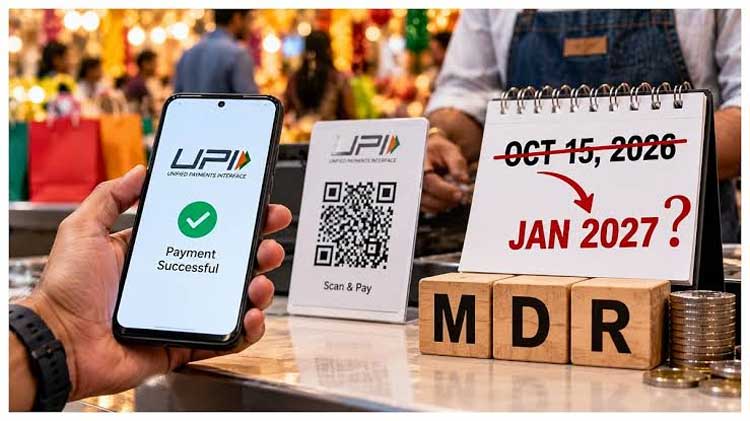
The government is reportedly considering postponing the implementation of Merchant Discount Rate (MDR) charges on large Unified Payments Interface (UPI) transactions by a few months, with the rollout potentially shifting from October 15 to January.
Reuters reported, citing an industry executive and a regulatory official familiar with the discussions, that the proposed delay is under consideration. Moneycontrol had earlier reported the possibility of a postponement.
Under the proposed framework, merchants accepting UPI payments above ₹2,000 would face charges depending on the category of transaction. Person-to-person (P2P) transfers would remain exempt, while payments to certain merchant categories would attract a flat fee.
Why Could The UPI MDR Rollout Be Delayed?
The National Payments Corporation of India (NPCI) has yet to take a final decision on postponing the implementation, one of the sources told Reuters. A decision could be made in the coming days.
The proposed delay would give payment companies additional time to update their systems and prepare for the new fee structure. It could also help avoid implementation-related complications during India’s festive season, according to the report.
The October 15 deadline had raised concerns about the timing of the transition, as digital payment volumes typically rise during the festive period.
What Are The Proposed MDR Charges On UPI Payments?
Under the new framework, two types of charges would apply to eligible UPI transactions above ₹2,000.
- Flat ₹5 fee: Payments to merchants in four specified categories — railways, telecom services, insurance and fuel — would attract a flat charge of ₹5 per transaction.
- 0.4% MDR: Other eligible person-to-merchant (P2M) UPI payments above ₹2,000 would attract a fee of 0.4% of the transaction value, capped at ₹300 per transaction.
For example, a ₹10,000 UPI payment made at a railway ticket counter, telecom operator, insurance provider or fuel outlet would attract a ₹5 fee under the proposed structure. The same payment made to another eligible merchant would attract a charge of ₹40.
Which UPI Transactions Would Be Exempt?
The framework provides exemptions for several categories of transactions:
- Person-to-person (P2P) UPI transfers.
- Person-to-merchant payments of up to ₹2,000.
- Person-to-person merchant (P2PM) transactions.
- All RuPay debit card transactions.
P2PM transactions generally cover small merchants receiving up to ₹1 lakh per month directly into their bank accounts through UPI QR codes.
What Is The Legal Basis For The New Charges?
Parliament passed the Taxation and Other Laws (Amendment) Bill, 2026, on August 11. The legislation amended Section 10A of the Payment and Settlement Systems Act, 2007, empowering the government to permit charges on specified digital payment modes.
The proposed MDR framework was subsequently introduced to establish a fee structure for eligible UPI transactions.
However, the final implementation timeline remains subject to a decision by NPCI. Until an official announcement is made, the reported shift to January should be treated as a proposal rather than a confirmed change.
Comments are closed, but trackbacks and pingbacks are open.