
UN Court to Deliver Landmark Ruling on Whether Myanmar Committed Genocide Against Rohingya
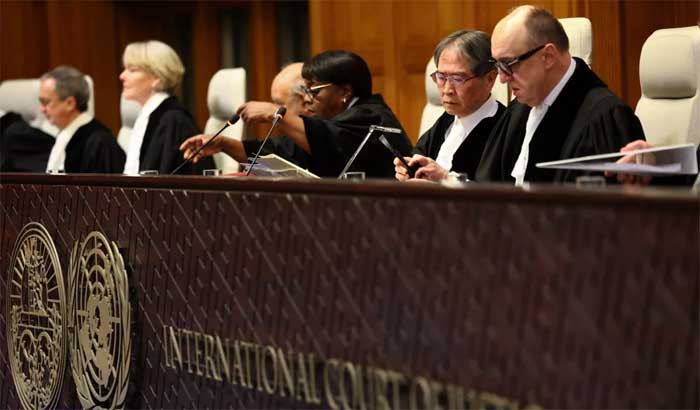
The United Nations’ top court will deliver a landmark ruling on November 19 on whether Myanmar’s military crackdown against its predominantly Muslim Rohingya minority amounted to genocide, officials announced on Tuesday.
Judges at the International Court of Justice (ICJ) have spent seven years examining allegations brought by The Gambia that Myanmar’s violent campaign against the Rohingya violated the 1948 UN Genocide Convention.
Although the ICJ has no mechanism to enforce its rulings, a finding that Myanmar committed genocide would intensify international pressure on the country’s military leadership and represent a significant moment for hundreds of thousands of Rohingya who were forced to flee their homes.
Legal experts are also closely watching the proceedings for potential implications for another landmark genocide case brought by South Africa against Israel over its military campaign in Gaza.
Myanmar has consistently rejected accusations of genocide, maintaining that its military operations were aimed at suppressing an insurgency following attacks by Rohingya militants that killed around a dozen security personnel.
The military crackdown, carried out by Myanmar’s armed forces and Buddhist militias, forced hundreds of thousands of Rohingya to flee across the border into neighbouring Bangladesh. Refugees reported widespread atrocities, including gang rape, mass killings and executions.
More than one million Rohingya refugees continue to live in Bangladesh, which hosts the world’s largest refugee settlement.
The Gambia says Rohingya faced systematic destruction
During hearings in January, Gambian Justice Minister Dawda Jallow told the court that the Rohingya had endured some of the most horrific violence imaginable.
“It is not about esoteric issues of international law. It is about real people, real stories and a real group of human beings,” Jallow said.
“The Rohingya of Myanmar. They have been targeted for destruction,” he added.
The Gambia initiated the case under the UN Genocide Convention, which allows any member state to bring proceedings before the ICJ over alleged violations, even when it is not directly affected by the crimes.
Jallow argued that the alleged violations represented a moral responsibility for the international community to address.
The alleged crimes, he said, “are a stain on our collective conscience and it would be irresponsible to pretend that it is not our business.”
Myanmar rejected the allegations during the hearings, describing them as unsubstantiated.
“Emotional language and blurry factual pictures are not a substitute for a rigorous presentation of facts,” said Ko Ko Hlaing, a minister in the president’s office.
Aung San Suu Kyi previously defended Myanmar
During an earlier hearing in 2019, Myanmar’s then de facto civilian leader, Aung San Suu Kyi, personally appeared before the court at the Peace Palace in The Hague.
The Nobel Peace Prize laureate rejected accusations of genocidal intent, arguing that the legal proceedings risked reopening tensions surrounding the Rohingya crisis.
Suu Kyi is not expected to attend the November 19 verdict. She has remained under detention in the capital, Naypyidaw, since the military seized power in a coup in February 2021.
ICJ previously ordered Myanmar to prevent genocide
The upcoming judgment follows an earlier ruling by the ICJ in January 2020, when judges ordered Myanmar to take all measures within its power to prevent acts prohibited under the Genocide Convention.
These included killing members of the Rohingya community and deliberately imposing living conditions calculated to bring about the group’s physical destruction, either wholly or partially.
The court also rejected Myanmar’s objections to its jurisdiction, confirming that it had the authority to hear the case and rule on the genocide allegations.
Other international courts investigating crimes against Rohingya
The ICJ is not the only international judicial body examining alleged crimes committed against the Rohingya.
In 2024, the chief prosecutor of the International Criminal Court (ICC), also based in The Hague, requested an arrest warrant for Myanmar’s military leader, Min Aung Hlaing, over alleged crimes against humanity.
Separately, proceedings are underway in Argentina under the principle of universal jurisdiction, which allows national courts to investigate and prosecute certain serious international crimes regardless of where they were committed or the nationality of those involved.
The November 19 ruling is expected to mark a significant development in international efforts to establish legal accountability for the violence against Myanmar’s Rohingya population.
Comments are closed, but trackbacks and pingbacks are open.