
Trump’s new tariffs spark global backlash: Australia says ‘makes no sense’, Brazil threatens WTO action

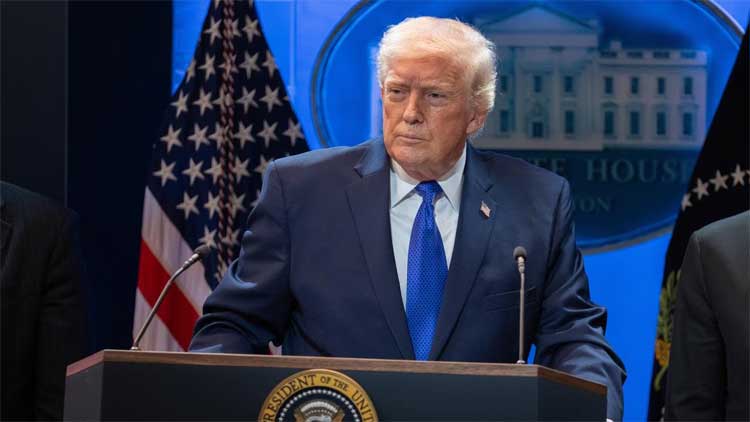
US President Donald Trump’s new tariffs on imports from 60 trading partners have triggered sharp criticism from several countries, with Australia calling the move illogical, Brazil threatening retaliation and legal action, and Mexico downplaying the impact on its exports.
The new tariffs, ranging from 10% to 12.5%, target countries the US says have failed to adequately enforce bans on goods produced with forced labour. The measures replace temporary worldwide tariffs that expired on Friday and mark the latest step in Trump’s push to reshape US trade policy.
Australia rejects tariff rationale
Australia criticised the decision, which raises the effective tariff on its exports to the US from 10% to 12.5%.
“This really, in our view, makes no sense,” Defence Minister Richard Marles said, rejecting Washington’s claim that Australia had failed to enforce restrictions on forced-labour imports.
Brazil calls tariffs ‘arbitrary’
Brazil strongly condemned the move, accusing the US of using human rights concerns as a pretext for protectionist trade policies.
Calling the tariffs “arbitrary and unjustified,” Brasilia said it would activate retaliatory measures under its Reciprocity Law and challenge the decision at the World Trade Organization (WTO).
The latest measure comes just a week after Washington imposed a separate 25% tariff on several Brazilian goods. President Luiz Inacio Lula da Silva has said Brazil remains open to negotiations but is prepared to diversify export markets if needed.
Mexico sees limited impact
Mexico said the practical effect of the tariffs would be minimal because most of its exports remain protected under the United States-Mexico-Canada Agreement (USMCA).
Economy Minister Marcelo Ebrard said around 85% of Mexican exports would continue entering the US tariff-free, while the new tariffs would largely replace existing duties on another 10% of exports.
Canada braces for separate tariff threat
Canada is separately negotiating with Washington over Trump’s proposal to impose 50% tariffs on Canadian goods from August 19.
Prime Minister Mark Carney said Ottawa is prepared to respond if the tariffs take effect but stressed that negotiations remain the priority.
Trump’s tariff strategy
The new tariffs follow a Supreme Court ruling that struck down Trump’s earlier global tariff programme under emergency powers. The administration has instead invoked provisions of the Trade Act of 1974, arguing the targeted countries have failed to curb imports linked to forced labour.
Washington says the tariffs are intended to strengthen enforcement against forced labour in global supply chains. However, critics argue the policy lacks a sound legal basis and risks disrupting global trade while increasing costs for American consumers.
The administration has also launched investigations into imports from 16 countries, claiming excessive production and unfair pricing practices have harmed US manufacturers.
While some countries, including India, secured lower tariff rates after tightening forced-labour enforcement, the policy has drawn criticism from lawmakers and human rights advocates, who argue that combating forced labour requires stronger enforcement and international cooperation rather than tariffs alone.
With US importers expected to bear the added costs, analysts warn the tariffs could also fuel higher prices for consumers ahead of the November midterm elections.
Comments are closed.