
Why the Samajwadi Party is reluctant to give Congress a large share of UP Assembly seats

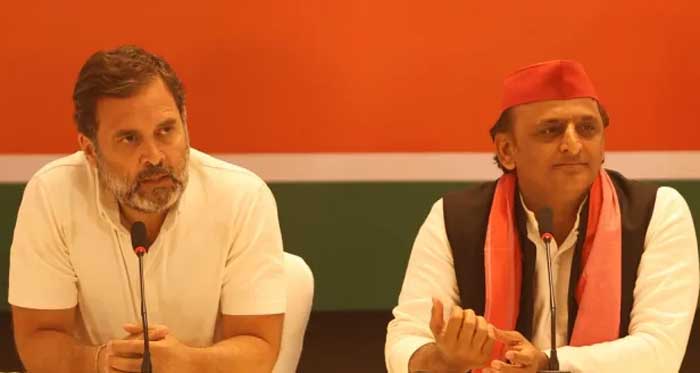
The seat-sharing tussle between the Samajwadi Party (SP) and the Congress ahead of the Uttar Pradesh Assembly elections has intensified, with both parties sticking to their respective demands.
The SP has asked the Congress to provide names of “winnable candidates”, while the Congress has refused and instead submitted a list of 180 Assembly constituencies it wants to contest. SP sources said the party was unhappy with Congress leaders making what they described as “unnecessary statements” in the media about its seat demands. The SP is particularly displeased with AICC in-charge Rajendra Pal Gautam’s suggestion that the Congress should get around 200 seats in the 403-member Assembly.
A senior Congress source said SP MP Rajeev Rai had asked Congress general secretary and Wayanad MP Priyanka Gandhi Vadra, during a high tea at Rahul Gandhi’s residence on October 13, to share the party’s preferred constituencies. Vadra reportedly told Rai that the list would be shared soon.
Vadra subsequently met state Congress leaders at her residence on October 19 to discuss the issue. Those present included UP Congress president Aradhana Misra, working president Imran Masood and Gautam.
According to sources, Vadra urged the leaders to focus on the “quality of seats” rather than the total number they sought. She also reportedly advised them to keep negotiations open with the SP rather than treating their demands as final.
“She told the leaders that we should convey to the SP that we are willing to sit at the negotiation table and not make it full and final. We have sent a list of 180 seats we want to contest. This is how a negotiation starts,” a source said.
Another Congress source indicated that the party could eventually settle for around 80-90 seats.
Congress insiders said the party had divided constituencies into four categories — A, B, C and D — based on its internal assessment of electoral prospects and organisational strength. “We are fighting in the state to defeat the BJP. We have strong candidates,” Gautam told The Indian Express.
Why the Congress is miffed
The SP has adopted a wait-and-watch approach, insisting that the Congress first identify candidates capable of winning. A senior SP leader argued that allocating seats to the Congress without clarity on its candidates could weaken the alliance, pointing to the party’s performance in the 2022 Assembly elections.
The Congress contested the 2022 polls independently, allocating 40% of its seats to women candidates. It won just two constituencies and secured 2.33% of the vote. The party also struggled to field candidates across all constituencies, prompting the SP leadership to seek assurances that the same situation would not recur.
The SP, by contrast, won 111 seats with a 36% vote share in 2022. It contested in alliance with several smaller parties, including Om Prakash Rajbhar’s Suheldev Bharatiya Samaj Party, Jayant Chaudhary’s Rashtriya Lok Dal — both of which are now aligned with the BJP-led NDA — and Pallavi Patel’s Apna Dal (Kamerawadi).
“We are willing to give the Congress seats which it can win. But they should share the details of the candidates who can win in UP. The Congress organisation in the state is weak and that will reflect in the results too if they do what they did in 2022,” an SP leader said.
The Congress, however, has rejected the demand for a list of potential candidates. “Why should we give them a list of who will contest from where? No party does this anywhere. This is an unreasonable demand from the SP,” a Congress MP said.
Dispute over constituencies held by SP MLAs
Another potential flashpoint is the inclusion of around a dozen constituencies currently represented by SP MLAs in the Congress’s list of 180 seats.
A Congress leader said the party believed it had a stronger chance of winning some of these constituencies, despite the SP having won them in 2022. SP leaders, however, indicated that relinquishing such seats would be extremely difficult.
SP sources said party president Akhilesh Yadav favoured allocating fewer than 100 seats to the Congress, with one leader suggesting a range of 50-80 constituencies.
“We can give them something between 50-80 seats. That is what our leader (Akhilesh) had also told us,” the leader said.
Despite the differences, senior leaders in both parties remain confident that the alliance will hold. Akhilesh Yadav and Leader of the Opposition Rahul Gandhi have reportedly impressed upon their respective party leaders the need to ensure that the seat-sharing dispute does not jeopardise their partnership.
Comments are closed, but trackbacks and pingbacks are open.