
Triple COP’ year offers major opportunity for businesses to drive climate, nature action: UNFCCC

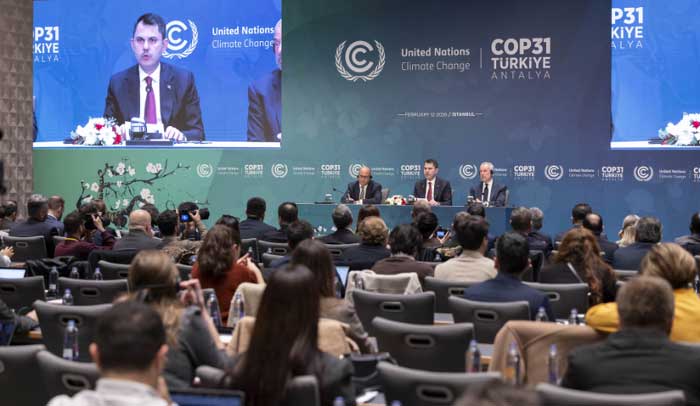
For the first time since 2024, the three Rio Conventions will hold their COP meetings in the same year in 2026, creating a major opportunity for businesses to invest in global efforts to tackle climate change, biodiversity loss and land degradation, the UN Framework Convention on Climate Change (UNFCCC) has said.
The UN Convention to Combat Desertification’s COP17 is currently underway in Mongolia and will conclude on August 28. It will be followed by the Convention on Biological Diversity’s COP17 in Armenia in October and the UNFCCC’s COP31 in Türkiye in November.
In a joint article published on the UNFCCC website, Yasmine Fouad, executive secretary of the UNCCD, Astrid Schomaker, executive secretary of the CBD, and Simon Stiell, executive secretary of the UNFCCC, highlighted the potential of the three summits to strengthen cooperation between governments and the private sector.
Opportunity to align climate, nature and land action
The officials described the simultaneous COP cycle as an opportunity to “harness the synergies” between the three interconnected environmental agendas.
Each summit will also feature a dedicated business forum: the UNCCD COP17 Business4Land Forum on August 24, the CBD COP17 Business Forum on October 25 and the UNFCCC COP31 Business & Investment Summit on November 12-13.
These forums are expected to focus on improving coordination with the private sector, particularly around policy signals, investment opportunities and market incentives.
Environmental crises pose growing economic risks
The UN officials highlighted the enormous economic costs associated with environmental degradation. Land degradation, desertification and drought are estimated to cost the global economy around $878 billion annually, while climate-related disasters have caused about $3.6 trillion in damage this century.
They also warned that pollinator losses put around $577 billion in annual crop production at risk. Up to half of the world’s rangelands are degraded, threatening a significant share of global food production as well as a major carbon reservoir.
The potential impact of a strong El Niño could add further pressure to economies and ecosystems.
Green economy offers investment opportunities
The authors argued that the growing green economy can help businesses respond to these challenges. The sector is currently valued at around $5 trillion annually and could reach $7 trillion by 2030, with green revenues growing at roughly twice the pace of conventional revenues.
However, investment in activities that harm nature continues to vastly outweigh spending on nature-positive solutions.
“In 2023, the private sector was directing $4.9 trillion toward nature-negative activity, but only $23 billion toward nature-based solutions,” the officials said.
They argued that the three COP meetings taking place in the same year provide a crucial opportunity to redirect capital towards climate action, biodiversity protection and sustainable land management.
Comments are closed, but trackbacks and pingbacks are open.