
Threatened By Climate Change, World Leaders Demand UN To Work

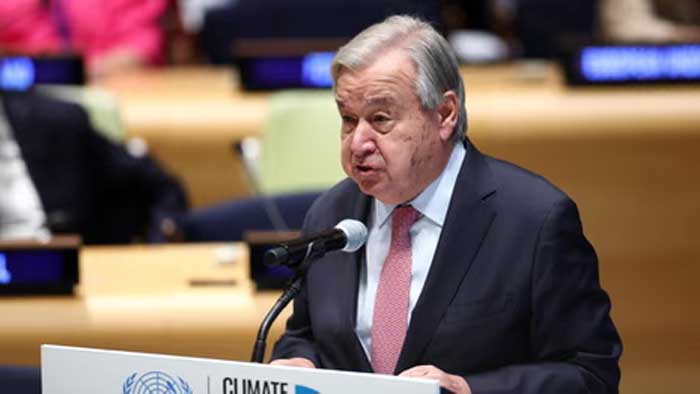
World leaders at the 81st session of the United Nations General Assembly have called for stronger international cooperation to tackle challenges such as climate change, while questioning whether the UN is equipped to respond effectively to the crises facing the world.
The debate, which concluded on September 28, brought together more than 150 speeches and highlighted growing concerns over climate change, rising sea levels, geopolitical tensions and the need to reform global institutions.
Climate Change Adds Urgency
For island nations, climate change has become an existential concern as rising sea levels and warming oceans threaten communities and livelihoods. Several leaders argued that countries most vulnerable to climate change need a stronger voice in global decision-making.
At a UN climate summit on September 23, leaders called for faster deployment of existing climate solutions, a shift towards clean energy, greater access to climate finance and stronger resilience against climate impacts.
A separate high-level UN meeting on September 24 focused specifically on the threats posed by rising sea levels, with countries discussing international cooperation and practical measures to protect vulnerable coastal and island communities.
‘Where Are The United Nations?’
The concerns over the UN’s effectiveness were particularly sharp during the General Assembly. El Salvador Foreign Minister Alexandra Hill Tinoco questioned whether the organisation remains relevant, while Samoa’s Deputy Prime Minister Mulipola Anarosa Ale-Molioʻo said multilateralism was “under siege,” according to an Associated Press report published by NDTV.
Sri Lankan Foreign Minister Vijitha Herath also stressed that some global problems cannot be solved by individual countries acting alone.
The UN has identified climate change, alongside issues including conflict, inequality and artificial intelligence, as one of the major challenges requiring international cooperation. Secretary-General António Guterres has urged countries to strengthen cooperation despite growing geopolitical divisions.
Island Nations Seek Greater Representation
Climate-vulnerable island countries also renewed calls for greater representation in the UN Security Council. The council has 15 members, including five permanent members — the United States, Russia, China, France and the United Kingdom — that possess veto power.
Solomon Islands Prime Minister Matthew Wale described the veto as a “relic” and argued that countries facing climate threats should have a stronger role in decisions affecting their future.
Bahamas Prime Minister Philip Edward Davis similarly argued that small nations should be able to exercise their sovereignty without having to seek permission from more powerful states.
Africa Also Pushes For UN Reform
African leaders used the General Assembly to renew demands for permanent representation on the Security Council. The Republic of Congo’s Foreign Minister Constant-Serge Bounda said Africa should have a greater role in decisions affecting the continent.
African countries currently have three rotating seats on the 15-member Security Council but no permanent seat.
‘Stop Talking. Start Doing’
The discussions reflected a wider frustration among several countries that international institutions need to translate commitments into concrete action.
The UN’s 2026 climate discussions have focused on accelerating the clean-energy transition, expanding climate finance, strengthening resilience and protecting people and livelihoods from climate impacts.
With climate change increasingly affecting vulnerable countries, many leaders are calling for a UN system that can turn international cooperation into faster and more effective action.
Comments are closed, but trackbacks and pingbacks are open.