
Sunil Gavaskar Slams India A Scheduling Clash With Ranji Trophy, Warns Against Diluting Domestic Cricket

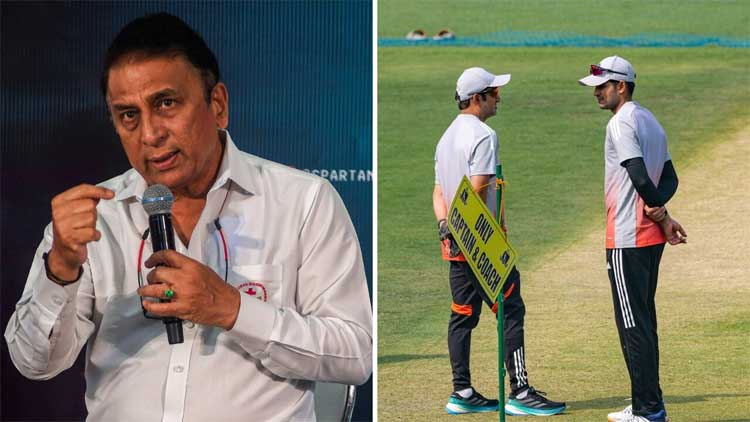
Former India captain Sunil Gavaskar has criticised the scheduling of India A matches alongside domestic tournaments, particularly the Ranji Trophy, arguing that the overlap deprives state teams of key players and affects the quality of competition.
The latest edition of the premier red-ball tournament began on Sunday, with several top players in action. However, the opening day coincided with the third and final one-day match between India A and Australia A, leaving Rajat Patidar, Devdutt Padikkal and Ruturaj Gaikwad unavailable for their respective state teams — Madhya Pradesh, Karnataka and Maharashtra.
Later this month, India A will travel to New Zealand for three unofficial Tests, meaning some players will again miss matches for their state sides.
Addressing the scheduling issue, Gavaskar urged organisers to be mindful of the domestic calendar and ensure that the Ranji Trophy does not suffer because of overlapping fixtures.
The 1983 World Cup winner also questioned whether records set in the Plate Group should be viewed on the same footing as those achieved in the Elite divisions, arguing that the inclusion of teams from all states and Union Territories had lowered the overall standard of the competition.
Also Read: Ranji Trophy First Round Day 2 Live Updates
Gavaskar Questions Ranji Trophy Performances
In his column for Mid-Day, Gavaskar acknowledged that the standard among Elite teams had become more competitive, with sides that were previously less successful now going on to win the Ranji Trophy.
“The standard in the Elite division has levelled to a great extent as can be seen by teams who were not very competitive earlier, now going on to win the Ranji Trophy. That’s most encouraging though with the India international players hardly playing in the domestic competitions, it’s difficult to know how good some of the individual players are,” Gavaskar wrote.
He added that several leading run-scorers and wicket-takers in the Ranji Trophy had struggled to make an impact after earning opportunities with the senior India team.
“This is noticeable when some of the leading run makers and wicket takers in the Ranji Trophy are picked to play for India. They struggle to find their feet, and some fade away quickly, while some still stay on the fringes but are not quite able to crack it,” he added.
‘A’ Team Matches Should Not Overlap With Ranji Trophy
Gavaskar argued that when leading players are absent from domestic competitions, the reduced level of competition can allow some batters and bowlers to accumulate extraordinary numbers without necessarily demonstrating their ability to succeed at the international level.
“There really is no easy solution, and the ‘A’ team matches certainly help in telling who is more likely to succeed internationally and who will remain a top Ranji performer. There’s a case for more A team matches, but not when the domestic competitions, especially the Ranji Trophy, are on. For then it won’t be a surprise with weakened competition, a batter may reach 2000 runs and a bowler 100 wickets in a Ranji season,” Gavaskar wrote.
He maintained that India A fixtures serve an important purpose in assessing players’ readiness for international cricket, but said they should be scheduled outside the main domestic competition whenever possible.
‘Standard Got Lowered’
Gavaskar also took issue with records being set in the Ranji Trophy Plate Group, arguing that the inclusion of all states and Union Territories following recommendations by the Lodha panel had affected the tournament’s overall standard.
The current Ranji Trophy season features five groups — A, B, C, D and Plate. Each of the four Elite groups comprises eight teams, while the Plate Group has six. The top two Plate teams qualify for the Plate Final, with the winner earning promotion to the Elite Group for the following season.
Highlighting the disparity between the two tiers, Gavaskar said several newly formed state teams lacked adequate infrastructure and recruited players who had been unable to secure places in their home-state squads.
“Even in the Ranji Trophy, in the Plate Division, there are records being broken and new marks set at both batting and bowling. When the Lodha panel recommended that all states and Union Territories should be included in the Ranji Trophy, it just meant that the standard got lowered,” he wrote.
“Most of the new state teams did not even have proper infrastructure and so hired players from other states who couldn’t find a place in their home state teams. These players were good but unable to break through into their home state teams, and so went to the state teams in the Plate Division. When most, if not all, played against teams from the Elite division, they were found wanting, and it just exposed the yawning gap in the standard between the divisions. Yet the records set are still called records because they are playing in the Ranji Trophy,” he added.
Comments are closed, but trackbacks and pingbacks are open.