
Six years after court-mandated deadlines, Delhi’s building safety audit drive remains largely incomplete

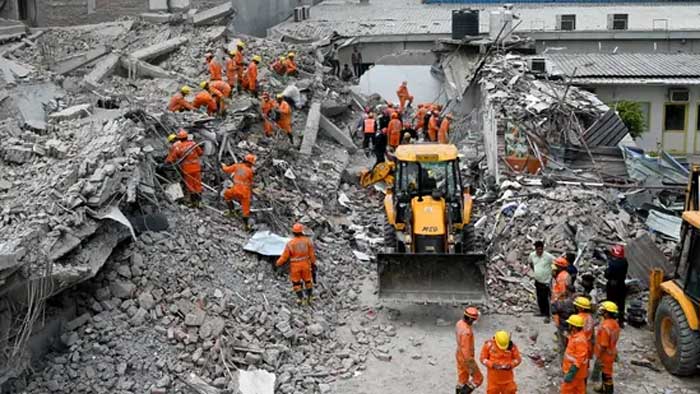
The collapse of a building in Delhi’s Saidulajab area that claimed six lives on Saturday has once again highlighted the capital’s persistent failure to ensure structural safety, despite years of court scrutiny, repeated warnings and official promises to audit vulnerable buildings.
The tragedy has renewed focus on the large number of ageing and potentially unsafe structures across Delhi, many of which have never undergone mandatory structural assessments.
The issue has repeatedly come before the Delhi High Court, which has closely monitored the city’s preparedness for earthquakes and the safety of old buildings. Located in Seismic Zone IV, Delhi is considered vulnerable to major earthquakes, prompting the court to repeatedly stress the need for structural audits and retrofitting of high-risk buildings.
However, progress has remained limited.
In June 2020, acting on court directions, the three erstwhile municipal corporations set a six-month deadline for owners of high-risk buildings and structures constructed before seismic safety norms were incorporated into Delhi’s building by-laws to obtain structural safety certificates. Nearly six years later, compliance remains far from satisfactory.
The High Court had warned at the time that “mere paperwork and consultations” would not address the looming threat posed by unsafe buildings and stressed that only concrete action on the ground could protect residents from a potential disaster.
Arpit Bhargava, the petitioner in the case, said authorities have repeatedly assured the court of action but have failed to deliver meaningful results.
“Accountability must be fixed to prevent these avoidable deaths. The administration does not appear serious. They do not even have enough empanelled structural engineers. A five-year action plan was promised in 2019, followed by a six-month compliance deadline in 2020, but very little has changed,” he said.
According to the latest status report submitted to the court, the Municipal Corporation of Delhi (MCD) identified 4,762 old and high-risk structures across the city. While notices were issued in 4,571 cases, structural audit reports were received for only 1,155 buildings. Demolition action was taken in just 56 cases, while retrofitting was completed in only 47 structures.
The figures underscore the significant gap between identifying unsafe buildings and actually making them secure.
An MCD official associated with the court-monitored exercise said the challenge is particularly severe in unauthorised colonies and older neighbourhoods, where compliance levels remain low.
“In many cases, residents do not respond to notices. Stronger measures such as disconnecting utilities often face public resistance. The scale of unauthorised and non-compliant construction is enormous, especially in unauthorised colonies and parts of Old Delhi,” the official said.
The official added that authorities may need to prioritise buildings with high public occupancy, including schools, government offices, hospitals and high-rise structures, under safety and retrofitting programmes.
Bhargava, however, said agencies have repeatedly sought more time without achieving substantial progress.
“In 2023, authorities informed the court that a policy decision would be taken, but nothing followed. Schools and hospitals were supposed to undergo audits within three months, yet there was no meaningful follow-up,” he said.
Another senior MCD official noted that the court-monitored exercise primarily covers legally constructed buildings, while the larger challenge remains unauthorised structures spread across the city.
“The task of ensuring safety in illegal buildings is far more complex. At present, we focus on identifying visibly dangerous or unstable structures. Achieving comprehensive seismic compliance and retrofitting across Delhi is a much larger undertaking,” the official said.
The scale of the problem is reflected in Delhi’s vast built environment. The city is estimated to have more than five million buildings, many of which were developed without adherence to planning and construction norms. A 2006 committee headed by former Delhi Lieutenant Governor Tejendra Khanna had estimated that between 70% and 80% of structures in the capital violated building regulations.
Comments are closed.