
Russia-India train route: Could passenger travel become a reality?

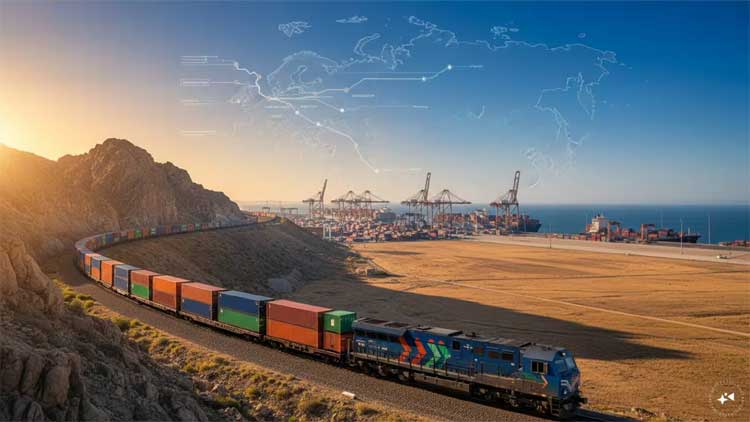
The idea of travelling from Russia to India by train has captured the imagination of travellers, with a proposed rail corridor between the two countries generating considerable interest. But one important question remains: Will passengers actually be able to travel on this route?
For now, the answer is no. The proposed connectivity is primarily focused on freight and trade, although passenger travel could potentially become a possibility in the future.
What is the proposed Russia-India rail corridor?
Russian authorities have discussed expanding rail connectivity with India as part of broader efforts to strengthen trade routes and reduce dependence on traditional maritime transport.
The proposal is linked to the International North-South Transport Corridor (INSTC), a multimodal network designed to connect Russia with India through Central Asia and Iran.
A potential route could involve trains travelling from Moscow through Kazakhstan and Turkmenistan before entering Iran through existing railway networks. Cargo could then move towards ports such as Bandar Abbas before being transported to India by sea or through future rail expansion.
At present, therefore, the corridor is not a single continuous railway journey between Russia and India. It is primarily a multimodal freight network involving rail, road and sea transport.
Is passenger travel planned?
There is currently no confirmed announcement for a direct passenger train service connecting Russia and India through this corridor.
The focus remains on freight, logistics and strategic connectivity, with the aim of making the movement of goods between Russia, Central Asia, West Asia and India faster and more efficient.
There are also no confirmed passenger ticketing systems, schedules or tourism-oriented services for a direct Russia-India train.
Why can’t travellers use the route yet?
Converting a major freight corridor into a passenger-friendly international railway would involve several challenges.
These include:
- Visa and immigration requirements across multiple countries
- Different railway gauges and infrastructure
- Border and security considerations
- Geopolitical complications
- Lack of integrated passenger schedules and facilities
- Coordination between multiple national railway systems
Even freight movement requires extensive coordination between the countries involved, making a seamless passenger journey considerably more complicated.
Can you travel parts of the route today?
Some sections of the proposed corridor can technically be travelled using a combination of trains and other forms of transport.
However, such a journey would require separate tickets, multiple border crossings and extensive planning. There is currently no single ticket or direct train connecting India and Russia.
For most travellers, attempting the entire journey today would therefore be complicated and impractical.
Could a Russia-India passenger train become a reality?
Passenger services could potentially be considered if the corridor becomes fully operational, commercially viable and geopolitically stable.
Such a service could eventually offer travellers a unique transcontinental journey across Eurasia, connecting Russia with Central Asian destinations and historic Silk Road cities before reaching India.
It could also provide a slower and more immersive alternative to air travel, allowing passengers to experience multiple countries and cultures along the way.
However, this remains a long-term possibility rather than a confirmed passenger rail project.
Why the idea is attracting travellers
The prospect of travelling by train from Russia to India appeals to the growing interest in long-distance rail journeys.
The Trans-Siberian Railway has already demonstrated the appeal of travelling across vast distances by train, offering passengers an opportunity to experience changing landscapes, cultures and cities along the way.
A future Russia-India rail connection could take that concept even further, linking two countries with longstanding historical, economic and cultural ties.
For now, however, travellers should view the proposed Russia-India train route as a trade and connectivity initiative rather than a ready-to-book passenger service.
Comments are closed, but trackbacks and pingbacks are open.