
Rubio Defends Trump’s Iran War Despite Republican Election Losses

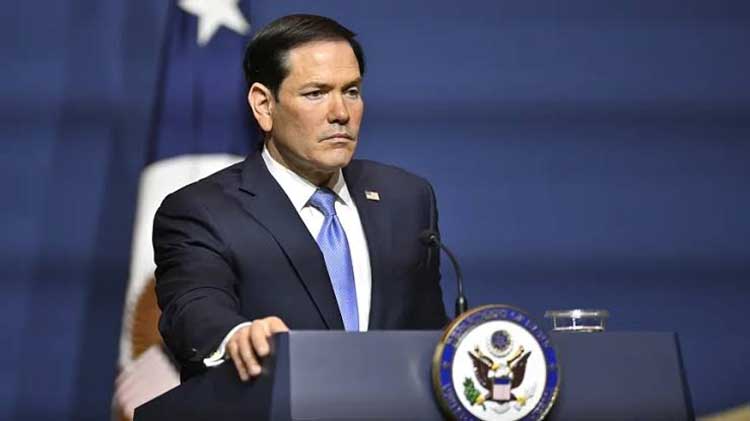
US Secretary of State Marco Rubio said Sunday that President Donald Trump launched the war against Iran to protect global security from the country’s nuclear ambitions, despite the conflict’s unpopularity among American voters.
Rubio declined to directly address the Republican Party’s significant losses in Tuesday’s elections, which handed Democrats control of Congress. The outcome reflected voter dissatisfaction with Trump’s policies, particularly the Iran war and its impact on fuel prices and the broader economy.
Responding to Vice President JD Vance’s social media post blaming the war for Republican losses, Rubio defended Trump’s decision, saying the president had identified a serious threat and acted to prevent Iran from developing nuclear weapons.
He argued that confronting major national security challenges is sometimes necessary even when such decisions are politically unpopular. Rubio made the remarks in Florida before departing for a Group of Seven foreign ministers’ meeting in Paris.
The war, now more than eight months old, has disrupted shipping through the Strait of Hormuz, a vital global oil transit route that previously carried around one-fifth of the world’s oil. The disruption has contributed to higher energy prices and increased economic pressure on American households.
Rubio’s remarks also highlighted differences between him and Vance, amid speculation about their potential presidential ambitions in 2028. Trump supported Vance’s position but said the vice president should also have emphasized that launching the war was the right decision.
Trump maintained that the military operation would be remembered as one of the most consequential decisions in US history, arguing that a nuclear-armed Iran would pose a threat to the world.
Iran has consistently maintained that its nuclear programme is peaceful. However, the International Atomic Energy Agency has reported that Tehran possesses 440.9 kilograms of uranium enriched to 60 per cent purity, a level relatively close to the 90 per cent generally associated with weapons-grade uranium.
Meanwhile, diplomatic efforts to end the conflict remain uncertain, with mediators attempting to revive negotiations between Washington and Tehran.
Rubio said he did not believe the two sides were close to a breakthrough. He reiterated that Trump preferred a diplomatic settlement but described Iran’s negotiating demands as unacceptable and unrealistic.
Trump is scheduled to meet Qatari Prime Minister Sheikh Mohammed bin Abdulrahman Al Thani at the White House on Monday. Qatar has been working to bridge differences between the United States and Iran over Tehran’s nuclear programme.
According to reports by The Associated Press, Iran is reviewing proposals presented by Qatar. However, Tehran has reportedly insisted on several conditions before entering negotiations, including an end to the US blockade of Iranian ports, the lifting of sanctions, the release of frozen assets, compensation for war-related damage and a region-wide cessation of hostilities, including Israeli military operations in Lebanon.
Despite the absence of a confirmed diplomatic breakthrough, Trump told CNN that renewed military strikes were highly unlikely if negotiations continued to make progress and resulted in a strong agreement.
However, he warned that the United States had identified potential military targets, including 38 bridges, should hostilities resume.
The US military has continued limited operations against Iranian targets, including air defence systems, carrying out at least two strikes over the preceding week. It also fired on and disabled a commercial vessel on Saturday, alleging that the ship had attempted to breach the naval blockade on Iranian ports.
Rubio defended the continued US military presence in the region, saying Washington reserved the right to take defensive action if American forces or commercial shipping faced an immediate threat.
He stressed that the United States would respond if there were a clear and present danger to its forces or maritime operations in the region.
Comments are closed, but trackbacks and pingbacks are open.