
Rising seas: How climate change is putting homes, livelihoods and entire nations at risk

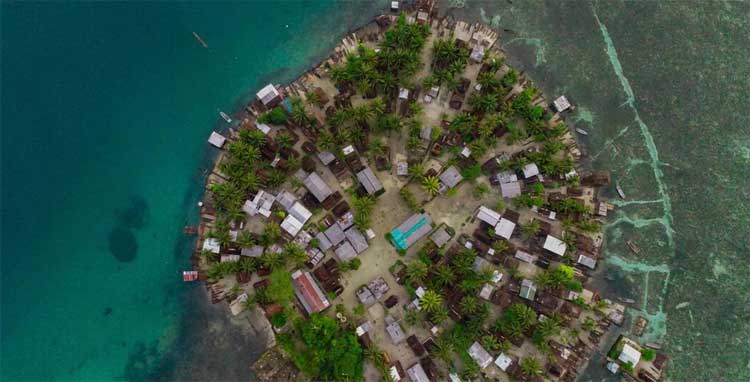
The world’s oceans are rising faster than at any point in recorded history, and the consequences are already being felt. Coastal communities are facing more frequent flooding, the loss of farmland and homes, and growing threats to livelihoods.
Sea-level rise is no longer just an environmental issue. It has major implications for human rights, economic development, public health, cultural heritage and the future of vulnerable countries.
From developed economies to some of the world’s poorest nations, communities are being forced to adapt to a changing coastline. How quickly governments act today could determine whether rising seas remain a manageable challenge or become a generational crisis.
What is sea-level rise?
Simply put, global sea levels are rising largely because of human-driven climate change.
Between 2014 and 2023, the global average sea level rose by about 4.7 millimetres a year. In 2024, the rate jumped to a record 5.9 millimetres.
Even under an optimistic emissions scenario, global sea levels could rise by up to 0.55 metres by 2100. Under high-emissions scenarios, the increase could exceed one metre, while a smaller but potentially high-impact possibility of nearly two metres cannot be ruled out.
What is causing oceans to rise?
Two major processes are driving sea-level rise:
Melting glaciers and ice sheets: As temperatures increase, glaciers and major ice sheets lose mass, adding more water to the oceans.
Thermal expansion: Warmer seawater expands and takes up more space, contributing significantly to rising sea levels.
The oceans absorb around 91% of the excess heat trapped by human-induced greenhouse gas emissions. As the planet warms, some further sea-level rise is therefore already locked in.
The human cost
Around 770 million people — roughly one in 10 people globally — live less than five metres above the high-tide line, putting them particularly close to the growing threat.
In vulnerable coastal regions:
- Freshwater wells and agricultural land are becoming increasingly salty.
- Flooding is damaging hospitals, schools and sanitation systems.
- Contaminated water can increase exposure to waterborne diseases.
- Fisheries and tourism, vital sources of income for many coastal communities, are being disrupted.
- Repeated disasters can cause significant psychological stress.
Some projections suggest that as many as 1.2 billion people could be displaced globally by 2050 as communities search not only for safer places to live but also for opportunities to rebuild their livelihoods.
New research also suggests that sea-level risks may have been underestimated in some regions, potentially leaving tens of millions more people vulnerable than previously believed.
The damage extends beyond homes and infrastructure. Ancestral lands, cultural heritage and traditional ways of life are also at risk of disappearing, creating profound psychological and social consequences.
The economic price
The financial costs of rising seas are already substantial.
Coastal infrastructure damage has exceeded $1.8 trillion, while annual global losses could reach $1.4 trillion without adequate adaptation.
Small Island Developing States suffered around $153 billion in losses from climate-related hazards between 1970 and 2020.
In the United States, home insurance premiums in disaster-prone areas increased by 33% between 2020 and 2023, reflecting the growing financial risks associated with climate-related disasters.
Global trade is also vulnerable. Ports handling more than 80% of international trade face increasing exposure to flooding and rising seas, threatening supply chains and economic activity around the world.
Which places face the greatest risk?
Some of the countries and communities most exposed to rising seas are also among those that have contributed the least to the greenhouse gas emissions driving climate change. Many have fewer financial and technical resources to adapt.
Small island nations
Several Pacific island countries face relative sea-level rise at more than twice the global average and are particularly vulnerable to increasingly frequent coastal flooding.
Low-lying delta cities
Cities including Dhaka, Mumbai and Kolkata face major risks because of their large populations, low-lying geography and dependence on vulnerable coastal infrastructure. More than 14 million people in these cities could face serious impacts.
Coastal megacities
Major economic centres such as Miami, New York and Guangzhou could face losses running into trillions of dollars if rising seas and flooding damage homes, transport networks and other critical infrastructure.
Can sea-level rise be stopped?
Not completely. Some amount of future sea-level rise is already unavoidable because of warming that has already occurred.
However, the scale and speed of future rises depend heavily on how quickly the world cuts greenhouse gas emissions.
One of the biggest concerns is Antarctica’s Thwaites Glacier, which covers roughly 190,000 square kilometres. Its potential collapse could contribute to a substantial and potentially irreversible rise in global sea levels over the longer term, making it a major focus of climate research.
Adapting to rising seas
Reducing dependence on fossil fuels and cutting greenhouse gas emissions remains the most important long-term step for slowing global warming and limiting further sea-level rise.
But adaptation cannot wait.
Governments and communities can take several measures, including:
- Early-warning systems to give communities time to evacuate before extreme flooding.
- Coastal defences, including seawalls, mangroves and restored dunes.
- Managed retreat from areas where continued habitation is becoming unsafe.
- Better monitoring and data, particularly in regions that still lack reliable information about changing sea levels and coastal conditions.
- Legal protections addressing questions around statehood, borders and maritime zones if territories become partially or completely submerged.
- Greater international financing to help vulnerable developing countries adapt.
Developing countries are estimated to need around $310-365 billion annually for climate adaptation, but global adaptation finance was only about $26 billion in 2023 — leaving a substantial funding gap.
The bottom line
Rising seas may appear to be an unstoppable consequence of climate change, but the scale of the damage — and who bears the greatest burden — is still largely shaped by decisions being made today.
Cutting emissions can limit how far sea levels rise, while investment in adaptation can protect communities from impacts that can no longer be avoided.
Closing the adaptation-finance gap, protecting the rights and statehood of vulnerable nations and treating sea-level rise as a permanent global priority will be crucial to safeguarding homes, livelihoods, cultures and identities for generations to come.
Comments are closed, but trackbacks and pingbacks are open.