
Nepal floods expose growing climate threat to Hindu Kush Himalayas, warns UN climate chief

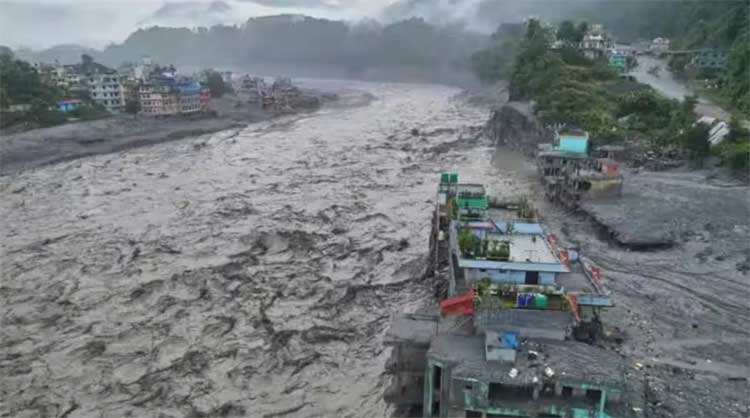
The devastating glacial collapse and flash floods in Nepal have exposed the growing vulnerability of the Hindu Kush Himalayas to climate change, UN climate chief Simon Stiell has warned.
The disaster near the Nepal-China border, which unleashed a massive torrent of water, mud and debris downstream, has killed hundreds of people and left thousands missing. The scale of the destruction has renewed concerns over the impact of a rapidly warming Himalayan region.
Stiell, executive secretary of the United Nations Framework Convention on Climate Change (UNFCCC), said the disaster was a devastating reminder of how fragile mountain environments can be, particularly across the Hindu Kush Himalayas.
“Scientists and local communities have been warning for years” about the risks facing the region, Stiell said, adding that a warming climate is making extreme disasters more likely, frequent and severe, with vulnerable communities often bearing the greatest burden.
Climate change intensifies Himalayan risks
The Hindu Kush Himalayas are experiencing rapid changes as rising temperatures accelerate glacier retreat, reduce snow cover and contribute to the thawing of permafrost. These changes can destabilise mountain slopes and increase the risk of ice-rock avalanches, landslides, flash floods and other cascading disasters.
The latest disaster has highlighted how quickly such events can overwhelm communities and infrastructure in remote Himalayan valleys. Experts say the region’s complex terrain and rapidly changing conditions also make monitoring and early-warning systems particularly challenging.
Recent assessments have warned that the Himalayan cryosphere is undergoing significant changes. The International Centre for Integrated Mountain Development (ICIMOD) reported earlier this year that snow cover across the Hindu Kush Himalaya had fallen sharply below its long-term average, underscoring the region’s growing vulnerability.
UN calls for faster climate action
Stiell said the disaster should serve as a warning that climate action and resilience-building can no longer be delayed.
He called for a faster global shift away from fossil fuels towards renewable energy, along with greater investment in climate resilience and measures to protect communities facing increasingly severe climate-related hazards.
The Nepal disaster has also raised questions about the safety of infrastructure in fragile Himalayan valleys. The floods damaged roads, bridges and hydropower facilities, with the destruction knocking out a significant portion of Nepal’s electricity-generation capacity.
For countries across the Hindu Kush Himalayas, the disaster has therefore become more than a humanitarian emergency. It is a stark reminder that a warming climate is altering one of the world’s most fragile mountain ecosystems — and that stronger early-warning systems, climate-resilient infrastructure and regional cooperation will be crucial to protecting millions of people who depend on the Himalayas.
Comments are closed, but trackbacks and pingbacks are open.