
Monsoon Session: Modi govt’s Constitutional amendment push explained — the math, politics and fears

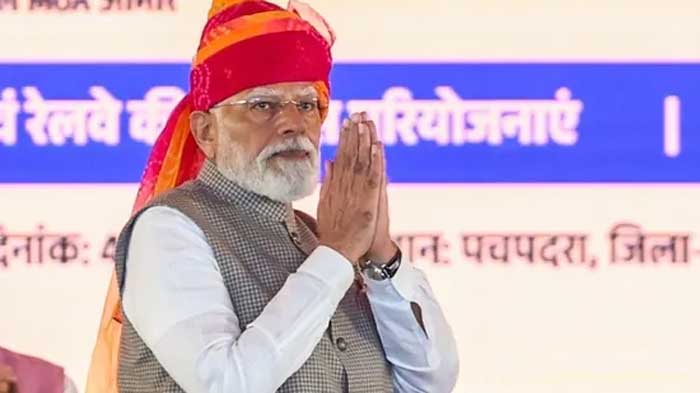
The Narendra Modi government heads into Parliament’s Monsoon Session, beginning July 20, with improved numbers in both Houses following a series of Opposition defections. The strengthened position has fuelled speculation that the BJP-led National Democratic Alliance (NDA) could revive key constitutional amendment bills that previously lacked the numbers to pass.
Among the measures expected to feature prominently are the proposed 130th Constitutional Amendment Bill, which seeks to disqualify the Prime Minister, chief ministers and ministers if they remain in judicial custody for more than 30 days, and the 131st Constitutional Amendment Bill, which aims to operationalise women’s reservation through delimitation. The government’s broader One Nation, One Election (ONOE) proposal also remains under parliamentary scrutiny.
The Congress has accused the BJP of trying to improve its constitutional arithmetic through defections in order to amend the Constitution.
“They’re splitting parties. But they’re not going to get a two-thirds majority,” Congress general secretary Jairam Ramesh said on Saturday. Recalling the BJP’s “Ab ki Baar, 400 Paar” slogan during the 2024 Lok Sabha elections, he alleged the party’s “real motive” was to secure enough seats to amend the Constitution.
Why constitutional amendments remain difficult
Unlike ordinary legislation, constitutional amendments must satisfy the higher threshold laid down under Article 368.
With the Lok Sabha’s effective strength currently at 540, a constitutional amendment requires not only a simple majority but also the support of at least two-thirds of members present and voting. If all 540 members participate, the government would need 360 affirmative votes. Even with lower attendance, the threshold remains steep.
Although the NDA’s strength has crossed the 300-mark following recent defections and support from allies, it remains short of a guaranteed two-thirds majority. The Rajya Sabha presents an even bigger challenge, making support—or abstentions—from regional parties potentially crucial.
First test: 130th Amendment Bill
One of the government’s key legislative priorities is expected to be the proposed 130th Constitutional Amendment Bill, which would require the Prime Minister, Union ministers, chief ministers and state ministers to vacate office if they remain in judicial custody for more than 30 consecutive days in cases carrying a minimum punishment of five years.
The proposal was referred to a Joint Parliamentary Committee (JPC) last year. According to PTI, citing official sources, the committee is expected to adopt its report around July 17, paving the way for the bill’s introduction during the Monsoon Session.
Union Home Minister Amit Shah has defended the proposal as a measure to strengthen accountability.
“No minister, Chief Minister or Prime Minister in the country can run the government while being in jail,” Shah had said while citing the example of former Delhi chief minister Arvind Kejriwal.
Addressing concerns that politically motivated cases could be used to unseat elected leaders, Shah argued that courts would serve as the safeguard.
“If there is a fake case, the courts are there to grant bail. If bail is not granted, then the person will have to quit,” he had said, while adding that Prime Minister Modi had voluntarily brought the office of the Prime Minister within the scope of the amendment.
Opposition parties, however, contend that the proposal effectively penalises leaders before conviction and could be misused through politically motivated prosecutions.
Delimitation and women’s reservation
The proposed 131st Constitutional Amendment Bill is likely to be another major political flashpoint.
The bill, which failed to secure the required support during the Budget Session in April, proposes increasing the maximum strength of the Lok Sabha, carrying out delimitation based on the 2011 Census and implementing the women’s reservation law before the 2029 general election.
The government argues that delimitation is necessary to operationalise the 33% reservation for women, which Parliament approved in 2023 but linked to a future Census and constituency redrawing exercise.
The Opposition, however, argues that the proposal goes well beyond women’s reservation and could significantly alter parliamentary representation.
The Congress and parties such as the DMK have warned that delimitation based on population would disproportionately increase representation for northern states such as Uttar Pradesh and Bihar at the expense of southern states that have achieved lower population growth.
Some Opposition leaders have also questioned why the women’s quota cannot be implemented within the existing strength of the Lok Sabha, while the government maintains that expanding the House is necessary to ensure equitable representation.
One Nation, One Election still under review
The government’s broader constitutional reform agenda extends beyond the current session.
The 129th Constitutional Amendment Bill, which seeks to implement the One Nation, One Election proposal, remains before a 39-member Joint Parliamentary Committee headed by BJP MP P.P. Chaudhary. Parliament has extended the committee’s tenure to allow it to continue consultations.
Prime Minister Modi has repeatedly argued that simultaneous elections would reduce governance disruptions caused by frequent polls, calling them an obstacle to national development. Chaudhary has described the proposal as a “historic reform” that would serve the country’s long-term interests.
Constitutional experts remain divided.
Former Chief Justice D. Y. Chandrachud has reportedly told the committee that while the Constitution does not mandate separate elections, giving the Election Commission sweeping powers to extend or curtail the tenure of legislatures could raise constitutional concerns.
Senior advocate Raju Ramachandran has argued that the proposal raises serious questions about India’s federal structure, while political scientist Milan Vaishnav has cautioned that such a fundamental redesign of democratic institutions should proceed only after broad political consensus.
Reservation debate resurfaces
The government’s renewed constitutional push has also revived political debate over reservations.
The issue first became a major electoral flashpoint during the 2015 Bihar Assembly elections after remarks by Mohan Bhagwat on reviewing the reservation policy triggered a political controversy. The BJP sought to distance itself from those comments, while the opposition successfully framed the election around protecting reservations.
The INDIA bloc revived similar arguments during the 2024 Lok Sabha campaign, alleging that the BJP’s “400 Paar” slogan reflected its intention to secure enough seats to amend the Constitution and dilute reservations for Scheduled Castes, Scheduled Tribes and Other Backward Classes.
Prime Minister Modi has repeatedly rejected those allegations, saying, “As long as Modi is alive, no one can end reservation.”
Congress, however, continues to argue that the government’s constitutional agenda should be viewed through that lens. Jairam Ramesh has alleged that the BJP’s long-term objective is to amend the Constitution and eventually weaken the reservation framework, while describing delimitation as an intermediate political goal.
At present, however, there is no constitutional amendment bill before Parliament proposing any change to reservations for SCs, STs or OBCs.
Comments are closed.