
Melting Glaciers, Big Dams & Climate Change: Experts Fear Nepal-Like Disaster In Ecologically Sensitive Northeast

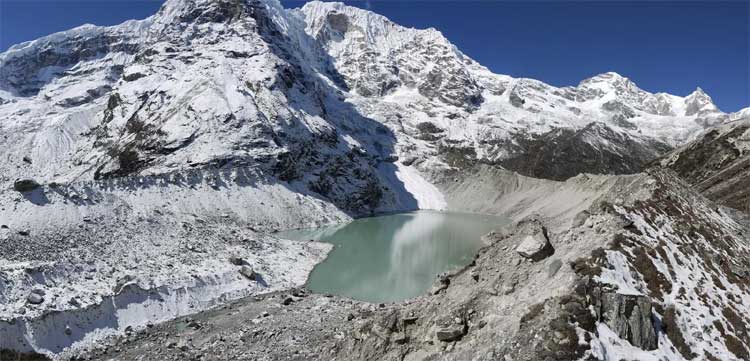
The catastrophic glacier-related disaster in Nepal has once again exposed the growing vulnerability of the Himalayan region to climate change. The August 26 disaster near the Nepal-Tibet border unleashed massive volumes of water, mud and debris, destroying villages, infrastructure and hydropower facilities. More than 1,200 people have been confirmed dead, while thousands remain missing, according to recent reports.
The disaster has raised an urgent question for India: could a similar chain of events unfold in the ecologically fragile Northeast, where rapidly changing glaciers, expanding glacial lakes, extreme rainfall and a concentration of hydropower projects are creating a potentially dangerous combination?
Sikkim already offers a warning
Sikkim is among the areas facing the most immediate concern. Authorities have identified 40 high-risk glacial lakes in the state, including 16 placed in the highest-risk Category A. The threat is not theoretical.
In October 2023, the South Lhonak glacial lake breached its banks, triggering a devastating Glacial Lake Outburst Flood (GLOF). The resulting flood swept downstream along the Teesta river system and destroyed the Teesta III hydropower dam at Chungthang, killing dozens of people and causing extensive damage to roads, bridges and other infrastructure.
The experience demonstrated how quickly a high-altitude glacial event can turn into a major downstream disaster when settlements and infrastructure are located along river valleys.
Climate change is making the risk more complicated
Experts say rising temperatures are altering the Himalayan cryosphere. Glaciers are retreating, while meltwater contributes to the growth of lakes trapped behind unstable moraine or other natural barriers.
When such barriers fail—because of intense rainfall, landslides, avalanches, earthquakes or other triggers—the stored water can rush downstream as a GLOF. Such floods can travel rapidly through narrow mountain valleys, carrying huge quantities of boulders, mud and debris.
A recent review of Himalayan risks notes that glacier retreat and expanding glacial lakes are emerging as major hazards in a warming Himalaya. Research has also highlighted GLOF vulnerability in northeastern India.
The broader Himalayan region is warming rapidly, increasing the likelihood of cascading hazards involving floods, landslides, avalanches and unstable slopes.
Big dams add another layer of vulnerability
The Northeast has enormous hydropower potential, and several large projects are either operational, under construction or planned across the Himalayan states.
Hydropower dams themselves do not cause GLOFs, but their presence can increase the consequences of a sudden flood. A high-altitude flood travelling downstream can damage dams, diversion structures, tunnels, roads and transmission infrastructure. In turn, damage to critical infrastructure can worsen disruption across entire river valleys.
Nepal’s latest disaster has brought this risk into sharper focus. Several hydropower facilities were affected by the recent floods, with workers trapped inside tunnels and major infrastructure destroyed or damaged.
For the Northeast, this underlines the importance of assessing not only individual dams but entire river basins and the chain of infrastructure connected to them.
Northeast is vulnerable beyond glaciers
The region’s vulnerability is not limited to glacial hazards. Northeast India is already exposed to landslides, flash floods, extreme rainfall, earthquakes and other climate-related risks.
A 2024 review of climate change and traditional adaptation practices in Northeast India identified multiple climate-induced hazards, including landslides, flash floods and extreme weather events.
This means that a future disaster may not necessarily begin with a classic GLOF. A combination of intense rainfall, a landslide, glacier instability and infrastructure failure could produce a cascading disaster.
Early warning systems are now critical
Following the Nepal disaster, experts and authorities are placing renewed emphasis on monitoring high-risk glacial lakes and improving early warning systems.
In Sikkim, authorities are considering measures including controlled drainage of vulnerable lakes, improved drainage structures, plug walls and tunnels. Satellite and remote-sensing technologies are also being used to monitor changes in glacial lakes and surrounding terrain.
However, experts say technology alone cannot eliminate the risk. Disaster planning must also consider where roads, bridges, settlements, power plants and other infrastructure are being built.
Development versus ecological safety
The central challenge for the Northeast is balancing the demand for energy and infrastructure with the fragile nature of the Himalayan environment.
Large-scale construction in steep and geologically sensitive terrain can increase exposure to landslides and flooding if environmental safeguards are inadequate. Climate change makes this challenge even more complicated because historical weather patterns may no longer provide a reliable guide to future risks.
The lesson from Nepal is therefore not simply that glaciers are melting. It is that climate change, unstable mountain landscapes and infrastructure concentrated along rivers can interact to produce disasters far larger than any single hazard alone.
For the Northeast, experts argue that the priority should be basin-wide risk assessments, real-time monitoring of dangerous glacial lakes, stronger early-warning networks, safer infrastructure design and greater coordination between states and neighbouring countries.
The warning is clear: the next Himalayan disaster may not look exactly like Nepal’s—but without stronger preparedness, the region’s glaciers, rivers and infrastructure could combine to create a catastrophe of similar scale.
Comments are closed.