
Maharashtra Shiv Sena split: Four years after Shinde rebellion, Uddhav Thackeray faces another crisis

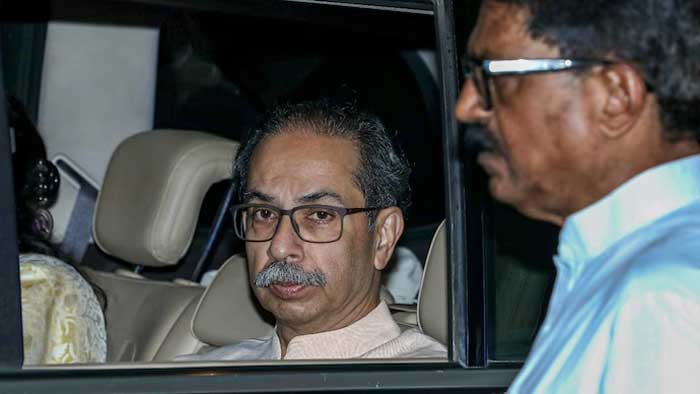
Four years after Eknath Shinde led a rebellion that brought down the Maha Vikas Aghadi (MVA) government in Maharashtra, the Shiv Sena is facing another major split, this time in Parliament.
On June 20, 2022, Shinde began his political revolt by moving a group of Shiv Sena MLAs to Surat and later Guwahati — both in BJP-ruled states — triggering the collapse of Uddhav Thackeray’s government nine days later.
Now, six of the nine Lok Sabha MPs from Uddhav Thackeray’s Shiv Sena (UBT) have reportedly approached the Lok Sabha Speaker seeking recognition as a separate group. They are expected to eventually merge with Shinde’s Shiv Sena and support the BJP-led NDA government of Prime Minister Narendra Modi.
The development marks the second major split in Bal Thackeray’s Shiv Sena in four years.
Six MPs break away
The MPs reportedly involved in the latest rebellion are Sanjay Jadhav (Parbhani), Bhausaheb Wakchaure (Shirdi), Sanjay Deshmukh (Yavatmal-Washim), Nagesh Patil Ashtikar (Hingoli), Sanjay Dina Patil (Mumbai North East) and Omraje Nimbalkar (Dharashiv).
The group had skipped both a Shiv Sena (UBT) parliamentary meeting and Uddhav Thackeray’s party foundation day event.
Meanwhile, Arvind Sawant, Anil Desai, Rajabhau Waje and Rajya Sabha MP Sanjay Raut remain with the Thackeray faction.
Reports suggest Maharashtra Deputy Chief Minister Eknath Shinde was in contact with the rebel MPs, while his son Shrikant Shinde played a key role in coordinating discussions.
Uddhav attacks BJP-Shinde alliance
Reacting to the possible split, Uddhav Thackeray rejected claims that the rebels were leaving because they feared a merger with Congress.
He said the Shiv Sena was created to protect Marathi identity and Hindutva, not to merge with another party.
Taking a swipe at the BJP, Thackeray said, “I fear the Maharashtra BJP might merge with the Shinde Sena.”
Sanjay Raut defended the party’s position, arguing that under the anti-defection law, a merger requires support from two-thirds of the entire political party and not just MPs or MLAs.
He also accused the rebel MPs of betraying the party.
Anti-defection law debate
The number six out of nine MPs is significant because it meets the two-thirds threshold under the Tenth Schedule of the Constitution, which deals with defections.
The law states that lawmakers can face disqualification if they voluntarily leave their party or violate the party whip. However, a merger exception exists if two-thirds of lawmakers agree to join another party.
The legal question remains whether the two-thirds rule applies to the entire political party or only the legislative wing. The Supreme Court is expected to examine a similar issue in another case.
A slow decline for Uddhav’s Sena
Unlike the dramatic 2022 rebellion, which unfolded within days, the latest crisis has developed over four years.
In 2022, 40 of Shiv Sena’s 56 MLAs joined Shinde, while 16 remained with Uddhav. In Parliament, 13 of 18 MPs moved with Shinde, leaving Uddhav with only five.
Despite the setback, Uddhav rebuilt the party under the Shiv Sena (UBT) name after losing the original party symbol and name to the Shinde faction.
The party performed strongly in the 2024 Lok Sabha elections, winning nine seats. However, the Maharashtra assembly elections later proved difficult, with Shiv Sena (UBT) winning only 20 of the 95 seats it contested, while Shinde’s Sena won 57 of 87 seats.
The BJP-Shiv Sena alliance’s victory in the Mumbai civic elections further weakened the Thackeray faction.
History of Shiv Sena splits
The party has witnessed several major exits over the years.
In 1991, senior leader Chhagan Bhujbal left Shiv Sena with several MLAs and later joined the Congress-NCP alliance. Narayan Rane also left the party in 2005.
Raj Thackeray, Bal Thackeray’s nephew, formed the Maharashtra Navnirman Sena in 2006 after differences over leadership succession.
However, Bal Thackeray managed to keep the party united until his death in 2012.
Wider political pattern in Maharashtra
The Shiv Sena crisis follows a similar split in the Nationalist Congress Party (NCP), where Ajit Pawar broke away from Sharad Pawar in 2023 and joined the Shinde-BJP government.
Sharad Pawar’s faction later lost the NCP name and symbol, similar to what happened with Uddhav Thackeray.
There has also been speculation about possible mergers involving regional parties and Congress, though leaders have denied such moves.
Uddhav Thackeray has rejected merger rumours and even said he would step aside as party chief if workers wanted a change.
The latest rebellion represents another major test for the Thackeray family’s control over the political legacy created by Bal Thackeray.
Comments are closed.