
Afghan fathers’ anguish as daughters are denied education

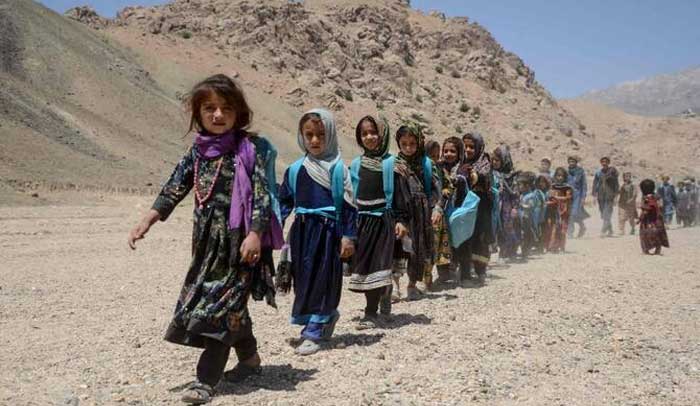
Afghan fathers struggle as Taliban education ban shuts daughters out of secondary school
Father after father interviewed by AFP across Afghanistan described despair and helplessness as the Taliban’s ban on girls’ secondary education leaves their daughters unable to study beyond primary school.
The ban, which the Taliban authorities justify through their interpretation of Islamic law, has caused deep distress even among religious and otherwise supportive fathers. One devout father said the Quran does not restrict education to men, while another, who praised the Taliban for improving security and reducing corruption, said he could find “no proper justification” for preventing girls from attending secondary school.
The Taliban barred girls from secondary schools in March 2022 after returning to power and shut universities to women later that year. Officials have repeatedly described the restrictions as temporary, but more than four years on, the UN estimates that at least one million girls have been directly affected.
A UN survey last year found that nine in 10 Afghan men believed it was important for girls to attend secondary school, while nearly two-thirds considered it “pious” for fathers to support their daughters’ education.
Fathers fear daughters’ futures
Ahmad, a 40-year-old engineer and father of four daughters, said he never imagined that his children could grow up without a proper education. His wife, a secondary-school mathematics teacher, is also barred from teaching.
With his eldest daughter approaching the end of primary school, Ahmad said he and his wife were increasingly worried about the day she would have to stay home. Secret classes in their northern Afghan city cost more than half his salary, while attempts to secure visas and leave the country have failed.
“We are getting closer to the moment when our daughters will have to stay home,” he told AFP.
Mohammad, a 42-year-old doctor in Kabul province, said he had always dreamed of sending his two daughters to leading universities. He explored sending them to Pakistan, but that option became impossible after the land border was closed amid heightened tensions.
He eventually found a private school secretly teaching general subjects alongside religious studies. The classes cost about 10,000 Afghanis ($153) a month for his two daughters, but the school does not issue graduation certificates and he fears authorities could raid it.
“The most important thing is that they go on learning,” he said, promising his daughters that he would find a way to continue their education.
‘How can I learn?’
A father from Kandahar province, identified only as N, said his 12-year-old daughter loves astronomy and frequently asks him questions about subjects such as gravity.
When she asked him how she could continue learning if she could not study beyond sixth grade, he struggled to answer.
The family moved to Kabul in search of work, while N explored underground schools and online courses in subjects such as design and computers. But he said dwindling opportunities and declining international aid were making it increasingly difficult to afford education.
He has tried to shield his daughter from the financial and emotional pressure caused by the restrictions, knowing that her time in school is running out.
‘I hide to cry’
Another father, identified as M, described the pain of watching his 13-year-old daughter lose access to school. He said the restrictions on girls’ activities, including access to parks, had left her increasingly isolated.
A devout man who credits the Taliban with restoring security and tackling corruption, M said he nevertheless could not understand the justification for banning girls from secondary education.
“When she gets so disappointed at home,” he said, he sometimes leaves the room because he cannot bear to see her suffering. “I hide to cry.”
He had saved money to move his daughter to Iran so she could continue studying, but the war ended that plan. He later enrolled her in a Quranic school to give her some social interaction, but she eventually stopped attending, telling him that continuing would not give her a future.
Families turn to home schooling
Nasir, 47, said his younger daughter was deeply affected after finishing primary school, having already witnessed the distress suffered by her older sister when her education was cut short.
He and his teacher wife now tutor their daughters at home using secondhand high-school textbooks. They maintain a school-like routine, with fixed study hours and early bedtimes.
But Nasir said his younger daughter has become depressed and sometimes struggles to continue studying on her own. The family has also secretly sent the girls to outside classes, despite the risks.
“We have sleepless nights,” he said.
The Taliban government did not respond to AFP’s questions about the education restrictions. The UN has repeatedly called for Afghan girls and women to regain access to education, warning of the long-term consequences of excluding them from schools and universities.
Comments are closed.