Libya charts new political course with two-year election roadmap

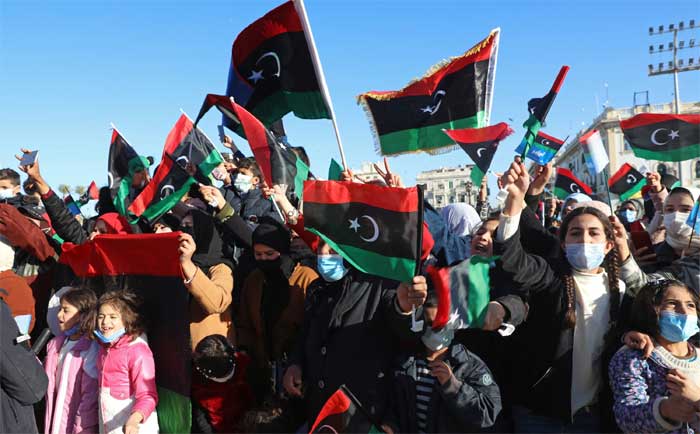
Libya has entered a potentially crucial phase in its long-running political transition after representatives of the country’s rival institutions signed a UN-backed agreement outlining a roadmap for presidential and parliamentary elections within two years.
The agreement was signed in Tripoli on Sunday under the auspices of the UN Support Mission in Libya (UNSMIL). It aims to resolve disputes over electoral laws, reform the national elections body and create conditions for ending more than a decade of rival governments and divided institutions.
The signing ceremony was attended by Hanna Tetteh, the UN secretary-general’s special representative for Libya and head of UNSMIL.
The deal followed months of negotiations under the “4+4” format, involving two representatives each from Libya’s four main power centres: the Government of National Unity, the High Council of State, the House of Representatives and the Libyan National Army.
Under the roadmap, presidential and legislative elections are to be held within 24 months under a single executive authority and unified national institutions. If that deadline cannot be met, the parties are expected to work with UNSMIL on an alternative mechanism to achieve the same electoral objective.
The agreement is being seen as an attempt to break Libya’s cycle of temporary political arrangements that has persisted since the overthrow of Muammar Qaddafi in 2011. Previous efforts to broker a lasting settlement have repeatedly collapsed over disputes concerning electoral legislation, institutional legitimacy, control of state bodies and the distribution of political power.
Libyan Prime Minister Abdul Hamid Dbeibeh welcomed the agreement, calling it an important step toward ending the country’s prolonged transitional period.
“We have advocated from the beginning for ending the transitional phases and moving toward elections,” Dbeibeh said, stressing that Libya’s future should ultimately be decided by its people through elections that restore legitimacy to state institutions.
House of Representatives Speaker Aguila Saleh also backed efforts to reach a comprehensive political settlement. He said the parliament supported initiatives aimed at ending political divisions and enabling simultaneous presidential and parliamentary elections.
However, the biggest challenge may lie in implementing the agreement rather than securing signatures. Libya has seen numerous political roadmaps announced and subsequently abandoned over the past 15 years, with rival institutions frequently failing to honour commitments reached during negotiations.
Analysts therefore said implementation would be the decisive test of the latest initiative.
Rakha Ahmed Hassan, a former Egyptian assistant foreign minister and ambassador to Kazakhstan, described the deal as “a step in the right direction” but warned that earlier UN-led efforts had repeatedly failed. He stressed that its success would depend on all Libyan factions respecting their commitments and avoiding delays that could derail the electoral process again.
Salah Halima, another former Egyptian assistant foreign minister and former ambassador to Sudan, said the agreement could help reunify Libya’s fragmented institutions after years of instability. He said the UN had likely consulted neighbouring countries and other states with significant interests in Libya before the agreement was reached.
Mohammed El-Shazly, a member of the Egyptian Council for Foreign Affairs and former ambassador, said political will would determine whether the initiative succeeds. Years of conflict and rivalry have inflicted significant damage on Libya despite its vast natural resources, while disputes among institutions have repeatedly blocked previous settlements.
“The issue is not merely an agreement on paper,” El-Shazly told Arab News. “What is required is a genuine desire on the part of the institutions to work seriously to implement it.”
Tetteh called the agreement an important step toward breaking the political and institutional deadlock that has obstructed Libya’s electoral process. She said Libyan parties must now translate the deal into concrete action by adopting it nationally, implementing the electoral framework and establishing the political and institutional conditions needed for credible elections.
The UN, she added, would continue supporting and facilitating the process, while emphasising that Libya’s political future ultimately belongs to its people.
Months of negotiations
The agreement followed months of talks between representatives of Libya’s rival institutions. The first meeting of the smaller dialogue format was held in Rome on April 29, followed by seven meetings in Tunis between May and August.
Those discussions eventually produced the Tripoli agreement and its commitment to holding presidential and parliamentary elections within 24 months.
The renewed diplomatic push comes amid growing regional and international attention on Libya. Last month, Arab League Secretary-General Nabil Fahmy met Massad Boulos, a senior adviser to US President Donald Trump on Arab and African affairs, to discuss developments in the country.
Fahmy reaffirmed the Arab League’s support for a Libyan-led political process aimed at unifying state institutions and holding presidential and parliamentary elections as soon as possible.
For Libya, the stakes remain high. The country continues to be divided between competing political and security institutions despite years of international efforts to establish a unified government and organise national elections.
The latest agreement provides another opportunity to break the deadlock. But after years of failed roadmaps and postponed elections, its real significance will depend on whether Libya’s rival factions can move beyond negotiations and actually implement the commitments they have made.
Ultimately, the test will be whether the country’s divided institutions can create the conditions for Libyans to freely choose their leaders and finally end the prolonged transitional era.
Comments are closed.