
KL Rahul’s Absence Leaves India With Middle-Order Puzzle Ahead of New Zealand ODIs

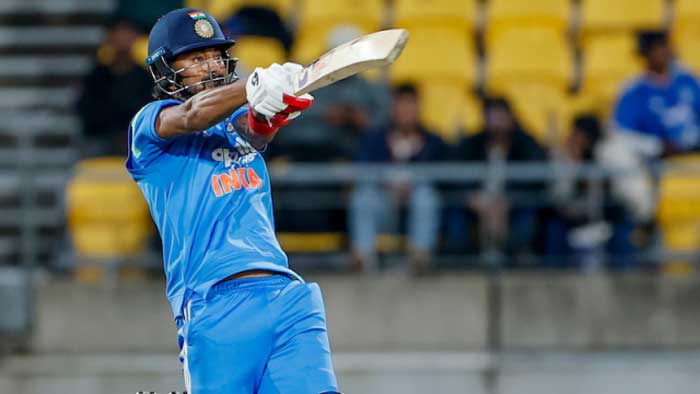
KL Rahul’s ability to bat anywhere in the order, absorb pressure and adapt to changing match situations makes him one of India’s most versatile and indispensable players in ODI cricket. Whether rebuilding an innings, accelerating the scoring rate, anchoring a chase or finishing strongly, Rahul has repeatedly demonstrated his value across different batting positions. His departure to prepare for the upcoming Test assignments, however, has left India facing a significant selection dilemma ahead of the fourth and fifth ODIs against New Zealand in Mount Maunganui.
Rahul’s presence at No. 6 allowed India to deploy Axar Patel at No. 5 in the first two matches, with the expectation that Rahul would take responsibility for finishing the innings. His absence now forces the team management to reconsider its batting combination, particularly positions five, six and seven.
Four players — Tilak Varma, Ruturaj Gaikwad, Naman Dhir and Axar Patel — are competing for these positions. Captain Shreyas Iyer and the team management must identify a combination that provides the right balance rather than simply selecting the three most accomplished batsmen.
Axar occupied the No. 5 position in the Auckland and Wellington ODIs, with four right-handed batsmen at the top of the order. India could look to retain a left-handed presence in the middle order to disrupt the sequence and offer greater flexibility. This makes Tilak a strong contender for a place in the playing XI.
Tilak Varma Offers Left-Handed Option but Needs to Improve Scoring Rate
Tilak has demonstrated his ability to rotate the strike under pressure before shifting gears in T20 cricket. His performance in the Asian Games final, where he initially consolidated before accelerating, highlighted his temperament and ability to adapt to different phases of an innings.
He also provided a glimpse of those qualities during his maiden ODI half-century against South Africa in Paarl in 2023. Coming to the crease at 101/3, Tilak took time to settle before scoring 52 off 77 deliveries. His partnership with Sanju Samson proved crucial in helping India build a match-winning position.
That innings reflected some of the qualities Rahul has consistently brought to India’s middle order: the ability to stabilise an innings before accelerating when required.
However, Tilak’s relatively slow starts in the 50-over format remain a concern. During the India A ODI tri-series in Sri Lanka in June, he took time to find his rhythm. While his left-handed batting offers an important tactical advantage, India will want to assess whether he can maintain the scoring momentum during the middle overs.
Ruturaj Gaikwad Provides Stability in the Middle Order
Ruturaj Gaikwad brings a different set of qualities to the selection debate. Although primarily known as a top-order batter, his performances at No. 4 provide a compelling case for considering him in the middle order.
He has scored 214 runs in five innings at that position, averaging 71.33, including a century and a half-century.
Gaikwad has also filled in at No. 4 when Shreyas Iyer was unavailable over the past 12 months. With Iyer back in the side, the management could consider moving Gaikwad to No. 5.
Can Gaikwad Increase the Scoring Tempo?
The main question surrounding Gaikwad is whether he can consistently accelerate once he has settled at the crease.
His ability to construct an innings is well established, but batting in the middle order requires a different approach from opening. He may have to increase the scoring rate quickly against spin and capitalise on the final overs without consuming too many deliveries during the rebuilding phase.
If India are looking for someone capable of providing stability in Rahul’s absence, Gaikwad offers a strong option.
Naman Dhir Emerges as a Finishing Option
The positions at No. 6 and No. 7 present another selection challenge, with Naman Dhir likely to be considered for the finisher’s role.
Dhir has limited experience in ODI cricket, having scored 47 runs in six matches. However, his attacking potential was evident in the first T20I against New Zealand in Christchurch, where he scored 31 off 17 deliveries at No. 7 to help India complete the chase.
His ability to attack from the outset could make him an attractive option in the lower middle order.
At No. 7, Dhir may be required to accelerate immediately, whereas batting at No. 6 could give him additional time to assess the situation before launching an attack.
India must decide whether they want to use him as an outright finisher or provide him with an opportunity to develop into a more versatile middle-order batter.
Axar Patel’s All-Round Value Makes Selection Complicated
Axar’s position in the batting order also requires careful consideration.
His record at No. 7 offers encouragement, with 346 runs in 22 innings at an average of 21.62 and a strike rate of 95.31.
However, his contribution goes beyond batting. Axar remains one of India’s important spin-bowling options, particularly during the middle overs, and his all-round ability provides the team with additional balance.
Having batted at No. 5 in the first two ODIs, Axar could be moved down to No. 7 to accommodate another specialist batter. Such a change, however, would require the management to assess how effectively he can contribute with the bat in a different role.
Dropping him altogether would also mean sacrificing a valuable bowling option, making his selection particularly important to India’s overall combination.
Two Possible Combinations for India
India have several options, but two combinations appear particularly relevant as the management looks to fill the gaps left by Rahul.
Option 1: Ruturaj Gaikwad at No. 5, Tilak Varma at No. 6 and Axar Patel at No. 7
This combination would provide a relatively balanced middle order. Gaikwad could take responsibility for building the innings, Tilak would introduce a left-handed option, and Axar would offer all-round support at No. 7.
Naman Dhir could be considered as an alternative if India want additional attacking firepower. However, leaving Axar out would reduce their bowling resources, while excluding Tilak would mean losing the left-handed presence the team may be looking for.
Option 2: Tilak Varma at No. 5, Naman Dhir at No. 6 and Axar Patel at No. 7
This combination would give India a left-hander higher up the order and allow Dhir to settle at No. 6 before taking on the finisher’s responsibilities.
It would also preserve Axar’s all-round contribution. However, leaving Gaikwad out would mean sacrificing a batter who has demonstrated his ability to provide stability and build substantial innings.
India Face a Balancing Act Without Rahul
The two combinations offer different advantages. Gaikwad brings greater experience in constructing an ODI innings, while Dhir provides another attacking option in the lower middle order. Tilak offers left-handed variety, and Axar brings valuable flexibility with both bat and ball.
Ultimately, the decision cannot be based on statistics alone. India need a batter capable of absorbing pressure and rebuilding an innings in Rahul’s absence, a left-hander who can break up the sequence of right-handed batters and a reliable option to finish strongly.
The challenge for Iyer and the team management is to find a combination that addresses all three requirements without weakening the bowling attack.
The remaining two ODIs against New Zealand in Mount Maunganui will therefore be important not only for the series but also for assessing India’s middle-order depth and identifying players capable of taking on greater responsibility in Rahul’s absence.
Comments are closed, but trackbacks and pingbacks are open.