
Jet, Set, Sway: As international travel slows, these Indian destinations are becoming wedding hotspots

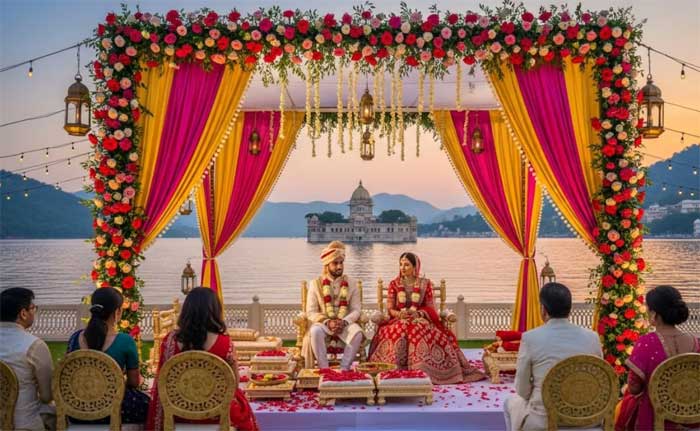
Destination weddings have long been synonymous with exotic international locales — exchanging garlands on the beaches of Bali or Thailand, hosting a lavish poolside sangeet in Dubai, or saying “I do” amid the vineyards of Italy. But shifting travel realities and growing interest in domestic destinations are prompting many Bengalurean couples to rethink those aspirations.
With international travel becoming more expensive and unpredictable in recent months, and Prime Minister Narendra Modi urging Indians to consider hosting weddings within the country, wedding planners say there is a noticeable shift towards Indian destinations.
“Over the past few years, destination weddings have become increasingly popular, and today around 30 per cent of our weddings involve guests travelling outside the couple’s home city,” says Roxabell Gomez, co-founder of Bengaluru-based Elegant Weddings. “Families are now spending more time evaluating backup plans, travel insurance, flight connectivity and overall guest convenience. The focus has clearly shifted towards venues within India.”
Domestic destinations gain momentum
For many couples, choosing India is no longer viewed as a compromise. Established favourites such as Goa, Rajasthan and Kerala continue to attract strong interest, with wedding planners reporting a surge in enquiries.
“We used to receive around 100 enquiries for Goa, but that number has risen to 125 or 130 in recent months,” says Arpan Suresh Parihar, business head (destination) at Meragi Events. “Overall, we’ve seen nearly a 30 per cent increase in demand for domestic wedding destinations.”
Alongside these traditional hotspots, couples are increasingly exploring lesser-known locations inspired by social media and a growing preference for intimate celebrations.
Travel influencer Madhu Sharma notes that destinations such as Kodagu, Chikkamagaluru, Kumarakom, Wayanad and Rishikesh are emerging as attractive alternatives.
“These places are less crowded, often more affordable and offer greater flexibility in terms of venue availability,” she says. “They’re cosy, private and ideal for smaller gatherings.”
Beyond Jaipur and Udaipur
The trend is also reshaping Rajasthan’s wedding landscape. While Jaipur, Udaipur and Jodhpur remain popular, many couples are now looking at smaller towns that offer grand venues without the congestion and premium costs associated with larger cities.
“Places like Pushkar, Kumbhalgarh and Ranthambore have become increasingly popular,” says Parihar. “Celebrity weddings have certainly played a role in that shift. Couples can often book larger palaces at similar budgets while enjoying a more exclusive experience.”
However, he cautions that smaller destinations may have fewer local wedding vendors and support services compared to more established wedding hubs.
Nandi Hills and Chennai emerge as contenders
Closer to Bengaluru, Nandi Hills has evolved into a sought-after wedding destination over the past two years.
According to Siddharth Hegde, founder of Dreamstrokes Weddings, the region’s luxury resorts and scenic backdrop have made it especially popular for inter-state South Indian weddings and couples with ties to Bengaluru.
“The appeal lies in the combination of luxury venues, views of the foothills and architecture that reflects South Indian heritage,” he says.
Meanwhile, Chennai is emerging as another unexpected favourite.
“People traditionally viewed Chennai as a metropolitan city rather than a wedding destination,” says Parihar. “But beachfront properties on the outskirts are drawing attention because they offer greenery, ocean views, excellent connectivity and proximity to Bengaluru.”
A boost for local wedding economies
Industry professionals see the growing preference for domestic destinations as a positive development for India’s wedding ecosystem.
“When weddings moved overseas, a significant portion of local vendors and service providers lost business opportunities,” says Hegde. “This shift creates more opportunities across the industry.”
Gomez agrees, adding that the trend could benefit a wide range of stakeholders, from venues and planners to artisans and tourism operators.
“If more couples choose to celebrate within India, it can provide a major boost to local businesses, hospitality sectors and tourism ecosystems,” she says.
As travel preferences evolve, India’s diverse landscapes — from beaches and hill stations to heritage towns and vineyard retreats — appear increasingly capable of delivering the destination wedding experience that couples once sought abroad.
Comments are closed, but trackbacks and pingbacks are open.