
Jaishankar Raises India’s Concerns Over US Russia Sanctions With Rubio At UNGA

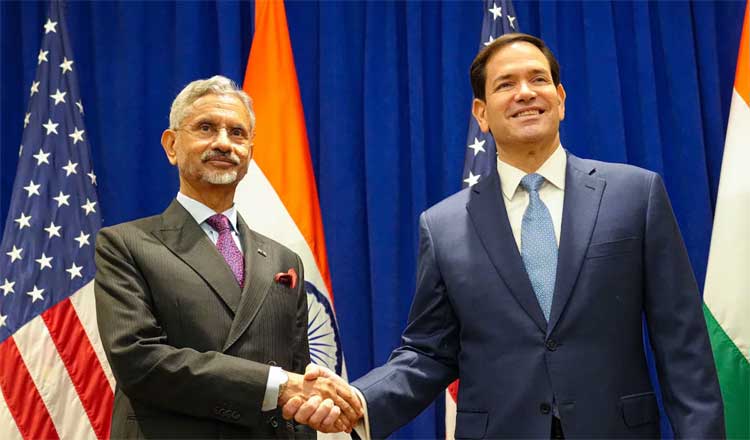
External Affairs Minister S Jaishankar said he raised India’s concerns over US sanctions targeting buyers of Russian energy during a meeting with US Secretary of State Marco Rubio on the sidelines of the United Nations General Assembly’s High-Level Week in New York.
“Reiterated India’s interests and concerns with regard to SRIA. Also discussed the Gulf and Ukraine situations,” Jaishankar said in a post on X on Wednesday.
The Lindsey O. Graham Sanctioning Russia and Iran Act (SRIA) of 2026, signed into law by US President Donald Trump last week, gives the president the authority to impose tariffs of up to 100% on the five largest purchasers of Russian oil and gas.
India, China, Azerbaijan, Slovakia and Hungary are currently implicated by the provision.
Rubio, in a statement after the meeting, said Washington was working with New Delhi on “regional priorities” and “multilateral efforts”.
“Great to meet with Indian External Affairs Minister @DrSJaishankar in New York today. Together, we are building on the U.S.-India strategic partnership and coordinating on key regional priorities and upcoming multilateral efforts,” Rubio posted on X.
India Flags Impact On Energy Markets
India’s Ministry of External Affairs had earlier warned that the legislation could have implications for both India-US relations and global energy markets.
“This issue has been discussed at high levels in recent months with various US interlocutors. Its potential implications for not just the bilateral relationship but also the international energy market have been very clearly articulated by the Indian side,” the MEA said in a September 17 statement.
The ministry said New Delhi would take necessary steps to safeguard the Indian economy and work closely with trade and industry bodies.
It also reiterated that India would remain committed to ensuring energy security for its 1.4 billion people through diversified energy procurement based on market dynamics.
How The SRIA Tariff Provision Works
The legislation does not specifically name any country as a target. Instead, it directs the US Trade Representative, in consultation with the Secretaries of State and Energy, to identify the five largest importers of Russian crude oil and gas by total volume over the preceding 12 months.
The list is to be reassessed every 180 days.
The tariff can be set at any rate up to the 100% ceiling and remains at the discretion of the US president. The law does not require the president to impose tariffs on Russian energy buyers.
However, key supporters of the legislation, including Senators Richard Blumenthal and Jeanne Shaheen, have identified India and China among the countries that could face the proposed tariffs.
“To China and India: You better clean up your act. Buy your oil and gas somewhere else,” Blumenthal said on Wednesday after the House passed the bill.
More India-US Talks Expected
India’s concerns over the SRIA are also expected to feature in further high-level discussions in New York.
Foreign Secretary Vikram Misri is expected to meet his US counterpart Allison Hooker, the Under Secretary of State for Political Affairs, on Thursday. Additional meetings between senior Indian and US officials could also take place during the UNGA week.
The SRIA was signed into law by Trump on Friday after the House of Representatives passed it on Wednesday. The US Senate had approved the legislation in August by a decisive margin.
Comments are closed, but trackbacks and pingbacks are open.