
IPL Player Trade and Transfer: Biggest Deals in Indian Premier League History

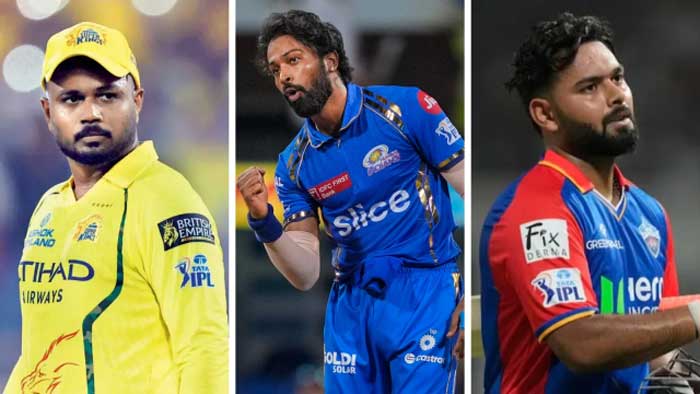
The Indian Premier League (IPL) is famous for explosive batting, thrilling finishes and record-breaking auctions. However, some of the biggest moments in IPL history have happened away from the cricket field, through player trades and transfers.
Over the years, franchises have made blockbuster moves to strengthen their squads, fill crucial gaps and build championship-winning teams. From superstar captains switching sides to expensive all-rounders changing franchises, IPL transfers have significantly influenced the competition.
Here is a look at some of the biggest and most memorable player trades and transfers in IPL history.
What is an IPL player trade or transfer?
An IPL player trade is an arrangement in which one franchise transfers a contracted player to another franchise before the upcoming season. It can happen in two main ways:
-
Cash trade: A franchise transfers a player to another team, with the financial terms agreed between the franchises.
-
Player-for-player trade: Two franchises exchange players, sometimes with an additional cash adjustment.
These deals are different from regular IPL auctions, where franchises compete to purchase available players. A trade allows teams to negotiate directly, subject to IPL regulations and approval.
Top 8 biggest IPL player trades and transfers
1. Sanju Samson to Chennai Super Kings – ₹18 crore (2025)
One of the biggest transfers in IPL history saw Rajasthan Royals captain Sanju Samson move to Chennai Super Kings ahead of IPL 2026.
After representing Rajasthan Royals for several seasons, Samson joined CSK at his existing league fee of ₹18 crore. In exchange, Ravindra Jadeja moved to Rajasthan Royals at a revised fee of ₹14 crore, while England all-rounder Sam Curran also joined Rajasthan.
The deal was particularly significant because it involved two established international players and one of India’s most popular wicketkeeper-batters.
For CSK, Samson offered a long-term batting and leadership option, while Rajasthan gained the experience of Jadeja and the versatility of Curran.
2. Cameron Green to Royal Challengers Bengaluru – ₹17.50 crore (2023)
Australian all-rounder Cameron Green became part of a major IPL trade when Mumbai Indians transferred him to Royal Challengers Bengaluru ahead of the 2024 season.
Mumbai had purchased Green for ₹17.50 crore at the 2023 auction. RCB acquired him at the same existing player fee through the trade arrangement.
The transfer was also strategically important for Mumbai Indians because it helped facilitate the return of Hardik Pandya from Gujarat Titans.
Green brought considerable value to RCB with his ability to contribute with both bat and ball. The deal demonstrated how one major transfer can influence several other franchise decisions.
3. Hardik Pandya to Mumbai Indians – ₹15 crore (2023)
Hardik Pandya’s return to Mumbai Indians was arguably the most talked-about IPL transfer in recent years.
After leading Gujarat Titans to the IPL title in 2022 and the final in 2023, Hardik returned to his former franchise ahead of IPL 2024.
Mumbai Indians acquired him from Gujarat Titans at his existing player fee of ₹15 crore. The move attracted enormous attention because Hardik had established himself as a successful captain at Gujarat.
His return also marked a major leadership change, as Mumbai appointed him captain, replacing Rohit Sharma.
The transfer highlighted the importance of leadership, franchise loyalty and team-building in the IPL.
4. Rishabh Pant to Delhi Capitals – ₹15 crore (2026)
Rishabh Pant’s return to Delhi Capitals became another headline-making IPL transfer in June 2026.
Pant had joined Lucknow Super Giants for a record-breaking ₹27 crore at the 2025 auction. However, following the 2026 season, he returned to Delhi Capitals at a revised fee of ₹15 crore.
As part of the arrangement, left-arm wrist-spinner Kuldeep Yadav moved from Delhi to Lucknow at his existing fee of ₹13.50 crore.
Pant had spent nine seasons with Delhi between 2016 and 2024, making the transfer a return to familiar surroundings.
The deal was particularly interesting because Pant accepted a substantial reduction in his player fee to rejoin his former franchise.
5. Ravindra Jadeja to Rajasthan Royals – ₹14 crore (2025)
Ravindra Jadeja’s move from Chennai Super Kings to Rajasthan Royals was an important part of the Sanju Samson trade.
Jadeja had been one of CSK’s most influential players for 12 seasons, contributing with his left-arm spin, batting and exceptional fielding.
Ahead of IPL 2026, he returned to Rajasthan Royals at a revised player fee of ₹14 crore.
Interestingly, Jadeja had previously represented Rajasthan Royals during the early years of his IPL career, including their title-winning 2008 campaign.
His return gave Rajasthan an experienced all-rounder capable of strengthening several departments.
6. Shardul Thakur to Kolkata Knight Riders – ₹10.75 crore (2022)
Shardul Thakur’s transfer from Delhi Capitals to Kolkata Knight Riders ahead of IPL 2023 was another notable deal.
KKR acquired the Indian fast-bowling all-rounder at a player fee of ₹10.75 crore.
Shardul had developed a reputation as a useful lower-order batter and a wicket-taking bowler. His ability to contribute in different situations made him an attractive option for Kolkata.
The franchise hoped his experience and all-round skills would strengthen its bowling attack and batting depth.
7. Lockie Ferguson to Kolkata Knight Riders – ₹10 crore (2022)
New Zealand fast bowler Lockie Ferguson moved from Gujarat Titans to Kolkata Knight Riders ahead of IPL 2023.
KKR acquired him at his existing player fee of ₹10 crore.
Ferguson had been part of Gujarat’s title-winning campaign in 2022 and was known for his ability to bowl consistently at high speeds.
His arrival was expected to provide KKR with an additional fast-bowling option, particularly during the death overs.
8. Avesh Khan to Rajasthan Royals – ₹10 crore (2024)
Avesh Khan’s move from Lucknow Super Giants to Rajasthan Royals ahead of IPL 2024 was another significant player exchange.
The transfer involved an exchange with Rajasthan’s Devdutt Padikkal, with Avesh valued at ₹10 crore.
Avesh had established himself as a dependable Indian fast bowler and offered Rajasthan an additional pace option.
The deal also showed how player-for-player exchanges can help franchises address specific squad requirements without relying entirely on the auction.
Other memorable IPL transfers
Apart from the headline deals above, several other transfers have shaped the league’s history.
|
Player |
From |
To |
Year |
|---|---|---|---|
|
Shikhar Dhawan |
SRH |
Delhi Capitals |
2019 |
|
Ravichandran Ashwin |
Punjab Kings |
Delhi Capitals |
2020 |
|
Trent Boult |
Delhi Capitals |
Mumbai Indians |
2020 |
|
Quinton de Kock |
RCB |
Mumbai Indians |
2019 |
|
Robin Uthappa |
Rajasthan Royals |
CSK |
2021 |
|
Mohammed Shami |
SRH |
Lucknow Super Giants |
2025 |
|
KL Rahul |
SRH |
RCB |
2016 |
|
Dinesh Karthik |
Punjab Kings |
Mumbai Indians |
2012 |
These transfers demonstrate how franchises have continuously changed their squads to remain competitive.
Biggest IPL trades: Financial comparison
The following figures represent the players’ reported or officially announced league fees, not necessarily the actual cash transfer payments between franchises.
|
Player |
League fee |
Transfer season |
|---|---|---|
|
Sanju Samson |
₹18 crore |
2026 |
|
Cameron Green |
₹17.50 crore |
2024 |
|
Hardik Pandya |
₹15 crore |
2024 |
|
Rishabh Pant |
₹15 crore |
2027 |
|
Ravindra Jadeja |
₹14 crore |
2026 |
|
Kuldeep Yadav |
₹13.50 crore |
2027 |
|
Shardul Thakur |
₹10.75 crore |
2023 |
|
Lockie Ferguson |
₹10 crore |
2023 |
|
Avesh Khan |
₹10 crore |
2024 |
How IPL trades have changed franchise strategies
IPL transfers have evolved significantly since the league began in 2008. Initially, player movements were relatively limited, but franchises gradually started using the trade window as an important squad-building strategy.
Some key reasons behind major transfers include:
-
Leadership requirements: Teams acquire experienced captains to improve their leadership structure.
-
Team combinations: Franchises look for players who can fill specific batting, bowling or all-rounder roles.
-
Financial planning: Trades help teams manage their available auction purse and player budgets.
-
Player preferences: Established players sometimes seek opportunities with different franchises.
-
Long-term planning: Teams look to build a squad that can compete over multiple IPL seasons.
Conclusion
IPL player trades and transfers have become an essential part of modern franchise cricket. Deals involving Sanju Samson, Ravindra Jadeja, Hardik Pandya, Cameron Green and Rishabh Pant demonstrate how a single transfer can reshape the future of multiple teams.
As competition between franchises becomes more intense, the trade window is likely to remain an important part of IPL team-building strategies.
Ultimately, the biggest question is not simply how much a franchise spends on a player, but how effectively that player contributes to the team’s success. In the IPL, one smart transfer can make the difference between an ordinary campaign and a championship-winning season.
Comments are closed, but trackbacks and pingbacks are open.