
India rejects Pakistan-China statement on Kashmir, reiterates opposition to CPEC

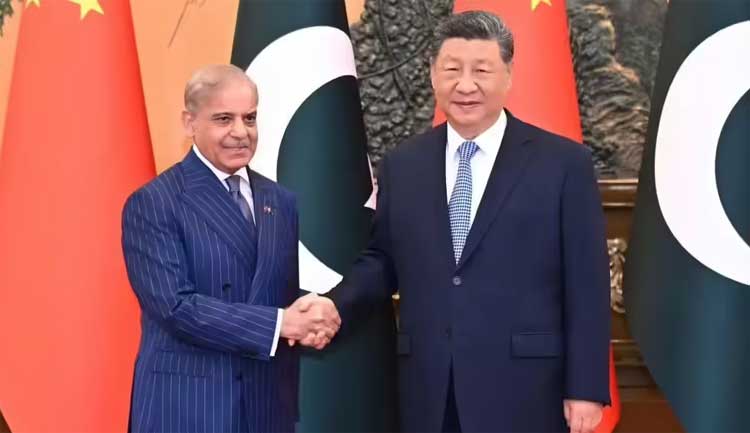
India on Tuesday strongly rejected references to Jammu and Kashmir in a recent joint statement by China and Pakistan, reiterating that the regions are an integral and inalienable part of the country and dismissing any external comments on the issue.
Responding to the statement, external affairs ministry spokesperson Randhir Jaiswal said the Union Territories of Jammu and Kashmir and Ladakh “have been, are and will always remain” part of India, adding that no other country has any standing to comment on the matter.
India also reiterated its opposition to projects under the China-Pakistan Economic Corridor (CPEC), saying some of them pass through territory it considers its sovereign land under Pakistan’s control. New Delhi said it rejects any attempts to legitimise what it described as Pakistan’s “illegal and forcible occupation” of these areas and has repeatedly conveyed its objections to both Islamabad and Beijing.
The ministry also took issue with references in the joint statement to “trans-boundary water resources cooperation” between China and Pakistan, arguing that the two countries do not share a direct border in those areas. India further reiterated that it does not recognise the 1963 boundary agreement between China and Pakistan, under which Islamabad ceded the Shaksgam Valley region to Beijing.
The comments followed a joint statement issued after Pakistani Prime Minister Shehbaz Sharif’s visit to China, during which Chinese leaders, including President Xi Jinping and Premier Li Qiang, held talks with him and pledged deeper strategic cooperation. The statement noted that Pakistan had briefed China on developments in Jammu and Kashmir and said the issue should be addressed in line with the UN Charter. It also referred to cooperation on cross-border water resources without elaborating further.
The references have drawn attention because they signal continued Chinese support for Pakistan on issues sensitive to India, including Kashmir and regional infrastructure projects, despite ongoing tensions between New Delhi and Beijing.
Comments are closed.