
Global Warming Set To Breach 1.5°C Limit In Coming Years, UN Warns Of Rising Climate Risks

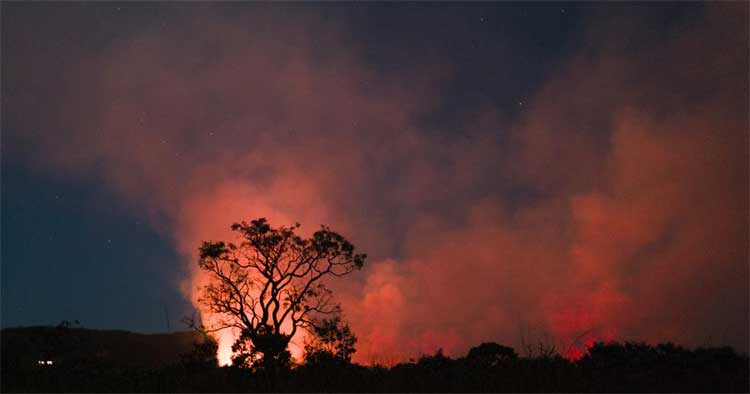
Global temperatures are likely to exceed the critical 1.5°C warming threshold within the next few years, increasing the risk of dangerous climate impacts. However, it is still possible to bring temperatures back below that limit and pursue the goals of the Paris Agreement, according to a new report by the United Nations Environment Programme (UNEP).
The report, titled Limiting Overshoot: Navigating Exceedance, identifies an “overshoot, peak and decline” pathway as the best remaining option to limit how far and how long global temperatures exceed 1.5°C before returning below the threshold.
UN Secretary-General António Guterres warned that extreme weather events were offering a glimpse of the dangers ahead.
“This summer’s scorching heat, raging wildfires and deadly floods are a warning of what lies ahead. We must make the overshoot above 1.5 degrees as small and short as possible. That demands an overshoot of ambition,” Guterres said.
The report calls for immediate and sustained cuts in greenhouse gas emissions, particularly methane, alongside a transition towards net-zero emissions. It also highlights the need for long-term net-negative emissions to bring temperatures down after they peak.
Global Warming Could Peak At 1.8°C Even In Best-Case Scenario
According to UNEP, the most optimistic scenario considered in the report would see global temperatures peak at around 1.8°C above pre-industrial levels, exceeding the Paris Agreement’s goal of limiting warming to 1.5°C. Most other scenarios project higher temperature peaks.
The report warns that climate risks and damage will intensify with every additional fraction of a degree of warming and every year temperatures remain elevated.
Potential consequences include more severe extreme weather events, ecosystem destruction, threats to food and water security, and damage to human health, infrastructure, cities and economies.
Small Island Developing States and low-lying coastal cities also face the threat of submersion as sea levels rise.
Inger Andersen, UNEP’s executive director, stressed that the world must accelerate climate action to limit the duration and magnitude of the temperature overshoot.
“There are no good outcomes if we remain above 1.5°C. Across the globe, extreme heatwaves are already proving that climate impacts will strike faster, hit harder, and last longer — costing more lives and causing deeper disruption,” Andersen said.
She called for stronger emissions reductions, improved resilience and adaptation measures, and urgent action to keep the overshoot as limited as possible.
Climate Tipping Points Could Trigger Irreversible Damage
The report warns that prolonged warming increases the likelihood of crossing irreversible climate tipping points, potentially triggering major changes in the Earth’s natural systems.
Among the key risks are the destabilisation of major ice sheets, degradation of the Amazon rainforest and disruption of the Atlantic Meridional Overturning Circulation (AMOC), a system of ocean currents that plays a crucial role in regulating global climate.
Some of these changes could occur abruptly, while others may develop gradually and accumulate over time.
The report emphasises that limiting peak temperatures is essential to reduce the likelihood and severity of such events. Even if global temperatures eventually return below 1.5°C, some climate-related losses and environmental changes may be permanent.
Carbon Removal And Renewable Energy Key To Reversing Warming
UNEP’s proposed pathway calls for a rapid transition away from fossil fuels, greater use of renewable energy and sustained reductions in greenhouse gas emissions.
It also identifies carbon dioxide removal (CDR) as an important component of efforts to lower temperatures after they peak. CDR involves removing carbon dioxide from the atmosphere and storing it, including through afforestation and other methods.
However, the report stresses that carbon removal must complement emissions reductions rather than replace them. Credible deployment would require strong governance, environmental safeguards and measures to ensure fairness.
The transition to renewable energy could also deliver wider benefits, including cleaner air, improved public health, lower energy costs and increased access to electricity.
At the same time, countries must strengthen climate adaptation measures to protect communities, infrastructure, food systems and economies from the effects of warming that are already unavoidable.
UNEP Calls For Stronger Climate Finance And International Cooperation
The report identifies political commitment, effective policies, inclusive governance, international cooperation and adequate financing as essential conditions for limiting global warming.
It also stresses the importance of equity and climate justice, arguing that countries with greater historical responsibility for climate change should take the lead by adopting faster and more ambitious emissions reductions.
Mitigation and adaptation efforts must advance together, with particular emphasis on measures that deliver benefits in both areas. Nature-based cooling solutions, for example, can help reduce heat risks while supporting environmental protection.
Adaptation strategies must also account for emerging risks, including sudden and non-linear climate changes that could threaten communities and undermine efforts to reduce emissions.
Climate Change Could Force Communities To Relocate
UNEP cautions that years of insufficient climate action mean irreversible losses and permanently altered conditions are likely even if global temperatures eventually return below 1.5°C.
Some communities may be forced to relocate, while others could face major changes to their livelihoods. Governments will need to address the resulting challenges through inclusive decision-making and policies that consider justice, political legitimacy and the needs of vulnerable populations.
The report describes the proposed overshoot, peak and decline pathway as a new frontier in climate action, but warns that it cannot be left for future generations to address.
Immediate action is necessary to keep the possibility of returning below 1.5°C alive.
COP31 Seen As Opportunity To Turn Climate Ambition Into Action
The findings come ahead of COP31, the United Nations climate conference, where governments are expected to face renewed pressure to strengthen emissions reduction commitments and climate resilience measures.
Chris Bowen, Australia’s Minister for Climate Change and Energy and president of negotiations for COP31, said every fraction of a degree above 1.5°C increases the severity of climate impacts, particularly for Pacific communities.
He said the energy crisis had reinforced the need to reduce dependence on fossil fuels, accelerate renewable energy adoption and strengthen international climate cooperation.
COP31 President-Designate Murat Kurum also stressed that exceeding 1.5°C must not be treated as an acceptable long-term outcome.
He called for rapid emissions reductions, stronger climate adaptation, greater electrification, methane reductions from waste and improved resilience for cities and marine and coastal ecosystems.
The UNEP report’s central message is that exceeding 1.5°C would significantly increase climate risks, but the scale of the damage will depend on how quickly governments reduce emissions, prepare communities for unavoidable impacts and work together to bring global temperatures down.
Comments are closed, but trackbacks and pingbacks are open.