
European allies urged to overhaul military strategy as Russia threat reshapes future warfare

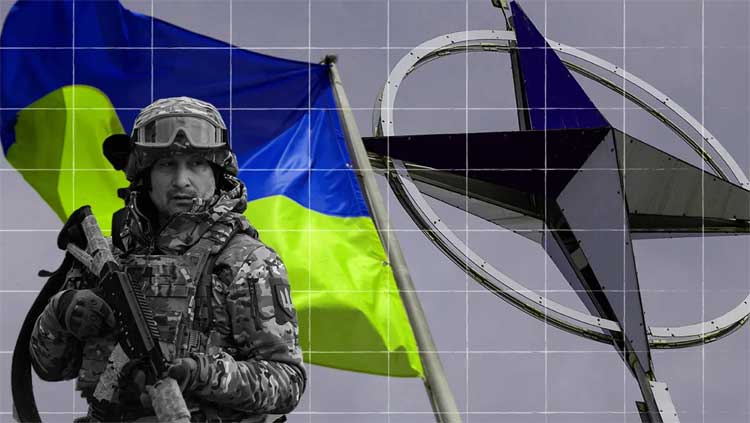
European allies must urgently transform their military capabilities to prepare for a new era of warfare, senior defence officials have warned, citing growing security challenges from Russia and lessons from conflicts in Ukraine and the Middle East.
Speaking at a defence conference in London, NATO’s deputy supreme allied commander in Europe, Air Chief Marshal Sir Johnny Stringer, called for a major shift away from reliance on expensive, advanced military platforms that take years to develop and toward mass-produced, affordable systems such as drones and missile interceptors.
Stringer said European forces must improve their ability to carry out long-range precision strikes, conduct electromagnetic warfare and strengthen air defences against weapons capable of travelling thousands of kilometres.
“The threat we face is at 360 degrees,” Stringer told military and industry representatives at the conference hosted by the Royal United Services Institute (RUSI). He said NATO must pay greater attention to threats from Russia’s long-range aviation capabilities and naval forces, including the Russian Navy’s Northern Fleet.
The warning comes as some European officials have raised concerns that Russia could rebuild its military strength and pose a greater threat to NATO territory in the coming years. The administration of US President Donald Trump has also repeatedly criticised European nations for spending too little on defence and depending heavily on American military support.
Washington announced plans in May to withdraw 5,000 troops from Germany, while Trump has previously threatened to reconsider the US role in NATO. A major NATO leaders’ summit is scheduled to take place in July in Ankara.
Ukraine war highlights changing battlefield
Military leaders said the prolonged war in Ukraine and conflicts in the Middle East have exposed the need for a complete rethink of defence strategies.
German army commander Lt. General Christian Freuding said modern conflicts show that land warfare is undergoing a “fundamental change.”
“Not only do we need to increase military spending and speed up procurement processes, we must fundamentally adapt how we will fight,” Freuding said.
He added that Germany is prioritising immediate solutions to fill critical military gaps rather than waiting years for future technologies that may arrive too late.
“We cannot wait for what might be possible in five years’ time but won’t be delivered for another 10 years,” he said.
AI and technology transforming warfare
Artificial intelligence is also changing how militaries analyse information and make battlefield decisions, officials said.
British Army chief General Sir Roly Walker said AI has dramatically reduced planning timelines and increased operational efficiency.
“A corps planning cycle that once took 72 hours can now take one,” Walker said, adding that forces that previously handled around 24 targets a day could now process many times more with new technology.
Military leaders said future conflicts will likely depend on a combination of advanced technology, rapid production, artificial intelligence, drones and flexible defence systems rather than only traditional high-end weapons.
The message from European defence officials was clear: adapting quickly to the changing nature of warfare will be essential to maintaining security in the face of evolving threats.
Comments are closed, but trackbacks and pingbacks are open.