
Europe scorched by record heatwave as Italy issues highest alert, wildfires rage

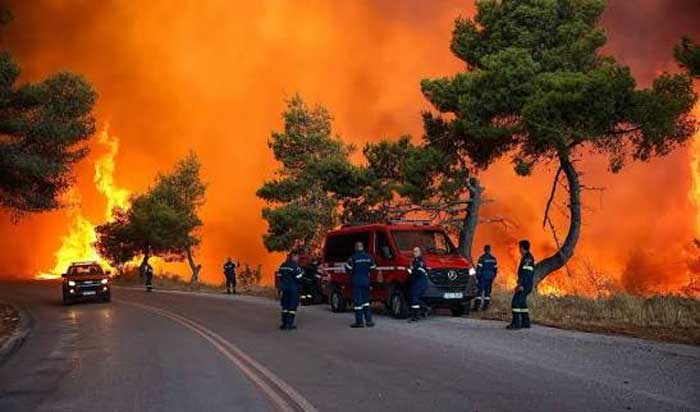
A relentless heatwave swept across Europe on Thursday, pushing temperatures above 40°C in several countries, triggering health emergencies, disrupting transport and power systems, and fuelling devastating wildfires.
Italy placed all 27 cities under its national heat surveillance network on the highest “red alert” for the first time this year, warning that the extreme heat poses a risk to everyone, not just vulnerable groups. Authorities urged people to stay indoors during peak hours, remain hydrated and avoid prolonged exposure to the sun.
To help residents and tourists cope, Rome installed misting fans at the Colosseum, expanded medical assistance points and extended evening hours at major attractions such as the Colosseum and Pantheon. The city also opened a free “urban beach” along the Tiber River, offering swimming pools, shaded areas and water features as a refuge from the intense heat.
The heatwave also shattered temperature records across Central Europe. Austria registered an all-time high of 41.2°C, while Slovakia recorded a new national record of 42.2°C. Severe drought and historically low water levels on the Danube have reduced hydroelectric generation in Slovakia and forced Hungary’s only nuclear power plant to cut output, prompting emergency electricity-saving measures.
Germany warned that falling water levels on the Rhine and other rivers are threatening inland shipping, industrial operations and supply chains, while environmental groups called for stronger climate adaptation measures.
In France, firefighters remained on high alert after a massive wildfire in the Var region burned over 60 square kilometres, with authorities warning that strong winds and dry conditions could reignite the blaze. England also felt the effects of the prolonged dry spell, with a grass fire temporarily closing Heathrow Airport’s southern runway.
Across the Balkans, Serbia battled multiple wildfires while Croatia endured soaring temperatures nearing 40°C, forcing tourists in Dubrovnik to seek shelter from the midday heat.
Scientists say such extreme weather events are becoming more frequent and severe due to climate change, exposing growing vulnerabilities in public health systems, energy infrastructure, transportation networks and tourism across Europe.
Comments are closed.