
EU To Push For Faster Shift Away From Fossil Fuels Ahead Of COP31

The European Union (EU) is preparing to push for a faster transition away from fossil fuels at the upcoming United Nations climate summit, COP31, placing energy security, affordable supplies and reduced dependence on foreign energy sources at the centre of its climate agenda.
According to a draft EU position document reviewed by Euronews, the bloc wants governments to accelerate the adoption of renewable and low-carbon energy while improving energy efficiency. The approach comes amid rising energy prices and supply disruptions that have exposed Europe’s dependence on imported oil and gas.
Energy Security To Be Central To COP31 Strategy
The EU argues that moving away from fossil fuels is not only necessary to tackle climate change but also essential to strengthen economic resilience and energy independence.
The bloc has faced mounting pressure from the loss of Russian energy supplies, increased reliance on liquefied natural gas (LNG) from the United States and disruptions to oil and gas shipments linked to conflict in the Middle East.
These developments have heightened concerns about the risks of depending heavily on external suppliers and volatile international energy markets.
A draft Council document dated October 5 states that a fair and orderly transition towards renewable and low-carbon energy, alongside greater energy efficiency, is central to ensuring energy security, affordability and reliable supplies.
The EU also intends to maintain its commitment to climate neutrality by 2050.
EU Seeks Action, Not Just Climate Pledges
Ahead of COP31, the EU wants countries to focus on implementing existing climate commitments rather than relying solely on new declarations.
The bloc is pushing for faster deployment of clean energy, wider electrification, a transition away from fossil fuels, and stronger efforts to reduce methane and other non-carbon dioxide emissions by 2030.
It also wants renewable energy capacity to triple and improvements in energy efficiency to double, in line with international climate goals.
The EU has acknowledged that global warming could exceed the Paris Agreement’s 1.5°C threshold in the coming decades. However, it argues that this possibility makes immediate emissions cuts more urgent, with governments needing to minimise both the scale and duration of any overshoot.
The bloc is expected to urge major emitting countries to strengthen their national climate plans and align policies and investment decisions with the 1.5°C target.
Climate Finance Remains A Key Challenge
Financing the transition is likely to be one of the major issues at COP31, particularly for developing countries that need funding to expand clean energy and adapt to climate impacts.
At COP29 in Baku in 2024, countries agreed on a goal of providing at least $300 billion annually in climate finance to developing nations by 2035. They also called for public and private climate funding to reach at least $1.3 trillion a year by that date.
The EU has indicated that it is willing to honour existing commitments but is reluctant to agree to additional financial obligations. It is instead calling for greater private-sector investment, arguing that public funding alone will not be enough to finance the transition.
According to the European Council, the EU and its member states contributed €42.7 billion in international public and private climate finance in 2024.
The bloc is also pressing major emitters to raise their climate ambitions and contribute to international efforts to limit global warming.
COP31 To Be Held In Türkiye In November
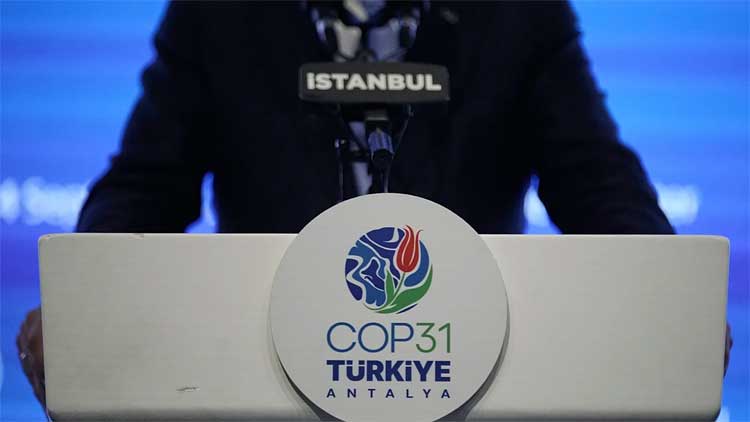
COP31 is scheduled to take place in Antalya, Türkiye, from November 9 to 20, 2026. The summit will bring governments together to discuss climate commitments, emissions reductions, energy transition and financial support for vulnerable countries.
The EU’s approach reflects a growing emphasis on implementation, investment and energy security as governments confront the economic and geopolitical consequences of fossil-fuel dependence.
However, progress will depend on whether major economies can agree on stronger action and how the costs of climate measures will be shared between developed and developing nations.
As negotiations approach, Brussels is expected to argue that accelerating the clean-energy transition can serve several objectives at once: reducing emissions, protecting consumers from energy-price volatility and strengthening Europe’s strategic independence.
Comments are closed, but trackbacks and pingbacks are open.