
Ebola cases in DR Congo top 3,000 as health workers strike over unpaid wages

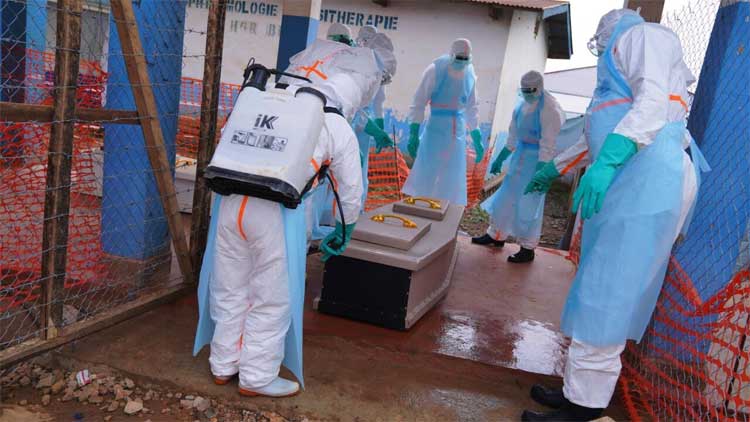
The Ebola outbreak in the Democratic Republic of Congo has crossed a grim milestone, with confirmed infections surpassing 3,000 and the death toll climbing above 1,350, even as a strike by frontline health workers threatens to disrupt the response.
According to government data released Saturday, the outbreak has now recorded 3,075 confirmed cases, including 1,354 deaths.
The crisis intensified after doctors, nurses and security staff at the Elikya Ebola Treatment Center in Bunia, the epicenter of the outbreak in Ituri province, walked off the job over two months of unpaid performance bonuses. Around 100 workers staged a protest outside the facility, warning that delayed payments were hurting morale and affecting patient care.
Health worker Martin Bolombi said the strike had become unavoidable, stressing that several patients had died while staff awaited a resolution. In a statement, employees said they would continue their strike until authorities provided “concrete solutions” to clear the payment backlog.
Ebola response operations manager Dr. Adelard Lufungula said the government had begun switching payments from cash to mobile money and expected the outstanding dues to be cleared within days.
The dispute follows Prime Minister Judith Suminwa’s visit to treatment centers in Ituri, where healthcare workers similarly complained of unpaid compensation. Bunia General Hospital, the region’s largest medical facility, also witnessed a strike last week over unpaid salaries.
The World Health Organization says more than 100 health workers have been infected since the outbreak began.
The outbreak, caused by the rare Bundibugyo strain of the Ebola virus, has been spreading since May 15. According to the Health Ministry, 766 patients remain hospitalized or in isolation, while 540 people have recovered. Nearly 90% of all confirmed cases are concentrated in Ituri province.
Health officials continue to face major challenges, including armed conflict, mass displacement, illegal mining, funding shortages, attacks on health facilities, and community mistrust, all of which have complicated contact tracing. Authorities have also been unable to identify the outbreak’s first patient.
Unlike the more common Zaire strain of Ebola, the Bundibugyo virus has no approved vaccine or treatment, although researchers have begun clinical trials of two experimental therapies in Ituri.
The World Health Organization maintains that the risk of the outbreak spreading beyond Central Africa remains low, noting that Ebola is primarily transmitted through direct contact with the bodily fluids of an infected person.
Comments are closed.