
Climate report warns 1.5°C global warming threshold likely to be breached by 2030

More than 70 climate scientists, including contributors to the United Nations’ Intergovernmental Panel on Climate Change (IPCC), have sounded the alarm over record levels of human-driven global warming and rapidly intensifying marine heatwaves, according to a major annual assessment published between IPCC reporting cycles.
The study, published in the journal Earth System Science Data, paints a troubling picture of a planet accumulating heat at an unprecedented rate, with scientists warning that key climate indicators are moving in the wrong direction.
“These indicators represent an essential monitoring of the vitals of a patient exhibiting ever increasingly troubling symptoms,” said Peter Thorne, a co-author of the report and deputy chair of the UN-backed Global Climate Observing System (GCOS).
He also expressed concern about the future of climate monitoring itself, warning that some of the global observation systems used to track climate change are either deteriorating or facing significant risks.
Human activity behind nearly all warming
The report found that global temperatures in 2025 were approximately 1.39°C above pre-industrial levels, with human activities responsible for nearly all of that increase—around 1.37°C.
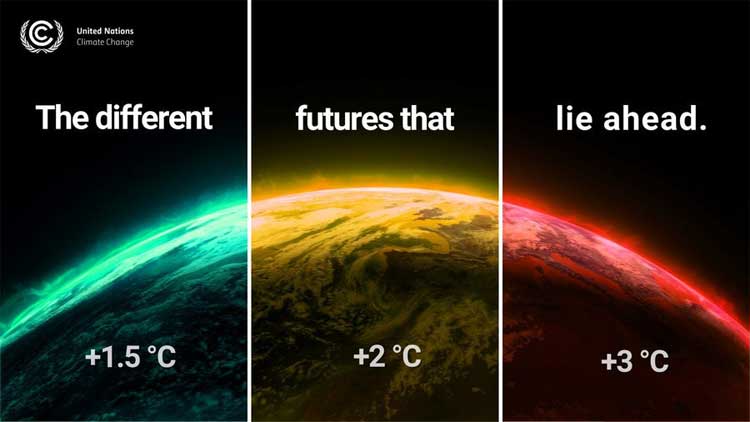
The findings underscore how close the world is to breaching the goals of the 2015 Paris Agreement, under which countries pledged to limit warming to well below 2°C and ideally no more than 1.5°C above pre-industrial levels.
Scientists highlighted a growing “Earth energy imbalance”—the difference between the amount of energy entering the planet from the Sun and the amount escaping back into space.
“Without human influence, it should be close to zero, but it has been growing since the 1970s and is now at a record high, doubling in recent decades,” said lead author Piers Forster, a professor of physical climate change at the University of Leeds.
Record emissions and shrinking carbon budget
Researchers said the accelerating warming trend is being driven by a combination of record greenhouse gas emissions and a decline in aerosol pollution.
While reducing aerosol pollution benefits human health, it also removes particles that reflect sunlight and exert a temporary cooling effect on the planet.
Carbon dioxide remains the primary driver of climate change, and global CO₂ emissions continue to hover at record levels.
Although the pace of emissions growth has slowed, scientists warned that the remaining global carbon budget compatible with limiting warming to 1.5°C could be exhausted within roughly three years if current trends continue.
“Given that greenhouse gas emissions are still on the rise, keeping global warming below this threshold now seems unachievable,” said Aurélien Ribes, a climate scientist at France’s national meteorological service, Météo-France.
Oceans sounding the alarm
The report also highlights the growing impact of climate change on the world’s oceans.
Global sea levels have risen by approximately 23 centimetres since 1901 and are now increasing at an average rate of 3.84 millimetres per year. The rise is being driven by the melting of glaciers and ice sheets, as well as the thermal expansion of seawater as it warms.
For the first time, the report included marine heatwave days as a key climate indicator. The findings show that marine heatwave days have more than tripled since 1991, reaching an average of 65 days in 2025.
Scientists warn that increasingly frequent and intense marine heatwaves can damage coral reefs, disrupt marine ecosystems, threaten fisheries and intensify extreme weather events.
A narrowing window for action
The assessment serves as another stark reminder that the world is rapidly approaching critical climate thresholds. With temperatures rising, oceans warming and carbon budgets shrinking, researchers say the opportunity to limit the most severe impacts of climate change is becoming increasingly narrow.
The report’s authors stress that substantial and sustained reductions in greenhouse gas emissions remain essential if the world hopes to avoid the most dangerous consequences of a warming planet.
Comments are closed, but trackbacks and pingbacks are open.