
Chinese Researchers Link Glacial Collapse to Climate Change, Warn of Rising Disaster Risks

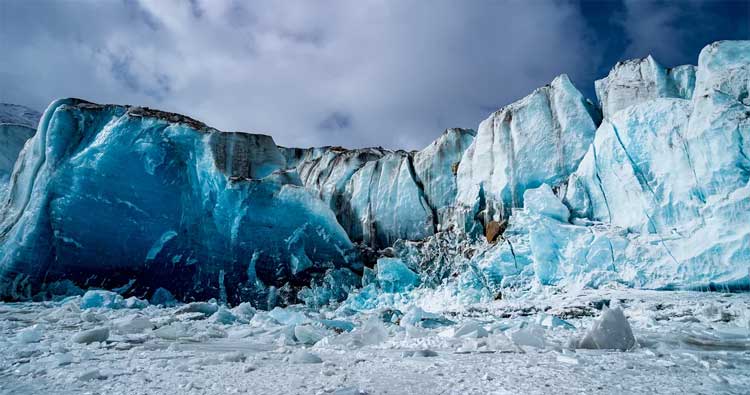
Chinese researchers have linked rising temperatures and rapid glacial retreat on the Tibetan Plateau to the growing risk of glacial lake outburst floods and other disasters, including the deadly glacial collapse reported along the Nepal-China border on August 26.
The warning comes as researchers highlight the rapid expansion of glacial lakes across the plateau, where more than 14,000 such lakes have now been mapped.
According to the latest glacier inventory compiled by Chinese researchers, the total glacier area on the Tibetan Plateau has declined to around 39,000 square kilometres, compared with 44,000 and 51,000 square kilometres recorded in two earlier studies spanning roughly six decades.
“The retreat has been particularly pronounced in the southern part of the plateau,” Kang Shichang, director and researcher at the Institute of Mountain Hazards and Environment under the Chinese Academy of Sciences in Chengdu, told China’s People’s Daily.
Glaciers in the Gangdise Mountains, Nyenchen Tanglha Mountains and the Himalayas have shrunk by around 40% over the past 60 years, Kang said. Across the entire plateau, glacier coverage has declined by about 24%.
“The main driver of this dramatic change is global warming,” he said, adding that glacier loss has directly contributed to a significant increase in both the number and size of glacial lakes.
Rising threat of glacial lake floods
Researchers warned that the retreat of glaciers has substantially increased the risk of glacial lake outburst floods, landslides and other natural disasters.
There are now more than 14,000 glacial lakes across the Qinghai-Tibet Plateau, covering a combined area of more than 1,100 square kilometres. The lakes are continuing to expand, increasing the potential for catastrophic flooding downstream.
“The most pronounced growth” in glacial lakes has been observed in the Himalayan region near China’s southern borders, according to Nie Yong, another researcher at the Institute of Mountain Hazards and Environment.
Glacial lakes in the region are expanding by an average of around 1% every year, Nie said.
Concern for India and Nepal
The findings are particularly significant for downstream countries such as India and Nepal, where sudden releases of water from unstable glacial lakes can cause severe flooding, landslides and damage to infrastructure and communities.
Experts say the growing threat underlines the need for more detailed and regular mapping of glacial lakes, along with greater sharing of data between countries in the Himalayan region.
Improved monitoring and early-warning systems could help downstream communities prepare for potential glacial lake outburst floods as climate change continues to reshape the Himalayan cryosphere.
Comments are closed, but trackbacks and pingbacks are open.