
Carbon Debt Explained: Why BRICS Supports Fossil Fuels And Why It Matters At COP31

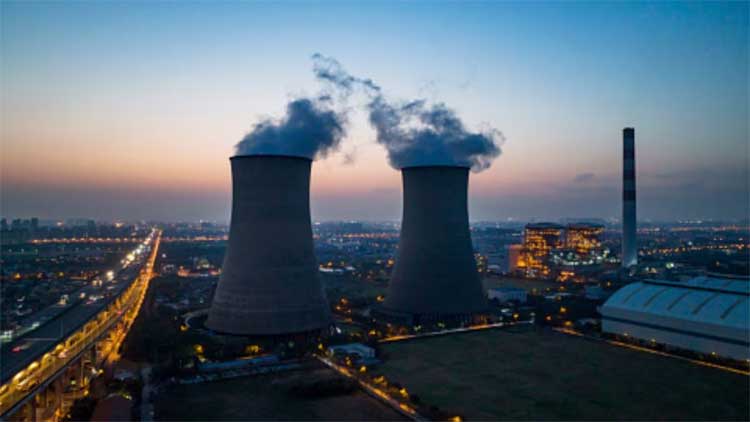
With less than a month to go before the United Nations Climate Change Conference (COP31), negotiations over climate action are once again set to expose deep divisions between developed and developing nations. While these disputes may appear to be routine diplomatic differences, their consequences are felt directly by ordinary people facing droughts, floods, rising temperatures and water shortages.
For farmers, prolonged droughts can mean crop failures and lost incomes. In flood-prone areas, economically vulnerable families risk losing homes and livelihoods. Coastal communities are increasingly struggling with freshwater availability due to saltwater intrusion, while outdoor workers in cities face extreme heat, heatstroke and lost wages.
These impacts have brought renewed focus on the idea of climate justice — the argument that countries and communities that have contributed the least to global warming should not be forced to bear a disproportionate share of its consequences.
The debate is closely linked to the concept of “carbon debt”, which refers to the historical emissions accumulated by developed economies during their industrialisation.
The issue has gained fresh prominence following the BRICS New Delhi Declaration, in which developing nations reiterated that fossil fuels would continue to play a role in their energy mix while stressing the need for “just, orderly, equitable and inclusive energy transitions.”
Developed Nations Account For Larger Historical Emissions
Speaking to PTI Videos, Pallavi Das, Programme Lead at the Council on Energy, Environment and Water (CEEW), said societies largely depended on agriculture and had minimal fossil-fuel consumption before the era of carbon-intensive development.
The Industrial Revolution fundamentally changed that pattern as coal, oil and gas became central to factories, power generation and other industries.
Das said developed economies consequently accumulated a disproportionately large share of historical global emissions compared with their populations at the time.
According to figures cited by Das, between 1890 and 2009, the United States emitted around 400 gigatonnes of carbon dioxide, while the European Union accounted for about 348 gigatonnes and China around 220 gigatonnes. India’s historical emissions during the same period stood at approximately 53 gigatonnes.
By 2019, India’s cumulative historical carbon dioxide emissions were still only around 11 per cent of those of the United States, she noted.
What Is ‘Carbon Debt’?
Sanjay Vashist, Director at the Climate Action Network in South Asia (CANSA), explained the concept of carbon debt in terms of the unequal use of the atmosphere’s limited capacity to absorb greenhouse gas emissions.
He said developed countries had historically consumed more than their fair share of atmospheric space by burning fossil fuels to achieve economic growth and accumulate wealth.
“Since the Industrial Revolution, developed nations burned coal and other fossil fuels and accumulated enormous wealth. Now that it has become a problem, they are asking developing countries, especially major emerging economies like the BRICS nations, to cut back on emissions and growth,” Vashist told PTI.
‘Paris Agreement Becoming One-Sided’
Former Environment Ministry Secretary CK Mishra said developing countries were continuing to adhere to the Paris Agreement, while developed nations had found what he described as a “convenient way out of the process.”
He said the agreement was based on the expectation that developed countries would provide financial resources and technology to help developing nations address climate change.
“That hasn’t happened, and doesn’t seem to be happening soon,” Mishra told PTI.
He argued that the Paris Agreement risked becoming a one-sided arrangement in which developing countries carried a disproportionate burden despite having fewer resources to implement climate action.
Mishra previously led India’s climate negotiations at United Nations Climate Change Conferences during his tenure as Environment Ministry secretary.
Why Developing Nations Still Need Fossil Fuels
The BRICS declaration’s recognition that fossil fuels will continue to have an important role in the global energy mix reflects the different economic and energy realities faced by developing countries.
CEEW’s Pallavi Das said developed economies could transition more easily to cleaner sources because of relatively stable energy demand, whereas developing nations continue to experience rapidly rising demand for electricity and other forms of energy.
For countries still expanding infrastructure, manufacturing and access to electricity, an abrupt shift away from fossil fuels could create significant economic and energy-security challenges.
Climate Justice Does Not Mean Unlimited Fossil Fuel Use
Shailly Kedia, Director at The Energy and Resources Institute, said the debate should not be reduced to whether developing countries should transition away from fossil fuels.
“The question isn’t whether developing countries, including BRICS nations, should transition away from fossil fuels, a transition does need to happen. But carbon debt should not be used as a license for unlimited fossil fuel use either,” she said.
Kedia stressed that although all countries under the Paris Agreement and the United Nations Framework Convention on Climate Change (UNFCCC) have committed themselves to the common goal of climate stabilisation, they are starting from very different economic, developmental and historical positions.
She said this difference in starting points lies at the heart of climate justice.
CBDR-RC Principle At The Heart Of COP31 Talks
The principle of Common But Differentiated Responsibilities and Respective Capabilities (CBDR-RC) recognises that while every country has a responsibility to tackle climate change, developed nations should shoulder a greater share of the burden because of their larger historical contribution to greenhouse gas emissions and greater financial and technological capabilities.
Kedia said the principle, along with national circumstances, is likely to remain central at COP31, particularly in negotiations on climate finance, adaptation and the broader framework for global climate action.
BRICS Position Also A Negotiating Strategy
CANSA’s Sanjay Vashist said BRICS countries’ continued reliance on fossil fuels could ultimately put their development gains at risk if climate disasters intensify.
He argued that under the CBDR-RC principle, developed nations must provide substantial climate finance, adaptation support and technology transfers to help developing economies transition towards cleaner energy without sacrificing development.
“In my view, BRICS’s position is also a negotiating strategy,” Vashist told PTI.
He cited the UNEP Emissions Gap Report to argue that developing countries are already taking significant steps to reduce emissions, while developed nations remain far from meeting what civil society groups consider their fair share of emission reductions.
COP31: Key Details
The 31st UN Climate Change Conference (COP31) is scheduled to take place in Antalya, Türkiye, from November 9 to 20. Australia will take on the role of President of the negotiations.
With climate finance, adaptation, energy transitions and historical responsibility expected to remain major areas of contention, the conference is likely to once again test whether developed and developing nations can agree on a climate framework that balances emissions reduction with economic development and climate justice.
Comments are closed, but trackbacks and pingbacks are open.