
BJP Faces Setback in PM Modi’s Varanasi Bastion as Samajwadi Party Retains Teachers’ Seat

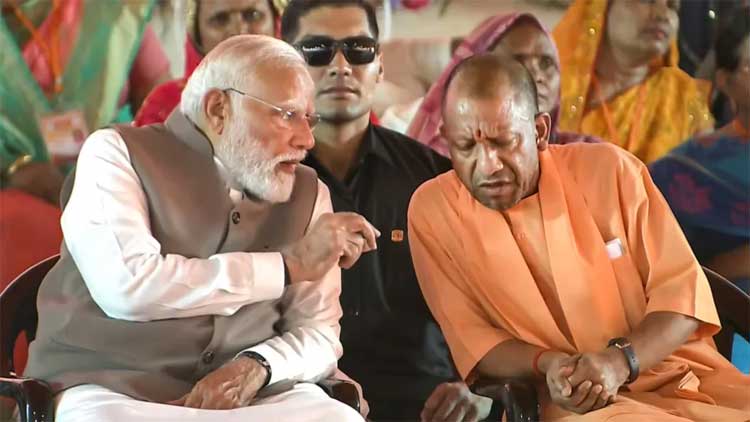
The Bharatiya Janata Party (BJP) has suffered a setback in Prime Minister Narendra Modi’s Lok Sabha constituency of Varanasi, with the Samajwadi Party (SP) retaining the teachers’ seat in the Uttar Pradesh Legislative Council elections and leading in the graduates’ constituency.
Of the 11 Legislative Council seats in Uttar Pradesh, the BJP has won six and the Samajwadi Party four, while the result in the Varanasi graduates’ constituency remains awaited. The SP had won only two of these seats in the previous election. A victory in Varanasi would take its tally to five, marking a significant gain ahead of the upcoming Assembly elections.
The contest in Varanasi has turned into a prolonged political standoff, with counting continuing for nearly 49 hours and leaders from both parties staging sit-ins at the counting centre. The BJP and the SP have accused each other of irregularities in the process.
Although elections to teachers’ and graduates’ constituencies do not necessarily reflect the political preferences of the wider electorate, they offer insights into the mood of educated voters. The results have also drawn attention amid concerns over unemployment, examination paper leaks and recruitment processes.
Samajwadi Party Retains Teachers’ Seat
Samajwadi Party candidate Lal Bihari Yadav retained the Varanasi teachers’ constituency, defeating BJP candidate Pramod Kumar Mishra by 5,015 votes.
The result strengthens the SP’s position in a constituency where Yadav had secured victory in the 2020 election as well. At that time, he defeated Mishra, who was then an Independent candidate, by a margin of 936 votes.
Chet Narayan Singh, a sitting Member of the Legislative Council who had received BJP support in 2020, contested this time as an Independent and finished third.
The increased victory margin suggests that the SP has consolidated its position among voters in the teachers’ constituency.
Varanasi Graduates’ Seat Sees Prolonged Counting Standoff
The graduates’ constituency has emerged as the principal battleground between the BJP and the SP, with the latter’s sitting MLC, Ashutosh Sinha, maintaining a comfortable lead over BJP candidate Kedar Nath Singh, according to the latest updates cited in the election report.
Sinha had defeated Singh by 3,850 votes in 2020. This time, his victory margin is expected to be substantially larger, although the final result remains subject to the completion of counting and the official declaration.
The extended counting process has triggered allegations of irregularities from both parties, prompting senior leaders and party workers to gather at the counting centre.
SP chief Akhilesh Yadav appealed to party workers on Thursday to remain at the centre until they received the official victory certificate. In a post on X, he also urged them to arrange food, drinking water, umbrellas and towels for those waiting at the site.
Earlier, Yadav questioned the integrity of the process, referring to reports that people were bringing Gangajal to the counting centre to challenge officials to demonstrate their honesty.
Late Wednesday night, BJP candidate Kedar Nath Singh demanded a recount, alleging anomalies and attempts to manipulate the counting process.
The rival claims have heightened tensions as both parties await the final outcome.
Why the Varanasi Result Matters
The Varanasi teachers’ and graduates’ constituencies cover eight districts: Ballia, Ghazipur, Jaunpur, Varanasi, Chandauli, Bhadohi, Mirzapur and Sonbhadra. Together, these districts account for 47 Assembly constituencies, making the region politically significant for both the BJP and the SP.
In the 2022 Uttar Pradesh Assembly elections, the BJP-led National Democratic Alliance (NDA) won 28 of these 47 seats. The BJP secured 22, while Apna Dal (Sonelal) and the Nishad Party won three seats each.
The Samajwadi Party won 14 seats, while its then ally, the Suheldev Bharatiya Samaj Party (SBSP), secured four. The Bahujan Samaj Party (BSP) won the remaining seat.
The SBSP, led by Om Prakash Rajbhar, has since joined the NDA, and Rajbhar is now a cabinet minister in the Uttar Pradesh government.
The BJP has also given the region substantial representation in the state government, with nine cabinet ministers reportedly hailing from the eight districts.
A strong SP performance in the Legislative Council elections could therefore prompt questions within the BJP about its organisational strength and voter outreach in a politically important region.
BJP Campaign Focused on Modi and Yogi
The BJP had deployed senior leaders to campaign for the Legislative Council elections, seeking to retain its influence among teachers and graduates.
Chief Minister Yogi Adityanath addressed a teachers-and-graduates gathering on October 14 as part of the campaign. During his speech, he described the Samajwadi Party as “anti-education” and accused its previous governments of corruption in government job recruitment. He urged voters not to trust the party led by Akhilesh Yadav.
Uttar Pradesh Cabinet Minister Suresh Khanna had earlier attributed the BJP’s defeat in both Varanasi constituencies in 2020 to overconfidence.
Following the latest results, a senior BJP leader acknowledged that overconfidence and organisational negligence may have again affected the party’s performance. The leader said a district-wise analysis of votes would be conducted.
Another BJP leader pointed to the SP’s stronger grassroots mobilisation, arguing that its workers had been more active in registering supporters as voters.
“The candidates and the party organization left the election to the popularity of Prime Minister Narendra Modi and Chief Minister Yogi Adityanath instead of reaching out to voters,” the leader said.
The remarks suggest that the BJP may need to reassess its strategy for elections involving smaller, more clearly defined electorates, where direct engagement and voter registration can play a decisive role.
A Warning Sign Ahead of Assembly Elections?
The Varanasi results highlight the importance of local organisation and targeted campaigning, even in constituencies associated with nationally prominent political leaders.
For the SP, retaining the teachers’ seat and maintaining a lead in the graduates’ constituency could provide a boost ahead of the Assembly polls. For the BJP, the outcome raises questions about whether its broader political appeal is translating into effective mobilisation among specific voter groups.
However, Legislative Council elections involving teachers and graduates are not directly comparable to Assembly elections, where the electorate is much larger and more diverse. The results alone cannot establish a wider shift in public opinion.
The final outcome in the Varanasi graduates’ constituency will determine the SP’s ultimate tally in Uttar Pradesh. Regardless of the result, the contest has placed the spotlight on party organisation, voter outreach and the political mood among educated voters in Modi’s parliamentary constituency.
Comments are closed, but trackbacks and pingbacks are open.