
Only 74 of 14,567 Voter Deletion Objections Found Valid in Maharashtra’s Bhusawal

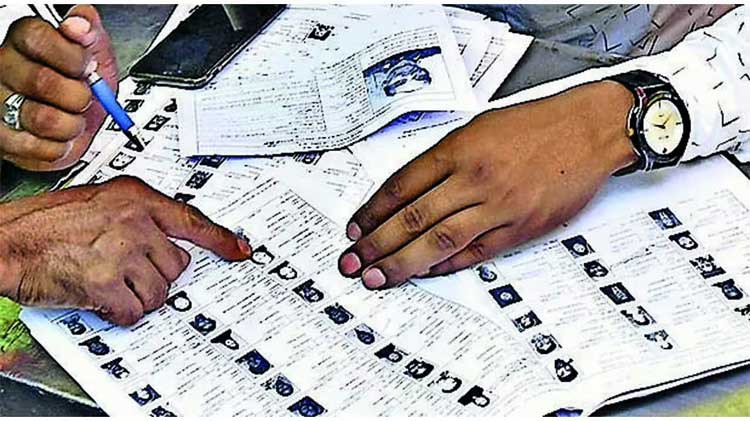
Days after complaints emerged over the bulk submission of offline Form-7 objections by 186 individuals seeking the deletion of 14,562 voters from the Bhusawal Assembly constituency in Maharashtra’s Jalgaon district, an official inquiry has found only 74 voters eligible for removal.
The district administration has initiated legal action against individuals who submitted objections with alleged “malicious intent.” The Bhusawal constituency is represented by Bharatiya Janata Party (BJP) leader and Maharashtra Textiles Minister Sanjay Savkare.
According to the factual report prepared following the inquiry, at least 21 of the 186 objectors voluntarily withdrew 2,532 objections after the opposition Congress raised the issue, further questioning the circumstances and intentions behind the bulk filing of Form-7 applications.
Thousands of objections withdrawn or rejected
The inquiry report stated that a total of 14,567 Form-7 objections were received by post in the Bhusawal Assembly constituency.
Following the withdrawal of 2,532 objections by 21 applicants, election authorities issued individual notices to the remaining objectors and published a public notice in a newspaper on November 5, 2026, asking them to submit supporting evidence.
The administration subsequently conducted physical inspections and detailed verification of individual applications through the concerned Booth Level Officers (BLOs).
Following the scrutiny, only 74 voters were found eligible for deletion, and action against them was initiated in accordance with electoral rules. All remaining objections were disposed of, the report stated.
An official order issued on November 17 by the Sub-Divisional Officer and Electoral Registration Officer confirmed that all 14,567 objections had been disposed of after following the prescribed legal procedures.
The order also warned that legal action would be taken against individuals found to have filed objections with malicious intent.
Congress demands accountability
The issue was initially highlighted by Munawwar Khan, a local Booth Level Agent (BLA) of the Congress, who questioned how such a large number of deletion applications could be submitted in the names of just 186 individuals.
Khan demanded an investigation into the acceptance of the bulk applications and whether they had been filed with the intention of unlawfully removing eligible voters from the electoral rolls.
“After I pointed out the mass submissions, the local administration swung into action and scrutiny took place. We even traced the individuals who had filed objections and many of them denied having signed on Form-7. We want a detailed inquiry into this,” Khan told The Indian Express.
The Congress has also raised concerns about the authenticity of the applications and called for accountability from those involved in their preparation and submission.
Election Commission had imposed limits on Form-7 applications
The controversy has drawn additional attention because the Election Commission of India (ECI) had introduced restrictions on bulk submissions of Form-7 applications in October 2026.
In instructions issued to Chief Electoral Officers across states and Union Territories, the Commission capped the number of Form-7 applications an individual elector could submit at 10 during the claims and objections period of the electoral roll revision process.
The restriction applies to both online and offline submissions. During routine continuous updating of electoral rolls, the limit was set at five applications per individual per month.
Form-7 is the prescribed application through which an elector can object to the inclusion of a name or seek the deletion of an existing entry from the electoral roll.
A senior official from the Maharashtra Chief Electoral Officer’s office said the Bhusawal applications had been received by post, which meant they were initially accepted without an opportunity to establish the identity of every objector.
“In Bhusawal, the forms were sent through post, resulting in acceptance of all forms as there was no way of knowing who was the objector. Once we received the forms and scrutinised them, due process was followed. Since we followed the procedure, held hearings and disposed of malicious objections, only 74 have been accepted,” the official told The Indian Express.
The findings have brought renewed attention to safeguards governing electoral roll revisions and the need to prevent the misuse of deletion procedures.
With legal action now being initiated against those suspected of filing objections with malicious intent, the focus will be on establishing who was responsible for the questionable submissions and whether any individuals or others were involved in organizing them.
Comments are closed, but trackbacks and pingbacks are open.