
Scientists Race to Understand Rare Ebola Strain as Deadly Congo Outbreak Spreads

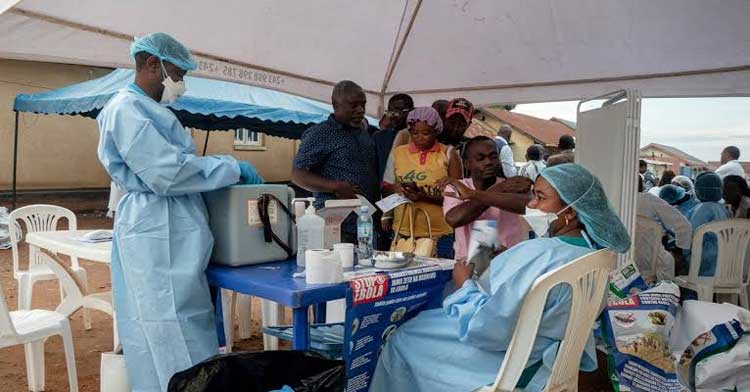
More than six months into a devastating Ebola outbreak in the Democratic Republic of the Congo (DRC), scientists and medical teams are gaining new insights into the rare Bundibugyo strain of the virus, hoping to understand its rapid spread and identify effective ways to contain it.
The outbreak has recorded more than 11,000 cases and over 5,500 deaths, with the Bundibugyo virus spreading at twice the pace of the 2014–2016 West African Ebola epidemic, the largest on record. There are currently no licensed vaccines or treatments specifically approved to combat the strain.
Experts say the outbreak’s location in conflict-affected eastern Congo, where humanitarian conditions are already severe, may be complicating efforts to understand the virus. They caution, however, that drawing firm conclusions remains difficult because available data is limited, inconsistent, and challenging to collect.
“There are so many different factors to compare across outbreaks, even within outbreaks — it is really hard,” said Daniel Bausch, a member of the World Health Organization’s Ebola emergency committee and visiting professor at the Geneva Graduate Institute in Switzerland.
Catherine Smallwood, the WHO’s Ebola incident manager, said response teams were collecting evidence to improve understanding of the outbreak and guide interventions.
“Soon we’ll be able to make some bold statements about what’s the same, what’s different, and what we need to adjust,” she said.
Bleeding less common among patients
One major area of investigation involves the symptoms associated with the Bundibugyo strain, particularly among children, according to officials from the WHO and the Africa Centres for Disease Control and Prevention.
Ebola infection can cause fever, vomiting, diarrhea and, in severe cases, internal and external bleeding.
However, bleeding has been reported in only around 5% to 10% of confirmed cases in the current Bundibugyo outbreak, making it less common than in outbreaks caused by the more prevalent Zaire strain, said Yap Boum, Africa CDC’s deputy Ebola incident manager.
The difference can make the disease harder to distinguish from more common illnesses, particularly malaria. Boum said this may have contributed to delayed outbreak detection, alongside initial diagnostic difficulties, as tests designed to identify other Ebola species do not detect Bundibugyo.
The absence of easily recognizable symptoms is also complicating efforts to track transmission, as many people do not suspect Ebola and consequently delay seeking medical attention.
Around 70% of patients are still dying in their communities rather than in healthcare facilities.
Although the outbreak was officially declared in May, the WHO and Africa CDC believe transmission may have been occurring for several months before its detection.
Jean-Jacques Muyembe, a co-discoverer of Ebola and head of the DRC’s National Institute for Biomedical Research, said some patients were also developing bleeding symptoms later in the course of the disease.
Bausch noted that scientific understanding of Ebola symptoms has evolved, with researchers increasingly recognizing that bleeding is less universal across Ebola infections than previously believed. However, it appears to be particularly uncommon among patients infected with the Bundibugyo strain.
Children face higher risks
The disease presents additional diagnostic and treatment challenges among young children, Smallwood said.
Gastrointestinal symptoms are more common than fever in this age group, making early identification and treatment more difficult. This may also help explain why children are being disproportionately affected by the outbreak.
According to the latest figures from the Congolese Ministry of Health and the WHO, 1,207 confirmed cases have been recorded among children under five, with 844 deaths — a fatality rate of approximately 70%.
This is higher than the roughly 50% fatality rate reported among adults. The overall rate is also above those recorded in previous Bundibugyo outbreaks, although it remains below the typical fatality rates associated with the Zaire strain, which can reach 80% without treatment.
Unanswered questions and research challenges
Despite growing knowledge of the virus, experts say several important questions remain unanswered.
These include how frequently patients experience mild symptoms and what long-term health consequences survivors may face.
Around 700 survivors have enrolled in research studies and support programmes, according to the WHO.
Genomic sequencing has identified distinct differences between Bundibugyo and more common Ebola strains. However, available evidence indicates that the virus is not undergoing rapid changes or becoming increasingly transmissible.
Sylvie Jonckheere, emerging and re-emerging infectious diseases adviser at Médecins Sans Frontières (MSF), said research remains difficult because many cases are not being identified before patients die in their communities.
“If we don’t find the ones that are severely sick, what is our hope of finding the ones that are only mildly sick?” she said.
Experts emphasized that timely access to quality healthcare significantly improves patients’ chances of survival.
They also pointed to progress in controlling the outbreak in some of its initial hotspots as evidence that established public health measures, including patient isolation, can be effective. Like the Zaire strain, Bundibugyo appears to spread primarily when infected individuals are symptomatic.
Vaccine and treatment trials underway
A major priority for researchers is determining which vaccines and treatments could provide protection against the Bundibugyo strain.
A trial involving Merck’s Ervebo vaccine, originally developed to protect against the Zaire strain, is examining whether it can also provide cross-protection against Bundibugyo.
Meanwhile, vaccines specifically developed for the Bundibugyo strain are expected to enter clinical trials soon.
Medical teams in the DRC are also testing preventive antiviral medicines and potential treatments developed by Gilead Sciences and Mapp Biopharmaceutical.
Boum said the situation could change significantly if research establishes that existing or newly developed interventions are effective.
“When we started, we said there are no vaccines, no treatments,” he said. “If we start proving we have some efficacy… it becomes a game changer.”
Comments are closed, but trackbacks and pingbacks are open.