
“Fossil Fuels Must Go The Way Of Dinosaurs”: UN Chief António Guterres Urges World Leaders to Act at COP31

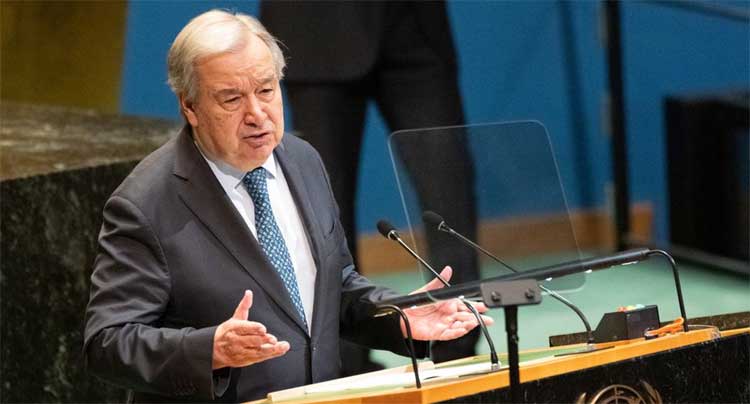
United Nations Secretary-General António Guterres has called on world leaders to accelerate the transition away from fossil fuels, declaring that coal, oil and natural gas must “go the way of the dinosaurs” to tackle the escalating climate crisis.
Addressing the COP31 Leaders’ Summit in Antalya, Türkiye, on November 11, Guterres warned that global efforts to combat climate change were falling dangerously behind scientific requirements. He accused powerful fossil fuel interests of obstructing climate policies and urged governments to accelerate investment in renewable energy.
“Fossil fuels must go the way of the dinosaurs. But that won’t happen on its own. The dinosaurs did not have a lobby. But fossil fuels do,” Guterres told world leaders.
His remarks came as the two-week COP31 climate negotiations entered a crucial phase, with governments facing growing pressure to reduce greenhouse gas emissions, strengthen climate commitments and provide financial assistance to vulnerable countries.
The summit, being held in Antalya from November 9 to 20, has brought together government representatives, climate scientists, environmental organisations and activists to discuss the implementation of international climate commitments.
‘Climate Crisis Is Outrunning Us,’ Warns Guterres
In his address, Guterres described the climate situation as increasingly urgent, pointing to record global emissions, rising temperatures and intensifying extreme weather events.
“The brutal truth is that the climate crisis is outrunning us,” he said.
According to the UN chief, global emissions reached record levels in 2025, while the last four years were the hottest ever recorded.
He warned that climate-related disasters were increasingly threatening lives, livelihoods and national economies through heatwaves, wildfires, floods and other extreme weather events.
Guterres also recalled the 2015 Paris Agreement, under which countries committed to limiting global warming to well below 2 degrees Celsius while pursuing efforts to restrict the temperature increase to 1.5 degrees Celsius above pre-industrial levels.
However, he said a temporary overshoot of the 1.5-degree threshold had become inevitable, highlighting the need for immediate and substantial emissions reductions to limit long-term damage.
UN Chief Accuses Fossil Fuel Lobby of Delaying Climate Action
A major part of Guterres’ speech focused on the influence of the oil, gas and coal industries on international climate policymaking.
He argued that fossil fuel companies and their lobbying networks were slowing the transition to cleaner energy by challenging scientific evidence, delaying government policies and resisting accountability.
“Their strategy is simple: Distort the science. Delay the policy. Delay the action. Delay the accountability,” he said.
Guterres also called attention to the financial interests associated with fossil fuel production, arguing that companies continued to benefit from substantial profits while communities around the world faced the consequences of climate change.
He urged governments to introduce taxes on windfall profits earned by fossil fuel companies and use the revenue to support countries particularly vulnerable to climate-related disasters.
His proposal reflects a broader debate at international climate negotiations over who should bear the financial responsibility for reducing emissions and addressing climate damage.
Renewable Energy Transition Must Accelerate
Guterres called for a faster, science-based and equitable transition towards renewable energy, warning that countries could not afford to continue relying heavily on fossil fuels.
He stressed that the transition must be orderly and fair, ensuring that workers, developing economies and vulnerable communities are not left behind.
According to the UN chief, three-quarters of humanity live in countries that import fossil fuels, leaving them exposed to international price fluctuations and energy supply disruptions.
He argued that dependence on imported coal, oil and gas also creates economic and security vulnerabilities, particularly during periods of geopolitical conflict.
The expansion of solar, wind and other renewable energy sources, alongside investment in electricity grids and energy storage, could help countries reduce these risks while cutting greenhouse gas emissions.
Global Emissions Must Fall 6% Every Year
Highlighting the gap between climate commitments and the action required, Guterres said global greenhouse gas emissions must decline by approximately 6 per cent annually.
However, existing national climate plans, including conditional commitments, would deliver only around one-third of the reductions required, according to his assessment.
He warned that even if countries fully implemented their current commitments, global temperatures could rise by more than 2.5 degrees Celsius by the end of the century.
Such warming would increase the risk of crossing dangerous and potentially irreversible climate tipping points, threatening ecosystems, food security, water supplies and human settlements.
“We need an extraordinary acceleration,” Guterres urged, warning that the world was running out of time to prevent the most severe consequences of climate change.
COP31 Faces Challenges Amid Global Political and Economic Tensions
The COP31 summit is taking place against a complicated geopolitical and economic backdrop.
The ongoing war involving the United States and Iran, Russia’s invasion of Ukraine, energy market uncertainty and international trade tensions have complicated efforts to build consensus on climate policies.
The negotiations are also taking place amid concerns over the participation of several major world leaders, raising questions about the level of political commitment to international climate agreements.
Since the 2023 COP28 summit in Dubai, where countries agreed for the first time to transition away from fossil fuels in their energy systems, progress towards implementing that commitment has remained a major challenge.
Governments continue to differ over the pace of the transition, the responsibilities of developed and developing countries, and the financial assistance required to support cleaner energy systems.
Developing nations have repeatedly argued that wealthier countries, which have historically contributed more to greenhouse gas emissions, should provide greater financial and technological assistance.
Climate Finance and Support for Vulnerable Countries
Another important issue at COP31 is the need to increase climate finance for developing countries.
Many vulnerable nations face rising costs from floods, droughts, coastal erosion, extreme temperatures and other climate-related disasters, despite contributing relatively little to historical global emissions.
Guterres has called for stronger financial support for these countries, including assistance for renewable energy development, climate adaptation and recovery from environmental disasters.
His proposal to tax extraordinary profits made by fossil fuel companies is aimed at generating additional resources for vulnerable communities.
The broader discussions also include strengthening international mechanisms for addressing loss and damage caused by climate-related events.
For developing economies, including India, the availability of affordable finance and technology will remain important in balancing economic development, energy security and emissions reduction.
COP31 Marks Guterres’ Final Climate Summit as UN Chief
The Antalya summit is particularly significant for Guterres as it is his final COP conference before his term as United Nations Secretary-General ends in December 2026.
Since taking office in 2017, he has consistently made climate change one of the central priorities of his leadership, repeatedly calling for stronger emissions reductions and a faster transition towards renewable energy.
His latest remarks reinforce his long-standing position that governments must move beyond climate pledges and deliver measurable action.
The two-week COP31 negotiations are scheduled to continue until November 20, with participating countries expected to discuss practical measures for implementing existing climate commitments.
What Lies Ahead for the Global Energy Transition?
Guterres’ speech has once again placed fossil fuel dependence at the centre of international climate discussions.
While renewable energy capacity continues to expand in several parts of the world, the transition involves major challenges, including financing requirements, electricity infrastructure, energy storage, industrial dependence on fossil fuels and the economic interests of producing countries.
For developing nations, the challenge is particularly complex because energy demand is growing alongside populations, urbanisation and industrial development.
The shift towards cleaner energy therefore requires not only political commitments but also investment, technological cooperation and financial assistance.
Guterres’ message at COP31 was clear: governments must accelerate the transition to renewable energy rather than allowing existing political and economic interests to delay climate action.
Whether world leaders can translate these warnings into concrete agreements and measurable emissions reductions will be one of the central questions facing the Antalya climate negotiations.
Comments are closed, but trackbacks and pingbacks are open.