India Calls US Midterm Elections an ‘Internal Matter’, Says Bilateral Ties Enjoy Strong Bipartisan Support

India on Tuesday described the US midterm elections as an “internal matter” of the United States, while emphasising that bilateral relations between the two countries continue to enjoy “strong bipartisan support” across the American political spectrum.
Responding to questions, Ministry of External Affairs (MEA) spokesperson Randhir Jaiswal said India had no specific comment on the electoral outcome but remained committed to strengthening its strategic partnership with Washington.
“The midterm elections are an internal matter of the US. I have no specific comment on them, beyond underlining that the India-United States relationship enjoys strong bipartisan support in the US. We continue to work to further strengthen our Comprehensive Global Strategic Partnership with the US,” Jaiswal said.
The election outcome represents a significant setback for US President Donald Trump, whose Republican Party lost control of both the Senate and the House of Representatives, two years into his presidential term.
Widely viewed as a referendum on Trump’s second term, the midterm elections dealt a major political blow to the President, whose domestic and foreign policy decisions have had implications for countries across the world, including India.
India-US relations have experienced considerable strain over the past two years, with disagreements involving tariffs, trade, visa restrictions, deportations and Washington’s close ties with Pakistan’s military.
India Hits Back at USCIRF Criticism
Another source of friction has been the repeated criticism of India by the United States Commission on International Religious Freedom (USCIRF), a US federal government commission that monitors religious freedom conditions around the world.
Responding to its latest remarks, Jaiswal strongly criticised the organisation, accusing it of political bias and selective commentary.
“As I have said before, the USCIRF is a biased and ill-informed organisation with a blatantly political agenda. It is particularly telling that the USCIRF and its Commissioners have consistently chosen to remain silent on attacks on religious places in the US and on the hate crimes and racial abuse targeted at the Indian community in the US. A prejudiced entity can hardly be taken seriously,” he said.
In a post on X last week, the USCIRF quoted Commissioner David Anderson as alleging that Sikh gurdwaras in India had faced vigilante attacks in recent weeks, including attempts to harm religious leaders.
Anderson urged the US government to link security assistance to India’s response to violence that prevents people from exercising their Freedom of Religion or Belief (FoRB).
The commission also quoted Commissioner Joe Grogan, who said attacks on places of worship, including churches, gurdwaras and mosques, undermined religious freedom rights recognised under international law.
Grogan called on the US government to continue pressing India to ensure accountability for those responsible for such violence and to protect places of worship.
India Defends Hiring US Lobbying Firms
Amid the strained bilateral relationship, India has also engaged lobbying firms in Washington to maintain communication channels with the US administration and other influential stakeholders.
The Indian Express reported on November 7 that filings under the US Foreign Agents Registration Act (FARA) showed that lobbying firm SHW Partners LLC had facilitated eight telephone conversations between Indian officials and senior White House figures during May and June 2026.
Asked about the disclosures, Jaiswal defended the practice, saying diplomatic missions routinely engage lobbying firms in the United States to facilitate outreach.
“It is a normal practice in the US for diplomatic missions to engage lobby firms to facilitate outreach and engagement with the US Administration, members of the Congress, and other relevant stakeholders. Incidentally, past filing records give ample examples of lobbyists facilitating contacts with US Administration leaders and personnel. So there should be no confusion on this account,” he said.
He added that such engagements complied with applicable American laws, including FARA, under which lobbying activities are publicly disclosed.
“Such engagements are undertaken in accordance with the applicable US laws, including the Foreign Agents Registration Act (FARA), under which the activities of these firms are publicly disclosed. India has been engaging lobby firms in Washington DC since 1948,” Jaiswal said.
MEA Rejects Pannun’s Lawsuit Against Indian Officials
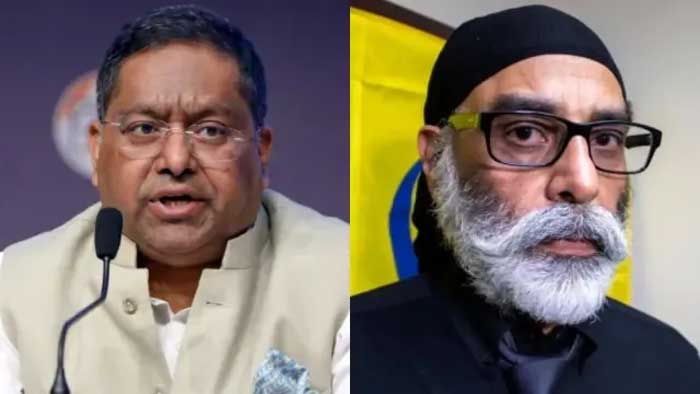
The MEA spokesperson also rejected a civil lawsuit filed in the United States by Khalistani separatist Gurpatwant Singh Pannun against Indian officials.
The response came after a US federal court allowed Pannun to pursue the service of summons on National Security Adviser Ajit Doval and former Research and Analysis Wing (R&AW) chief Samant Goel through Indian courts.
Rejecting the move, Jaiswal described the allegations and legal proceedings as malicious and frivolous.
“We reject the fabricated and malicious attacks on our high officials. Also, we reject the frivolous lawsuits. A request for the service of judicial documents in India can only be routed through India’s designated central authority, which is the Ministry of Law and Justice,” he said.
The development stems from an order issued by the US District Court for the Southern District of New York in connection with the civil lawsuit filed by Pannun.
Taken together, the issues underline the challenges confronting India-US relations, even as New Delhi continues to emphasise the enduring bipartisan support for its strategic partnership in Washington.
Comments are closed, but trackbacks and pingbacks are open.