
Delhi Braces for Another Winter of Toxic Air as Pollution Measures Face Test

Two cardboard boxes sit in the living room of Meenu Rana’s Delhi home. One contains Diwali decorations and strings of festive lights, while the other is packed with air purifiers.
“The mornings have already started feeling stuffy. It will get worse in the coming days, so it’s better to be prepared,” says the 43-year-old teacher.
Rana is among thousands of Delhi residents preparing for an annual winter ordeal that has become as predictable as the festive season itself: months of hazardous air pollution.
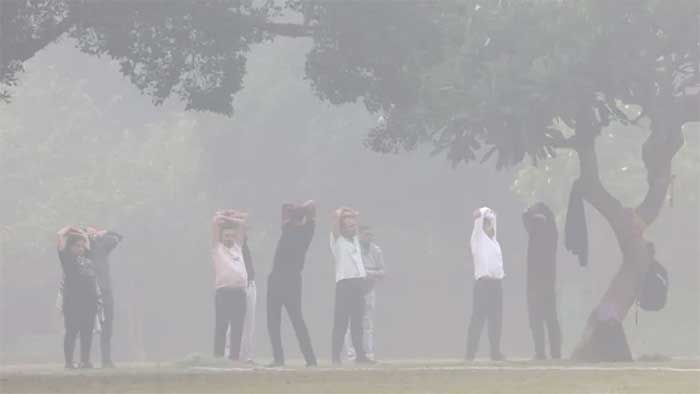
Delhi and its surrounding satellite cities regularly experience some of the world’s worst air quality. The situation typically deteriorates sharply during winter, when falling temperatures and weaker winds prevent pollutants from dispersing, trapping harmful particles close to the ground.
Smoke from agricultural stubble burning in neighbouring states adds to emissions from vehicles, industrial activities and construction dust. Firecrackers during the festive season further aggravate the problem.
The result is a recurring public health emergency that raises familiar questions about why the capital continues to struggle with pollution despite years of government interventions.
This year, however, the Delhi government introduced its Winter Action Plan well ahead of the peak pollution season. Covering November 1 to February 28, the programme outlines measures intended to tackle the sources of pollution during the months when air quality typically deteriorates.
Environmental experts have welcomed the earlier preparation, noting that previous administrations often introduced restrictions only after pollution had reached alarming levels. However, they caution that advance planning alone cannot solve the problem without sustained implementation and longer-term reforms.
Within days of the plan taking effect, Delhi was already slipping into its familiar winter pattern.
A thick grey haze has settled over the city, accompanied by a smoky smell that residents recognise all too well. Complaints of burning eyes, breathing difficulties, coughing and sneezing are becoming increasingly common.
For households that can afford them, air purifiers have become essential appliances. People venturing outdoors increasingly rely on masks and cloth coverings in an attempt to limit their exposure.
Controlling air pollution was among the key promises made by the ruling Bharatiya Janata Party during last year’s election campaign. The new Winter Action Plan is therefore an important test of its commitment.
Government rolls out restrictions to curb pollution
The plan introduces several measures aimed at reducing emissions and limiting activities that contribute to deteriorating air quality.
These include restricting the entry of older, more polluting vehicles registered outside Delhi and denying fuel to vehicles without valid pollution-under-control certificates.
Demolition activities and outdoor construction work likely to generate dust have also been temporarily prohibited.
The government is seeking to discourage private vehicle use by asking offices to allow 50% of their employees to work from home. It has also introduced staggered working hours for government staff and doubled parking charges.
Additional measures include strengthening pollution monitoring and enforcement, promoting public transport and encouraging the adoption of electric vehicles.
These initiatives operate alongside the Graded Response Action Plan (GRAP), which is administered by the federal Commission for Air Quality Management.
GRAP introduces restrictions in stages depending on the severity of pollution. As air quality worsens, progressively stricter measures are activated.
This week, Stage II of the plan was in force, bringing restrictions on diesel generator use and the burning of coal and firewood.
While experts say the combined measures provide a framework for addressing worsening air quality, they argue that their effectiveness ultimately depends on enforcement.
“There are a lot of positive changes as far as planning is concerned, but when it comes to execution, we probably still stand at the same level,” says Parthaa Bosu, strategic adviser at the Environmental Defense Fund, a non-profit organisation focused on climate solutions.
Experts call for a broader pollution-control strategy
Some environmental specialists argue that Delhi’s approach remains too focused on visible sources of pollution, such as vehicle emissions, construction activities and agricultural burning.
Manoj Kumar, an analyst at the Centre for Research on Energy and Clean Air, says authorities need to establish specific emission-reduction targets across all major sectors, including power generation, industry and transportation.
“If we want to reduce pollution, we need to set targets for every sector – including power generation, industry and transport – not just vehicle entry, construction and stubble burning,” he says.
“We know how much each sector and each state contributes to pollution. We can set targets to reduce emissions from each of them over the next five years.”
Bosu also highlights the often-overlooked contribution of secondary pollutants, which form when gases in the atmosphere react with sunlight, moisture and other substances to produce harmful particulate matter.
“Pollution is not just caused by biomass burning or vehicles,” he says.
Dust stirred up from the ground, coal and fly ash, emissions from brick kilns and the large-scale burning of urban waste also contribute significantly to the problem, he adds.
Much of this pollution, according to Bosu, continues to escape effective regulation.
Another major challenge is that Delhi’s air pollution does not originate entirely within the city.
Pollutants travel across state boundaries from neighbouring regions and other parts of northern India, adding to the concentration of harmful substances in the capital’s atmosphere.
This means that measures implemented by the Delhi government can achieve only limited results without coordinated action by neighbouring states and the wider northern region.
Toxic air poses growing public health risks
While authorities debate policies and enforcement, residents continue to face the health consequences of prolonged exposure to polluted air.
During winter, government monitoring stations in Delhi frequently record Air Quality Index (AQI) readings above 300, placing conditions in the ‘very poor’ category.
On particularly polluted days, readings can approach 500, the upper limit of India’s AQI scale. This does not necessarily mean pollution cannot rise further; rather, domestic monitoring classifications do not capture levels beyond that threshold.
International monitoring platforms, including Switzerland-based IQAir, have recorded readings approaching 1,000 on some occasions.
The World Health Organization recommends that average PM2.5 concentrations over a 24-hour period should not exceed 15 micrograms per cubic metre.
During Delhi’s pollution season, concentrations frequently exceed this guideline by more than 25 times.
Dr Manoj Goel, head of the pulmonology unit at Fortis Memorial Research Institute near Delhi, warns that fine particulate matter can have serious consequences for human health.
These tiny particles “can penetrate deep into the lungs and enter the bloodstream, triggering inflammation and affecting multiple organs,” he says.
Even short-term exposure can cause throat irritation, coughing, wheezing and breathlessness. It can also aggravate existing respiratory and cardiovascular conditions.
A 2025 report by the Energy Policy Institute at the University of Chicago estimated that air pollution could reduce life expectancy in Delhi by as much as 8.2 years.
Pollution restrictions disrupt everyday life
Beyond the health risks, the annual pollution crisis also affects daily routines, transportation and economic activity.
Delhi maintains close connections with neighbouring satellite cities, particularly Noida and Gurugram, where thousands of residents travel daily for employment.
Restrictions on vehicle movement and intensified inspections have contributed to long queues at the city’s entry points, leaving commuters stranded in traffic for extended periods.
Although the government’s latest measures have raised hopes of improvement, public frustration remains widespread.
Protests, political disputes and judicial interventions have become recurring features of Delhi’s annual pollution crisis. Yet, despite repeated promises and successive rounds of restrictions, the problem returns with every winter.
Residents prepare for another difficult winter
For Meenu Rana, the arrival of winter brings little excitement despite the approaching festive season.
She keeps the windows of her home closed, draws the curtains and has added more indoor plants in an effort to make the indoor environment more comfortable.
Her family remains anxious about another season of toxic air, but relocating from Delhi is not a realistic option.
“I would have left the city long ago had there been an option, but my son has his school, my husband and I have our jobs as well, which makes it practically impossible,” she says.
“What option do we have? It is unfair but we will have to live with it.”
For millions of Delhi residents, that sentiment captures the reality of a recurring crisis: preparing for polluted air has become part of the routine of living in the national capital, even as lasting solutions remain elusive.
Comments are closed, but trackbacks and pingbacks are open.